
History
William “Chick” Daniels: Most Beloved Waikiki Beach Boy | Hawaii Surf History
Jan
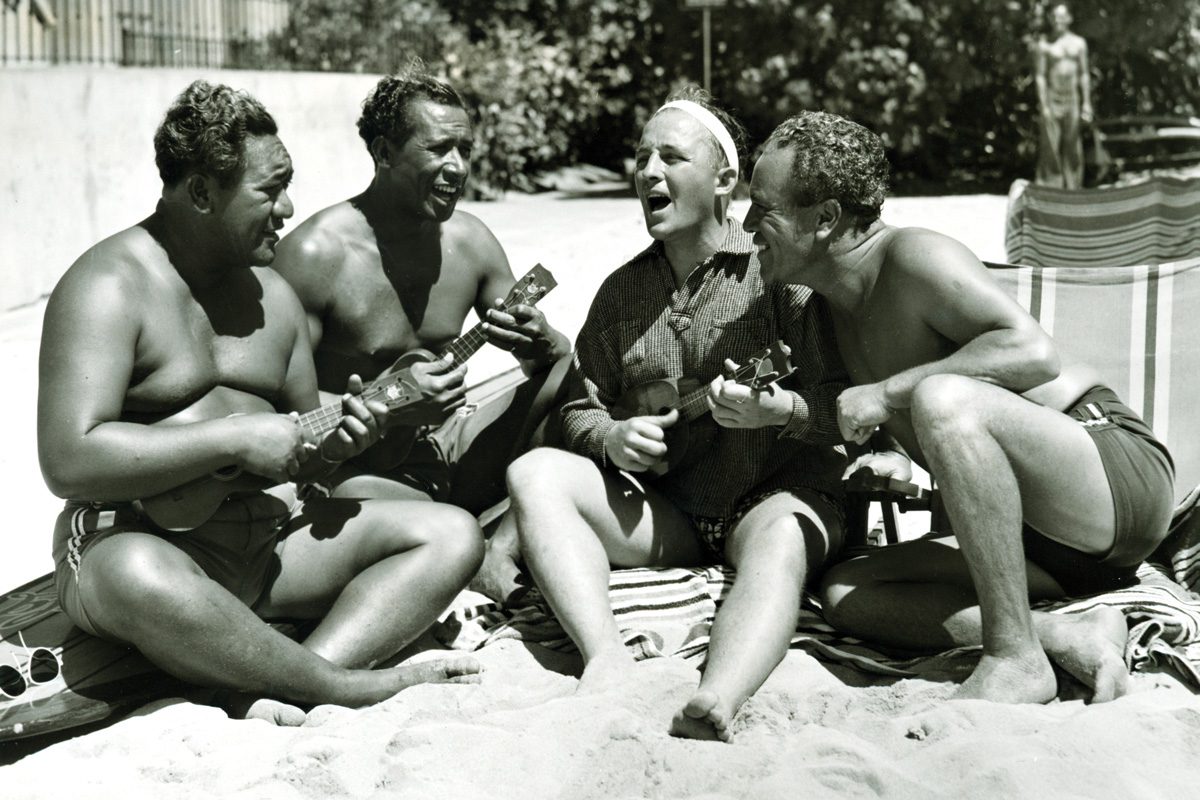
Image courtesy of hawaiimagazine.com
William “Chick” Daniels: The Most Beloved Beach Boy of Waikiki
How one man embodied the aloha spirit and shaped generations of surfers at Hawaii’s most famous beach
The Heart of Waikiki Beach
When visitors think of Waikiki Beach and its legendary surf culture, names like Duke Kahanamoku often dominate the conversation. But among the surfing elite who shaped Hawaii’s beach boy tradition, one figure stands out for his warmth, skill, and enduring impact on generations of wave riders: William “Chick” Daniels.
Born in 1913, Chick Daniels became one of the most recognizable and cherished faces along Waikiki’s golden sands during surfing’s golden era. As a member of the exclusive Waikiki Beach Boys, Daniels didn’t just ride waves—he embodied the aloha spirit that made Hawaii’s surf culture legendary around the world.
His infectious smile, patient teaching style, and genuine care for everyone he encountered earned him a reputation as perhaps the most beloved beach boy in Waikiki’s storied history.
What Were the Waikiki Beach Boys?
The Waikiki Beach Boys were far more than surf instructors. They were cultural ambassadors, elite watermen, and guardians of Hawaiian traditions who operated along Waikiki Beach from the early 1900s through the mid-20th century.
Elite Status and Responsibilities
Becoming a Waikiki Beach Boy required exceptional skills:
- Master watermen with expert knowledge of ocean conditions
- Surfing excellence on traditional wooden boards
- Canoe handling for outrigger rides and ocean tours
- Swimming and lifesaving abilities
- Cultural knowledge to share Hawaiian history and traditions
Beach boys worked for concessions at major hotels including the Royal Hawaiian, Moana, and Outrigger Canoe Club. They taught surfing, led outrigger canoe rides, entertained visitors, and served as hosts who introduced tourists to Hawaiian culture with authenticity and aloha.
The Golden Era
During the 1930s through 1960s, Waikiki became a playground for Hollywood celebrities, international dignitaries, and adventurous travelers seeking the thrill of surfing. The beach boys became celebrities themselves, known worldwide for their skills, style, and the unique lifestyle they represented.
Among this celebrated group, Chick Daniels earned special distinction for treating every person—from movie stars to first-time tourists—with the same warmth and genuine respect.
Chick’s Early Life and Rise
William “Chick” Daniels grew up immersed in Waikiki’s ocean culture during an era when Hawaiian surfing traditions were being preserved and shared with the outside world. Learning to surf as a young boy on heavy koa wood boards, he developed the skills and ocean knowledge that would define his career.
Mentored by Legends
Daniels learned from the first generation of beach boys, including contemporaries of Duke Kahanamoku. He absorbed not just surfing techniques but the philosophy of aloha—understanding that being a beach boy meant being a steward of the ocean, a representative of Hawaiian culture, and a friend to all who came to experience Waikiki’s magic.
By his twenties, Daniels had established himself as one of Waikiki’s premier watermen, known for his smooth surfing style and natural charisma that made everyone feel like family.
Teaching Hollywood and the World
Chick Daniels taught countless famous faces how to ride Hawaiian waves during Waikiki’s glamorous mid-century heyday. Hollywood stars, business moguls, politicians, and royalty all sought out the Waikiki Beach Boys for authentic surf experiences.
A Natural Teacher
What set Daniels apart was his genuine teaching ability. He had infinite patience with beginners, breaking down the fundamentals of surfing while ensuring everyone felt safe and confident. His natural humor put nervous first-timers at ease, and his encouragement helped countless people catch their first waves.
For more experienced surfers, Daniels offered advanced knowledge of Waikiki’s various breaks—Queens, Canoes, Populars, and others—sharing insights about reading swells, positioning, and the subtleties that separated good surfers from great ones.
The Chick Daniels Experience
Visitors who surfed with Chick Daniels described the experience as transformative. He didn’t just teach surfing mechanics; he shared the Hawaiian connection to the ocean, the history of surfing, and the spiritual dimension of riding waves.
Many people who learned from Daniels in the 1940s, 50s, and 60s would recall their time with him as the highlight of their Hawaiian vacation—not because of his celebrity connections, but because of his genuine aloha and ability to make everyone feel special.
Master Waterman and Surf Pioneer
While Daniels was beloved for his personality, he was also a master waterman whose surfing skills commanded deep respect among his peers. Growing up riding the iconic waves of Waikiki, he developed a smooth, effortless style that made surfing look like a graceful dance with the ocean.
Traditional Hawaiian Style
Daniels surfed in the traditional Hawaiian manner—powerful yet fluid, aggressive yet controlled. He could nose-ride heavy wooden longboards with precision, execute critical turns in the pocket, and read waves with an intuition developed over decades in the water.
His knowledge of ocean conditions, currents, tides, and the behavior of Waikiki’s various breaks made him an invaluable resource. Other beach boys and visiting surfers regularly sought his advice about conditions and wave forecasts.
Evolution and Innovation
While deeply rooted in tradition, Daniels also embraced innovations in board design and riding styles as surfing evolved through the mid-20th century. He witnessed and participated in the transition from massive koa wood boards to lighter balsa and foam designs, adapting his technique while maintaining the core principles of Hawaiian surfing.
Guardian of Aloha Spirit
What truly distinguished Chick Daniels was his embodiment of aloha—not just as a greeting, but as a complete way of life. He understood intuitively what many people spend lifetimes trying to learn: that aloha means approaching every interaction with love, compassion, and genuine care for others’ wellbeing.
Living the Philosophy
Daniels demonstrated aloha in everything he did:
- Patience with struggling beginners who others might have dismissed
- Generosity with his time and knowledge, never rushing anyone
- Humility despite his status and skills
- Joy that was infectious and authentic, never forced
- Respect for the ocean, Hawaiian culture, and every person he encountered
He treated janitors and movie stars identically—with genuine warmth and respect. This authenticity was rare even among the beach boys, and it’s why Daniels earned special affection from everyone who knew him.
Cultural Ambassador
As Hawaii transitioned through major changes in the mid-20th century—from territory to statehood, from local secret to tourist destination—the beach boys played crucial roles as cultural ambassadors. Daniels took this responsibility seriously, sharing Hawaiian history, language, and traditions with visitors while preserving their dignity and meaning.
He taught that surfing wasn’t just a sport but a spiritual practice connecting humans to nature. He shared stories of ancient Hawaiian chiefs and kahunas, the kapu system that once governed surfing, and the cultural renaissance that preserved Hawaiian traditions when they nearly disappeared.
Mentoring the Next Generation
Chick Daniels invested significant energy mentoring younger beach boys, passing down not only surfing techniques but the values that made Waikiki’s beach culture special. He taught that being a beach boy meant responsibility—to the ocean, to Hawaiian culture, and to everyone seeking to experience Waikiki’s magic.
The Daniels Legacy
Many second and third-generation beach boys credit Daniels with teaching them what aloha really means. His lessons went beyond surfing:
- Ocean safety and respect for nature’s power
- Reading people and understanding what they need
- Cultural preservation and why it matters
- Professional excellence in service and teaching
- Community responsibility as representatives of Hawaii
These lessons shaped Waikiki’s beach culture for decades after Daniels’ active years, creating a standard of excellence and aloha that newer beach boys aspired to maintain.
Life Beyond the Beach
While surfing and teaching defined much of Chick Daniels’ life, he was also deeply involved in Waikiki’s broader community. He participated in surf competitions, canoe races, and cultural events that celebrated Hawaiian traditions.
Family and Community
Daniels maintained strong ties to his ohana (family) and the local Hawaiian community. Even as Waikiki transformed into an international tourist destination, he remained connected to the Hawaiian families who had lived there for generations.
He participated in traditional Hawaiian ceremonies and cultural practices, ensuring that the commercial aspects of beach boy work didn’t disconnect him from his cultural roots. This authenticity was part of what made him such an effective cultural ambassador—he wasn’t performing Hawaiian culture for tourists; he was living it and inviting others to respectfully participate.
The Changing Times
By the 1960s and early 1970s, Waikiki was changing rapidly. High-rise hotels replaced beachfront homes, corporate surf shops overtook local operations, and the intimate beach boy culture of earlier decades faced pressure from modernization and commercialization.
Preserving Tradition
Daniels witnessed these changes with mixed feelings. While he welcomed sharing Hawaiian surf culture with the world, he worried about authenticity being lost in commercial exploitation. He advocated for preserving traditional beach boy standards and resisted efforts to reduce their role to mere surf instructors.
His influence helped maintain some traditional elements even as Waikiki evolved. The respect he commanded from hotel management and tourism authorities gave weight to his voice in discussions about beach boy operations and cultural preservation.
Legacy and Remembrance
William “Chick” Daniels passed away in 1973, but his legacy continues to ripple through Waikiki’s surf culture. The beach boys who followed him carried forward his teachings, his approach to sharing aloha, and his dedication to making every person feel welcome in the water.
Continuing Influence
Today, when you take a surf lesson at Waikiki Beach or catch a wave at Queens or Canoes, you’re participating in a tradition that Chick Daniels helped build and nurture. The spirit of generosity, joy, and connection that he brought to the beach remains woven into the fabric of Waikiki’s surfing community.
Modern beach boys and surf instructors still tell stories about Daniels, keeping his memory alive and using his example as a standard for how to treat people and represent Hawaiian culture with dignity and aloha.
Remembered by Those He Touched
People who learned to surf from Chick Daniels in the 1940s, 50s, and 60s still remember him decades later. In online forums, historical archives, and family stories, his name appears repeatedly—always associated with warmth, kindness, and the transformative experience of learning Hawaiian surfing from someone who embodied its spirit completely.
Many describe their time with Daniels as life-changing, not because they became great surfers, but because they experienced genuine aloha and understood for the first time what it means to live in harmony with the ocean and treat all people with love and respect.
Visiting Waikiki Today: Walking in Chick’s Footsteps
Modern visitors to Waikiki can still experience echoes of the magic that Chick Daniels helped create. While the beach has changed dramatically since his era—more crowded, more commercial, more developed—the essence of what he taught remains accessible.
Experiencing Authentic Beach Boy Culture
The beach boys and surf instructors who work along Waikiki Beach today continue traditions that Daniels helped establish:
- Personalized instruction focused on individual needs
- Cultural sharing beyond just surf mechanics
- Safety consciousness and respect for the ocean
- Genuine aloha in every interaction
When choosing a surf lesson or beach experience in Waikiki, look for instructors who emphasize these traditional values rather than just processing tourists efficiently.
The Waves Daniels Rode
The surf breaks that Chick Daniels mastered still roll into Waikiki Beach:
- Queens – The gentle, forgiving wave perfect for beginners
- Canoes – Longer rides with more power
- Populars – Faster, more challenging sections
- Cunhas – The inside break Daniels used for teaching
Each wave holds history and connection to the generations of surfers who rode them before you. When you paddle out at these breaks, you’re literally following in the wake of legends like Chick Daniels.
Why Chick Daniels Matters Today
In an era when surfing has become heavily commercialized and professionalized, Chick Daniels’ story reminds us of surfing’s heart—the joy of sharing waves, the responsibility of cultural stewardship, and the transformative power of genuine human connection.
Lessons for Modern Surfing
Daniels’ approach offers wisdom relevant to contemporary surf culture:
- Quality of interaction matters more than quantity
- Cultural respect enriches the surfing experience
- Patience and kindness create lasting impact
- Authenticity resonates more than performance
- Community sustains culture across generations
As surfing continues globalizing and modernizing, these lessons become more valuable, not less. They remind us that surfing is ultimately about connection—to nature, to culture, to each other.
The Aloha Standard
Perhaps Daniels’ greatest legacy is setting a standard for what aloha looks like in action. Not just saying the word, but living its meaning daily through every interaction. In a world that often feels rushed, transactional, and disconnected, his example offers an alternative way of being—one that prioritizes genuine care, presence, and human dignity.
The Most Beloved
William “Chick” Daniels earned the title of Waikiki’s most beloved beach boy not through competition victories or record-breaking rides, but through decades of treating every person he encountered with genuine aloha, sharing Hawaiian surf culture with authenticity and joy, and embodying values that made Waikiki special.
His legacy isn’t measured in trophies or headlines but in the countless lives he touched—the nervous beginners he encouraged, the children he taught to respect the ocean, the visitors who returned home transformed by experiencing genuine aloha, and the younger beach boys he mentored into guardians of Hawaiian surf culture.
The next time you’re paddling out at Waikiki, riding a gentle wave toward shore, or simply feeling the warm Hawaiian sun on your face, remember Chick Daniels—the beach boy who showed the world what aloha really means, whose kindness and stoke continue inspiring new generations of wave riders.
Experience the Waikiki surf culture that Chick Daniels helped create. Book an authentic surf lesson with traditional beach boys and become part of Hawaii’s living surf legacy.
Sources
