Apr
Image courtesy of eos.surf
Larry Bertlemann: The Rubberman Who Rewired Modern Surfing
Before Kelly Slater was doing aerials on the Championship Tour, before John John Florence was launching into the lip at Pipeline, there was a kid from Hilo teaching himself to do things on a surfboard that nobody had a name for yet. His name was Lawrence Mehau Bertlemann. The surf world called him the Rubberman. And if you’ve ever watched a surfer snap a sharp turn in the pocket rather than cruise a long carve to the shoulder, you’re watching something he helped invent.
From the Big Island to Ala Moana
Larry Bertlemann was born on August 7th, 1955 in Hilo on the Big Island of Hawaii. His father ran an auto shop, and his early years looked like those of a lot of Island kids: hunting pigs, fishing with handlines, not much thought given to surfing.
That all changed at eleven. He came to Oahu with his mother, putting Larry in proximity to Waikiki and the forces that would shape his life.
The story of how he got his first real break with equipment is one of those small moments that echoes. He broke his 9’6 and tried glassing the fin to the front half of the board, but had trouble getting it to stay. A man walked up and showed him how to do it properly, and that man turned out to be Donald Takayama. From that day, Bertlemann’s thinking about what a surfboard could be started to shift. Longboards were still the standard. He had other ideas.
On the way to school each morning, he passed two surf shops. One was called Surf Research, where Sparky shaped boards. The other was Surfboards Hawaii, where Ben Aipa was at work. He stopped in every day, watching them shape, absorbing everything. Sparky gave him his first manufactured board. Ben Aipa would soon become something more important than a sponsor.
The Partnership with Ben Aipa
The relationship between Larry Bertlemann and Ben Aipa is one of the most consequential in surfboard design history. Aipa saw what Bertlemann was trying to do physically on a wave and worked backward from there, building boards that could keep up with a surfer determined to ride in ways that didn’t yet exist.
Aipa created wide, short swallowtail and stinger designs that gave Bertlemann total freedom of movement. The boards were shorter than what most serious surfers were riding, with unconventional outlines that felt unstable under conventional surfing. Under Bertlemann, they flew.
Most of his defining surfing went down on Ben Aipa’s split-railed stinger boards during the mid-70s. The two were testing equipment and technique simultaneously, each pushing the other further. Bertlemann was a driving force in creating the swallowtail and also helped revive ultra-short twin-fins around 1980.
This wasn’t just an athlete and his shaper. It was a design lab operating out of Ala Moana, with the ocean as its testing ground.
A Style Nobody Had Seen
The surfing world of the early 1970s had a clear aesthetic ideal. Gerry Lopez’s subtle, Zen-like approach was considered the gold standard. Surfing was about flow, about reading the water and moving with it.
Bertlemann had other plans. He was an avid skateboarder, and he saw the ocean as terrain to attack rather than a current to follow. He envisioned translating his land-based repertoire of tricks to the water, and visualization was what separated him from the pack. “A friend of ours used to take Super 8 movies of us,” he once said, “and I would watch them thinking, wow, I could cut that line shorter. Anything is possible. I knew what I wanted to do; I just had to get the boards to do it.”
What came out of that thinking was unlike anything judges or photographers had seen before. Always running at top speed and on the verge of spinning out, his low-gravity cutbacks, 360s and switchfoot antics were spontaneous yet completely functional. He attacked the pocket of the wave top to bottom, generating speed where others were bleeding it off.
The nickname came naturally. He had a distinct, dynamic spring in his surfing that earned him the nickname “Rubberman.” His body moved through positions that looked physically improbable, yet each one served a purpose in the wave.
As he was joined by fellow test pilots Buttons Kaluhiokalani, Mark Liddell and later his cousin Dane Kealoha, Ala Moana and the more rippable North Shore venues became ground zero for progressive surfing.
The Duke, the Covers, and the Corporate World
Bertlemann was never purely a free surfer. He competed, and he won. He took the Duke Kahanamoku Surfing Championship in 1974, finished third in the 1972 World Contest in San Diego, and won the U.S. Surfing Championships in 1973.
He had complicated feelings about competition. “I surfed for myself and the public, not for five judges,” he said. “How do you score a maneuver you’ve never seen before?” The judges, trained on a different vocabulary of surfing, often couldn’t make sense of what they were watching. He finished in the IPS Top 16 in both 1976 and 1979, but his real audience was never a panel of five people with clipboards.
It was the cameras he understood. He landed eight covers of Surfing and Surfer magazines during the 1970s, more than Gerry Lopez, Shaun Tomson and Mark Richards combined, and appeared in over 25 surf films.
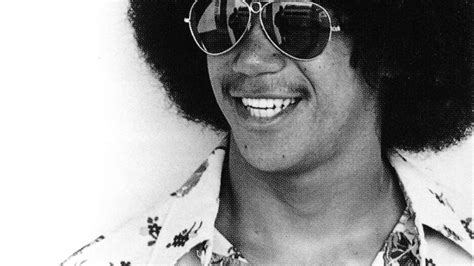
He was one of the first pros to secure major corporate sponsors like Pepsi, OP, Toyota and United Airlines. He surfed Pipeline in a custom bell-bottom wetsuit. His well-maintained afro and color-coordinated outfits made him impossible to ignore. He understood, before most, that surfing was a media business as much as it was a sport. In doing so, he helped establish the model of professional surfing that every athlete who came after him would inherit.
The Skateboard Connection and the Bert Slide
This is where Bertlemann’s influence gets genuinely strange and genuinely enormous.
Larry Bertlemann and Ben Aipa visited the Zephyr surf shop in Santa Monica, and the Z-Boys, already idolizing him from the magazines, absorbed his approach entirely. The way he moved on a wave, those sharp low pivots and rapid direction changes, translated almost directly to a skateboard on concrete.
The Zephyr skate team, including Shogo Kubo, Tony Alva, Jay Adams and Bob Biniak, named a skateboarding move after him: the “Bert slide.” Bertlemann’s reaction, years later: “I just remember thinking, oh man. Well, that will work.”
The 2001 documentary Dogtown and Z-Boys, which chronicles the rise of vert skating, features names like Tony Alva, Stacy Peralta and Jay Adams explicitly trying to take Larry’s approach on a wave to streets and parks. The surfing revolution he started in Hawaii became the foundation of modern skateboarding. Both disciplines still carry his fingerprints.
Later Years and the Legacy That Stuck
Despite dropping off the surf world’s radar around 1985 with back problems, Bertlemann returned to public attention with a lengthy profile in The Surfer’s Journal in 2001. His personal life had been complicated in the years before that. There were legal troubles in the early 2000s, a “Free Bert” campaign among those who remembered what he had given the sport, and a slow return to shaping boards after his release.
He never fully stopped. He continued hand shaping custom orders for Hawaiian locals and international customers alike, personally involved with each design from the template outline through the rocker, foiling and fin placement.
The evaluation of his place in surfing history has only grown clearer with time. Santa Cruz Surfboards, one of his later production partners, put it plainly: “The Rubberman opened the door. Arriving amid a period of flux, he demonstrated that no limits exist beyond our imagination. He didn’t invent the shortboard; he just showed us how to ride it. No one had a greater influence on the way people surf, from the best in the world on down.”
That’s not marketing copy. That’s the historical record.
Why Bertlemann Matters to Hawaii’s Surfing Story
The history of surfing in Hawaii is the history of innovation. From the ancient Hawaiians who first rode waves on heavy koa boards, to Duke Kahanamoku carrying surfing to the world, to the North Shore generations who defined big wave riding, every era has produced someone who changed what surfing meant.
Larry Bertlemann belongs in that lineage without question. He took the shortboard revolution that had already begun reshaping the sport, and showed what it could actually become in the right hands. He did it at Ala Moana. He did it on the North Shore. He did it in the magazines, on film, on concrete and in the minds of every surfer and skater who watched him and started wondering what else was possible.
The Rubberman is 70 years old now. The moves he invented still have names.
Sources
- The Inertia: Larry Bertlemann: How One Man Transformed Surfing
- Surfing Walk of Fame: Larry Bertlemann (2014 Champion)
- Savage Thrills: Larry Bertlemann, A Surfer Ahead of His Time
- Juice Magazine: Larry Bertlemann Interview
- Legendary Surfers: Larry Bertlemann (Malcolm Gault-Williams / Jason Borte)
- Larry Bertlemann Legendary Handmade Surfboards
- Surfboardline Collectors Network: Larry Bertlemann Hawaiian Expressions
- 3 Key Media: Hawaiian Expressions 1975 Bertlemann Single Fin
