

Legends
Paul Strauch: The Hawaiian Legend Who Invented the Cheater Five
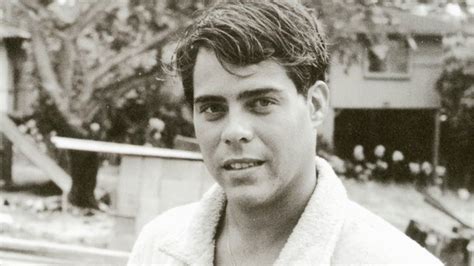
Apr
Image courtesy of eos.surf
Paul Strauch and the Cheater Five: A Legacy Written in Trim
There are surfers who win. There are surfers who inspire. And then there are surfers who change the way everyone else understands what a wave can be. Paul Strauch Jr. was the third kind.
Born in Honolulu in 1943 and raised within reach of the break at Waikiki, Strauch came up in the sport the way Hawaii’s best always have: organically, joyfully, and early. He was four years old the first time he paddled out, riding as a goofy-footer in the mellow shorebreak. By twelve, he had switched to regular stance after he and his father received custom balsa boards shaped by surf pioneer Tom Blake. It was a small moment with a long afterlife.
Because what Paul Strauch did with those boards, and every board that came after, would bend the arc of surfing.
Waikiki Raised, World Ready
Waikiki in the late 1950s was still surfing’s spiritual home. The Duke Kahanamoku era was living memory. The Makaha International was the contest that mattered. And a teenage Paul Strauch was already making noise.
He finished second in the junior division of the 1958 Makaha International, then came back and won it outright in 1959. He was sixteen years old.
What distinguished Strauch from his peers wasn’t aggression. It was something harder to teach. Where others carved at waves, Strauch seemed to inhabit them, drawing long unhurried lines that prioritized flow over flash. Barry Kanaiaupuni, one of Hawaii’s most respected power surfers, later said of him: “He was the best surfer in the world. It was like Star Trek; like something out of the future.”
That wasn’t nostalgia talking. That was someone who had watched Strauch up close and couldn’t fully explain what he was seeing.
The Cheater Five: Surfing’s Most Elegant Innovation
Every discipline has a move that redefines what’s possible. For longboard surfing, that move is the cheater five. And Paul Strauch invented it.
He developed a radically different noseriding stance: squatting low on his rear haunch, extending his front foot toward the nose, and keeping most of his weight on the back foot for stability. The move became known as the “cheater five,” or “Strauch crouch,” and it allowed surfers to noseride in bigger, more critical surf, something that hadn’t really existed before.
The traditional five or ten required a surfer to commit weight to the front of the board, which worked in small, soft surf. Strauch’s innovation made noseriding viable in real Hawaiian waves. It was a technical solution disguised as pure style, and it opened the door for everything that came after in longboard performance.
The cheater five is still going strong today. That’s seventy-plus years of relevance. Not many innovations in any sport can claim that kind of shelf life.
And the cheater five wasn’t even his only contribution to how surfing is done. Strauch is also widely credited as one of the first surfers to consistently use deep bottom turns in larger waves, something he began experimenting with in the late 1950s. The bottom turn is now as fundamental to surfing as the paddle itself. He was there at its origin.
Duke’s Man: A Cultural Ambassador
In Hawaii, there has always been surfing, and then there has been the way surfing carries culture. Paul Strauch understood both.
Mentored by Duke Kahanamoku, Strauch earned the legendary waterman’s attention and respect not through bravado but through grace, humility, and technical refinement. Duke did not give that respect freely. He saw something in Strauch that reflected his own values: the aloha spirit expressed through movement on water.
Kahanamoku later selected Strauch as part of a small group of Hawaiian surfers tasked with representing the islands and sharing surfing with the wider world, recognizing him as a cultural ambassador as much as a competitor. The Duke Kahanamoku Surf Team included Fred Hemmings, Joey Cabell, and Butch Van Artsdalen. It was the closest thing surfing had to a national team, and Strauch was on it.
He also appeared in the films that defined surfing’s golden era for the rest of the world, including Barefoot Adventure (1960), Gun Ho! (1963), and The Endless Summer (1966). Millions of people who will never know his name have already seen his surfing.
The Competitive Record, Quietly Stacked
For someone so associated with effortless style, Strauch competed fiercely and often won. He captured the 1963 Peru International, placed second at the 1965 Duke Kahanamoku Invitational, and finished third at the 1965 World Surfing Championships. He added the 1966 Hawaii state title, won the 1969 Makaha International, and competed in both the 1966 and 1970 World Championships. He also placed third in the SURFER Magazine Readers Poll in both 1963 and 1965.
That poll result says something worth dwelling on. Reader polls in the 1960s weren’t driven by social media or algorithm. They were driven by surfers watching other surfers and deciding who moved them most. The fact that Strauch placed in the top three twice tells you exactly how he was regarded by the people who understood the craft.
He wasn’t just a stylist. He was one of the best surfers in the world, full stop.
Life After the Water
Paul Strauch carried himself the same way off the waves as on them. He earned his business degree from the University of Hawaii and founded Alii Surfboards, channeling his knowledge of what boards could do into what they were built to be.
In his later years he served as a board member and executive director of the Surfing Heritage and Cultural Center, working to preserve the history of the sport he had helped shape. SHACC marked his passing with words that said everything: “Paul had a smile that lit up every room. He carried himself with style, charm, and grace, and he touched everyone he met with warmth, humor, and generosity. We will miss his electric smile and contagious laugh.”
He was inducted into the Hawaii Waterman Hall of Fame and spent his final years in Southern California.
Mahalo, Paul
Paul Strauch Jr. passed away in April 2026 at the age of 83. He leaves behind a legacy that does not require a statue or a headline to endure. It endures every time a longboarder drops low, extends a foot toward the nose, and finds the trim on a clean Hawaiian wall.
Every cheater five ever surfed carries his name in it, whether the surfer knows it or not. That is the definition of a lasting contribution to this sport.
He didn’t surf to be remembered. He surfed the way he lived: with grace, with aloha, and with a flow that made everyone watching feel something they couldn’t quite put into words.
Rest easy, Paul. Catch a few for us.
Sources
Hawaiian Style Master Paul Strauch Passes Away, Surfer Magazine
Surfing Legend Paul Strauch Has Passed Away, The Inertia
Hawaii Waterman Hall of Fame Member Paul Strauch Jr. Dies at 83, Hawaii News Now
