

Informational, Surf Break Series
Haleiwa Surf Break Guide: Wave Conditions, Crowds & Local Tips | Hawaii.Surf
Jan
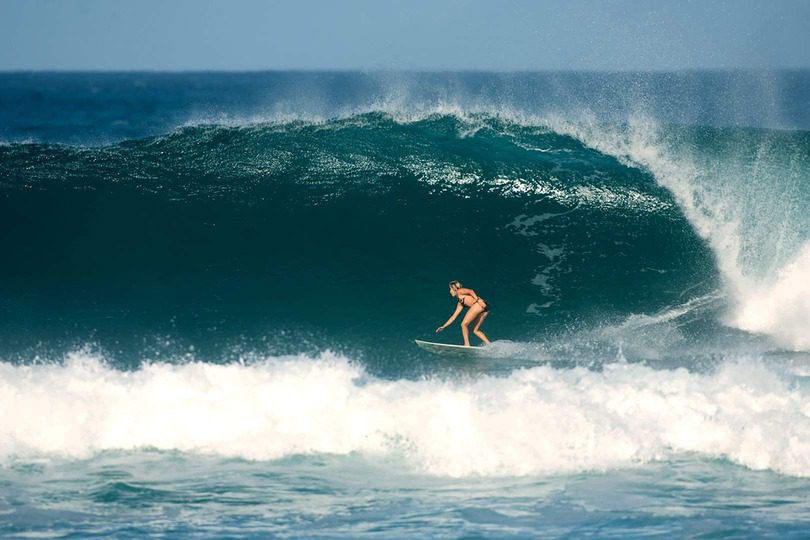
Image courtesy of stormrider.surf
Sunset Beach Surf Break Guide
On winter mornings when the swell runs deep out of the northwest, the horizon at Sunset Beach begins to rise long before the waves reach shore. Lines of energy stack across the reef, stretching wide across the lineup, promising long walls, heavy water, and a session that demands patience as much as skill.
Sunset Beach is not a wave that announces itself with perfection. It reveals itself slowly — through shifting peaks, powerful walls, and an ever-changing ocean canvas. For decades, it has been one of Hawaiʻi’s most respected surf breaks and a proving ground for surfers who truly understand the sea.
Break Overview and Location
Sunset Beach is located along the Seven Mile Miracle on the North Shore of Oʻahu, between Rocky Point and Velzyland. Unlike more concentrated reef breaks, Sunset spans a wide stretch of coastline, breaking over a deep reef system influenced by sand movement.
The result is a lineup that can feel expansive and unpredictable. Peaks form and fade, takeoff zones shift with swell direction, and positioning often matters more than aggression.
Sunset rarely offers the same wave twice.
The Wave at Sunset Beach
The Sunset Beach surf break is defined by power, scale, and movement rather than hollow shape.
Waves here tend to be:
Long, open-faced walls
Powerful and fast as size increases
Less forgiving when positioning is off
At smaller sizes, Sunset can feel approachable. As swell builds, the wave becomes heavy and demanding, requiring commitment from the moment a surfer turns toward shore.
This is not a place for hesitation.
Surf Conditions and Best Time to Surf Sunset Beach
Sunset Beach responds best to winter North Pacific swells and is primarily a cold-season wave.
Swell direction
North to northwest swells produce the best conditions
Swell size
Works from head-high through well-overhead
Becomes extremely challenging as waves reach double overhead
Wind
Light offshore or variable winds are ideal
Strong trade winds can quickly deteriorate surface conditions
Tide
Functions across a range of tides
Mid-tide often provides the best balance between shape and safety
Because the lineup is wide, surfers must constantly adjust positioning as conditions evolve throughout a session.
A Brief History of Sunset Beach
Sunset Beach played a crucial role in shaping modern professional surfing. During the 1970s and beyond, it became one of the most important contest venues on the North Shore.
As part of the Triple Crown of Surfing, Sunset often separated complete surfers from specialists. While Pipeline rewarded precision and Waimea demanded courage, Sunset required stamina, ocean reading, and consistency across unpredictable conditions.
Many of the sport’s greatest surfers earned their reputations not by dominating Sunset, but by surviving it intelligently.
Winning at Sunset has long been considered one of the hardest achievements in competitive surfing.
Sunset Beach and Hawaiian Surf Culture
Long before professional contests, Sunset Beach was respected by local surfers as a place where knowledge mattered. Understanding swell direction, current movement, and peak behavior has always been essential here.
Sunset reflects a core value of Hawaiian surfing culture:
the ocean is not something to conquer — it is something to understand.
That mindset still defines the lineup today.
Hazards and Safety at Sunset Beach
While Sunset may lack the visual intensity of Pipeline wipeouts, it presents its own serious risks.
Common hazards include:
Strong currents pulling surfers wide or inside
Long paddle-outs that test endurance
Multiple-wave hold-downs on larger days
Fatigue from repeated beatings
Because the waves break across such a wide area, surfers can easily find themselves out of position after a wipeout. Knowing when not to paddle for a wave is just as important as knowing when to go.
Sunset rewards restraint.
Board Selection and Gear
Board choice at Sunset Beach depends heavily on swell size.
On moderate days:
Step-up shortboards or performance guns
On larger days:
Semi-guns or guns with added paddle power
Strong leashes are essential
Additional considerations:
High fitness level
Strong paddling ability
Comfort navigating currents and wide lineups
Sunset is not a wave to surf underprepared.
Watching Sunset Beach
Sunset Beach is one of the easiest North Shore breaks to watch from shore. The long stretch of sand provides clear views of the lineup, especially during larger winter swells.
Spectators should:
Stay well back from the shoreline during large surf
Be mindful of sudden wave surges
Respect posted warnings and local guidance
On big days, Sunset becomes a powerful reminder of the Pacific’s scale and energy.
Why Sunset Beach Matters
Sunset Beach holds a unique place in Hawaiʻi’s surf landscape. It is not defined by a single peak, a single moment, or a single maneuver.
It is defined by movement.
For surfers, Sunset represents growth through understanding rather than domination. For Hawaiʻi, it remains a symbol of balance between power and patience — a wave that teaches lessons long before the takeoff.
Sunset Beach does not reward shortcuts.
It rewards respect.
Sources
