

Informational, Surf Break Series
Pua’ena Point Surf Break Guide: Haleiwa’s North Shore Gateway | Hawaii Surf
Apr
Image courtesy of to-hawaii.com
Pua’ena Point Surf Break Guide: Haleiwa’s North Shore Gateway
There’s a quiet art to knowing which wave to bring someone to on their first day on the North Shore. Bring them somewhere too exposed and they spend the session getting mauled. Bring them somewhere too tame and they leave underwhelmed, wondering what all the fuss is about. I’ve brought dozens of friends and first-timers to Pua’ena Point over the years, and it almost never fails them. The wave is honest — small enough to be manageable, shaped enough to be real, and framed by one of the most beautiful little coves on Oahu’s coastline. There are honu drifting through the lineup. Palm trees shade the beach. And if conditions align and someone catches a genuine right-hand wall off the outer reef for the first time, that look on their face is something else entirely.
Pua’ena Point doesn’t get the same ink as Pipeline or Waimea Bay. It won’t be the subject of a major motion picture or a Red Bull event anytime soon. But it sits right at the edge of Haleiwa town, at the northeastern corner of the harbor, and it does something none of those famous breaks can do: it works for everyone. On any given day, the inside section hosts beginners logging their first rides, while the outer reef peels off serious right-hand walls that demand the full attention of experienced surfers. That range — that unusual versatility — is what makes Pua’ena Point one of the most valuable breaks on the North Shore, even if it’s rarely the most celebrated.
This guide covers everything you need to know: the wave mechanics, the history, the best conditions, how to approach the lineup, and what to expect when you get there.
The Place: Pua’ena Point and Its Setting
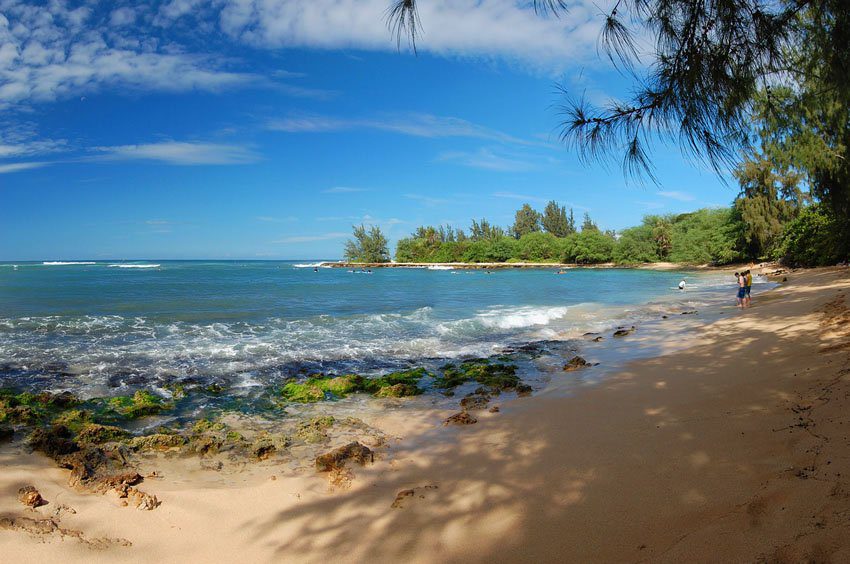
Pua’ena Point sits at the northeastern tip of Haleiwa Harbor, where the coastline bends and the deep-water channel that serves the harbor meets the exposed reef of the open North Shore. The point itself is a rocky outcropping — lava and coral — flanked by a small, sheltered cove beach backed by palms and ironwood trees. It’s accessed via Kahalewai Place, a short road off Kamehameha Highway just north of Haleiwa Beach Park, ending in a small parking area at the water’s edge.
The geography is what defines this wave. Haleiwa Harbor’s channel runs along the eastern side of the point, creating a natural buffer that organizes incoming swells before they meet the reef. This protected position within the bay gives the inner section of Pua’ena its trademark mellow character on smaller days — and on the largest, most powerful winter swells, the outer tip of the point transforms into something else entirely: a heavy, barreling right-hand wall that the casual visitor would not recognize as the same break.
The beach itself is small and reef-fringed, with several sandy entry points that make paddling out relatively straightforward even for newer surfers. The shallow nearshore reef is covered in algae that draws Hawaiian green sea turtles — honu — to the area year-round. Watching a honu cruise through the lineup mid-session is genuinely one of the small daily rituals of surfing Pua’ena. Please observe them respectfully, keep your distance, and let them pass — they’re not a tourist attraction, they’re a part of this place.
The surrounding area carries a strong local character. This is a neighborhood beach, not a destination resort. On weekends, local families spread out under the palms. Surf school vans line the parking lot on mornings when the surf is manageable. And the older surfers who’ve been surfing this break for decades hold the outer lineup with quiet authority. It’s a place that rewards the visitor who arrives with awareness rather than entitlement.
A Note on the Name
Pua’ena is a Hawaiian word. While the exact traditional translation is not definitively documented in available historical records, pua broadly means “flower” or “offspring,” and ‘ena relates to heat or warmth. The name has been associated with this point for generations, predating modern surf culture by centuries. Ancient Hawaiians used this stretch of coastline for fishing and ocean access — the harbor and surrounding reef provided rich marine resources that were essential to the communities of the Waialua district. The point’s strategic position on the bay made it a natural landmark. That history sits underneath every surf session here, even when it goes unacknowledged.
During the 1930s and early 1940s, the land behind Pua’ena Point served as the site of Kawailoa Army Air Field — also known as Haleiwa Airfield — one of three military airfields established on Oahu’s North Shore. On December 7, 1941, two Army Air Corps pilots scrambled from this field during the attack on Pearl Harbor and are credited with shooting down Japanese aircraft. A war memorial at nearby Haleiwa Beach Park honors those who served. The airfield is long gone now, but the point carries that history quietly in its bones.
Understanding the Wave: Inside vs. Outside
The defining characteristic of Pua’ena Point as a surf break is the distinction between its two very different zones — and understanding that distinction is essential to surfing it safely and enjoyably.
The Inside: A Natural Classroom
The inside section at Pua’ena is a protected, bay-like setup created by the point and the harbor channel working together. On most days — and especially through spring, summer, and early autumn — this inside reef produces mellow, rolling waves that are widely considered among the best in Hawaii for learning and skill development. The whitewater from the outer reef sets funnels into this sheltered zone in an organized, consistent rhythm, giving novice surfers a reliable and relatively forgiving environment to catch waves.
This is why Pua’ena Point is the home base for most of Haleiwa’s active surf schools. The combination of easy water entry (sandy patches between the reef), manageable wave size (typically waist to chest high on standard days), and calm nearshore conditions gives instructors a genuine teaching environment — not just a safe place to babysit beginners. You can actually learn to surf here. Countless people have.
For longboarders and stand-up paddleboarders, the inside section at Pua’ena offers an equally satisfying experience. Long, slow-rolling walls develop across the shallow reef and give longboard riders the open canvas they need to walk the board, hang five, and practice nose-riding without the time pressure of a fast-moving shore break. On small summer days especially, a patient longboarder can find consistent, uncrowded waves that most shortboard surfers have already dismissed as too small to bother with.
The Outside: A Different Animal
The outer reef at Pua’ena Point is a different conversation entirely. When a clean, long-period north or northwest swell arrives — and particularly when it angles in from a true northerly direction — the outer tip of the point comes alive with powerful, right-hand walls that peel toward the harbor channel. Surfline describes these outer reef rights as capable of reaching significant size, with serious current considerations on bigger swells.
These outer walls are not beginner waves. At head-high and above, the reef becomes shallower and more consequential, the takeoffs steepen, and the currents that run across the point intensify. The outer reef at Pua’ena can transform from a pleasant intermediate wave to a serious, expert-level barrel within the span of a single swell arriving from a slightly different angle. Anyone who has seen the outer peak turn on during a solid north swell understands immediately why this spot deserves more respect than its beginner-friendly reputation suggests.
On the biggest days — when the rest of the North Shore is maxing out and closed down — Pua’ena’s protected inner bay becomes one of the only places on the coast where rideable, quality surf can still be found. The outer reef absorbs and filters the chaos of massive swells, and the bay continues to produce surfable waves while Pipeline and Sunset are unsurfable. This gives Pua’ena a hidden value to local surfers that the spot’s beginner reputation doesn’t fully communicate: it’s a refuge on stormy days, and it never fully goes flat when everything else does.
Optimal Conditions
Swell Direction and Size
Pua’ena Point responds best to northwest through north swells, with northwest (around 315–330 degrees) producing the most organized conditions on the outside and a reliable supply of rideable waves on the inside. True northerly swells (350–360 degrees) generate the most significant outer reef activity — the long righthand walls that the experienced surfer comes for — but also the most challenging currents.
For the inside section, virtually any swell with enough period to wrap into the bay will produce rideable waves. Even trade wind swells from the northeast can funnel into the protected cove and generate consistent, if smaller, surf. This versatility is one of Pua’ena’s overlooked strengths — it picks up swell from a broader arc than most North Shore breaks.
Swell size matters differently at Pua’ena than at most breaks because of the inside/outside dynamic. The inside works best in the waist to head-high range. The outer reef comes alive from head-high upward and doesn’t max out until conditions become genuinely dangerous. On days when the swell exceeds eight to ten feet on the buoys, the currents across the point become severe and the outer section is best left to those with significant North Shore experience.
Wind
Like all North Shore breaks, Pua’ena Point favors light offshore winds from the south to southeast. Trade winds from the ENE are partially cross-offshore and manageable in lighter strengths, though they add texture to the wave face and affect the quality of the outer reef walls. Strong trades make the inside section choppy and less enjoyable; they push the outside walls into a more disorganized, difficult shape.
Morning glass-off sessions are reliably the best window. By mid-morning, the trades typically establish themselves and the quality drops. South to southeast wind events — less common, but among the most prized conditions in Hawaii — produce truly glassy, beautiful surf at Pua’ena and are worth making the early drive for.
Tide
Mid-tide is the sweet spot at Pua’ena for most surfers. Lower tides expose the reef on the inside, making falls more consequential and the entry/exit more technical. Higher tides reduce the wave’s energy and hollowness but cushion the reef — a reasonable tradeoff for beginners or surfers focused on the inside section. For the outer reef, mid-tide on an incoming is generally considered optimal: enough water to keep the takeoff manageable without losing the snap and shape that makes the wave interesting.
Best Times of Year
Pua’ena Point is primarily a winter spot. The North Shore swell season runs from October through April, and Pua’ena functions as an ideal entry point into that season for anyone building up their North Shore experience. October and November are excellent months — the swell is active, the crowds are thinner than December through February, and the morning conditions are often pristine. March can be underrated for similar reasons: swells keep arriving, the competition circus has wound down, and the break has a more relaxed character.
Summer months see the outside essentially go dormant, though the inside can still produce enjoyable, small surf on trade wind swells. The turtles are more active through the warmer months and the snorkeling is excellent — summer visits are worth making for the experience of the place even when the surf is modest.
Who Should Surf Pua’ena Point
True Beginners
If you have never surfed before and you’re on the North Shore, Pua’ena Point is where you should be. The combination of easy beach access, a forgiving inside section, consistent wave energy, and the presence of professional surf instruction makes it the most appropriate learning environment on this stretch of coast. Taking a lesson from one of the established local surf schools here is a genuinely worthwhile experience — instructors know this break intimately and will place you in the right zone for your ability.
The beginner-facing inside is not dumbed-down surf. It’s real wave energy, organized by the bay into a shape that allows a brand-new surfer to experience the actual sensation of riding a wave — the push of the whitewater, the balance challenge, the moment the board accelerates down the face. That authenticity matters. You’re not just standing on a board in a swimming pool. You’re surfing in Hawaii.
Intermediate Surfers
For the intermediate surfer — comfortable on a wave, working on reading the ocean and developing timing — Pua’ena Point offers serious value. The inside section provides a consistent environment to refine technique without the pressure of an intense crowd or consequential reef. The transition zone between inside and outside gives the progressing surfer a chance to read a more complex, performance-oriented wave. And when outside conditions are manageable (waist to head-high, light winds), the outer reef walls offer genuine challenge and reward.
This is the skill level where Pua’ena begins to show its full range. A competent intermediate surfer can work the inside on a small day, move gradually toward the outside as confidence grows, and return to the inside when the outer section closes out. The break almost teaches the progression itself.
Advanced Surfers
Advanced surfers looking for outer reef walls, long right-hand rides, and the challenge of North Shore currents will find Pua’ena genuinely interesting on the right swell. The outer tip comes alive on clean northwest swells, and the righthand wall that steamrolls toward the harbor channel on a proper north swell is a legitimately exciting wave — fast, hollow in sections, and demanding of good positioning and wave judgment. The current on northerly swells requires constant paddling to stay in position, which is a physical and strategic challenge that adds to the difficulty and the reward.
On the biggest days, when Pipeline and Sunset are closed down, advanced surfers who know the spot can find legitimate, quality waves in the protected bay that most of the North Shore has simply written off. That insider knowledge is one of Pua’ena’s quiet gifts.
First-Person: Why I Keep Bringing People Here
I’ve surfed Pua’ena Point more times than I can count. I grew up surfing and still bring visitors and beginners here whenever the window is right — and the window is almost always right at Pua’ena.
What I appreciate most about this spot is something you can’t fully put into a conditions report: the access and the safety. You can park, walk directly onto the beach, and be in the water in five minutes. There’s no long trail through ironwood trees, no navigating a crowd at a single compressed peak, no parking half a mile away. The bay creates a natural buffer that makes the experience manageable — even when there are sets rolling through, the inside zone rarely becomes genuinely dangerous for someone with basic ocean awareness.
I’ve watched beginners catch their first wave here and seen that particular joy, the one that brings people back to surfing for the rest of their lives. I’ve also surfed the outer reef on clean northwest days when the point lit up and the walls were long and fast and excellent. It’s one of those rare spots that I trust — for myself and for the people I bring with me. That trust comes from time in the water, and it’s earned.
The turtles don’t hurt either.
Practical Information
Getting There
Pua’ena Point Beach Park is accessed via Kahalewai Place, which turns off Kamehameha Highway (Route 83) just north of Haleiwa Beach Park. Look for the turnoff on the ocean side of the highway; the road ends in a small parking lot at the beach. From Honolulu and Waikiki, allow approximately 45–60 minutes depending on traffic. From the heart of Pipeline territory near Ehukai Beach Park, Pua’ena is about 15–20 minutes southwest along Kamehameha Highway.
The beach is within walking distance of Haleiwa town, which offers excellent food, the iconic Matsumoto Shave Ice, and Surf N Sea — the long-running local surf shop with board rentals, gear, and North Shore expertise. If you’re renting a board for Pua’ena, Surf N Sea is the natural first stop.
Parking
There is a small parking lot at the end of Kahalewai Place. This lot fills quickly on weekends and during peak morning sessions. Arrive early. Car break-ins occur in the area — leave nothing visible in your vehicle and take your valuables with you or leave them at your accommodation.
No Lifeguards
Pua’ena Point Beach Park does not have staffed lifeguards on duty. The nearest lifeguarded beach is Haleiwa Beach Park, a short distance down the road. This is important for anyone visiting with young children or non-swimmers. If you’re bringing beginners into the water, stay with them at all times. The inside section is generally safe and forgiving, but ocean conditions can change and situational awareness is non-negotiable.
Surf Schools
Multiple reputable North Shore surf schools operate at Pua’ena Point, particularly during the winter surf season (October through April). Schools typically provide boards, instruction, and safety guidance. Making a reservation in advance is recommended — popular schools fill up, especially on optimal surf days. If you’re a beginner planning to surf the North Shore, starting with a proper lesson at Pua’ena is the most sensible approach available to you.
Nearby Facilities
Haleiwa Beach Park, a short walk or drive away, offers restroom facilities and a broader beach area. Pua’ena Point itself has no restroom facilities on site. The town of Haleiwa, immediately accessible from the point, has restaurants, cafes, and shops — fueling up before or after a session is easy and enjoyable.
Gear Recommendations
Board Selection
For beginners: a foam longboard or softop in the 8–10 foot range, ideally provided by a surf school. The extra volume and stability make pop-ups more achievable and wipeouts more manageable.
For intermediates: a mid-length board (7–8 feet) or a funshape handles the inside section well and can be used on the outside on smaller days. If you’re transitioning to shortboards, a higher-volume fish or performance shortboard works on the outer reef when conditions are moderate.
For advanced surfers on the outer reef: a performance shortboard in the 5’8″–6’2″ range on standard days; step up to 6’4″–6’8″ when the outer reef starts to show real size and power.
Reef Safety
The nearshore reef at Pua’ena is mixed rock and coral — not the sharpest reef on the North Shore, but not forgiving either. Reef booties in the 2–3mm range are a reasonable precaution, particularly for beginners and anyone prone to falls near the rocks during entry and exit. Cover your head when wiping out, go limp over the reef, and don’t try to stand up until the wave has passed and you’ve confirmed the water is deep enough.
Sun and Ocean Protection
Reef-safe, mineral-based sunscreen is mandatory in Hawaii — the state prohibits sunscreens containing oxybenzone and octinoxate due to their documented harm to coral reef ecosystems. Apply before you arrive at the beach. A rashguard or UV shirt is practical for longer sessions, especially midday. The Hawaiian sun is intense year-round.
Respecting Pua’ena Point
This is a neighborhood beach that serves the local community before it serves visitors. The families that picnic under the palms on weekends, the surf school instructors who work this break every morning of the season, the older locals who hold the outer lineup — they all have a relationship with this place that precedes your visit and will outlast it.
The standard principles of respectful surfing apply here with particular force. Don’t crowd the peak. Don’t drop in on other surfers. Take your trash with you. Don’t touch the turtles — it is both illegal (federal law under the Endangered Species Act and the Marine Turtle Protection Act, with fines reaching $25,000) and a genuine disruption to animals that are simply going about their lives in their home territory.
Beyond the practical rules: be present. Pua’ena is a genuinely beautiful place. The view across the bay toward Ka’ena Point in the distance, the palms, the harbor channel, the honu drifting past — these things deserve your attention. A day at Pua’ena Point is a privilege. Treat it like one.
Frequently Asked Questions
Q: Is Pua’ena Point good for absolute beginners?
Yes — it is one of the best beginner spots on Oahu’s North Shore, particularly the inside section. The bay provides natural protection from larger swells, the inside reef produces consistent, manageable wave energy, and multiple professional surf schools operate here. A beginner taking a lesson at Pua’ena is in the right place.
Q: How does Pua’ena compare to other North Shore breaks?
Pua’ena occupies a unique position in the North Shore ecosystem. Unlike Pipeline, Sunset Beach, Waimea Bay, or Velzyland, which are all primarily intermediate-to-expert breaks, Pua’ena functions across all ability levels. The inside section is beginner-appropriate; the outside can be expert-level on the right swell. This range sets it apart from nearly every other break on the Seven-Mile Miracle.
Q: What’s the best time of year to surf Pua’ena Point?
The winter swell season — October through April — delivers the most consistent and interesting conditions at Pua’ena. October and November are excellent entry months with active swells and lighter crowds. Summer offers smaller, calmer conditions ideal for swimming, snorkeling, and casual beginner surfing.
Q: Are there sea turtles at Pua’ena Point?
Yes — green sea turtles (honu) are a regular, almost daily presence at Pua’ena. The algae-covered nearshore rocks are a feeding ground, and the turtles frequently rest on the beach. Keep a respectful distance (minimum 10 feet) and do not touch or approach them. They are federally protected.
Q: Is there parking at Pua’ena Point?
Yes, there is a small parking lot at the end of Kahalewai Place. It fills early on good surf days and weekends. Arrive early, leave nothing in your car, and stow valuables before you get to the beach.
Q: Are there lifeguards at Pua’ena Point?
No. Pua’ena Point Beach Park does not have lifeguard coverage. The nearest lifeguarded beach is Haleiwa Beach Park. Surf with awareness of your surroundings and don’t let beginners enter the water unsupervised.
Q: What makes the outer reef different from the inside?
The outer reef at Pua’ena, particularly the tip of the point, produces powerful righthand walls on clean north and northwest swells that bear no resemblance to the mellow inside section. Currents are stronger, wave faces are steeper, and the consequences of mistakes are more significant. The transition from inside to outside is not gradual — it’s a step change in intensity that should only be made by surfers with genuine reef break experience and North Shore wave judgment.
Pua’ena Point in the Context of the North Shore
Pua’ena sits at the southern gateway to the Seven-Mile Miracle — Haleiwa itself is often where surfers and visitors begin their North Shore experience before venturing northeast toward the heavier breaks. In that sense, Pua’ena Point is literally and figuratively where many people start their relationship with North Shore surfing.
That starting point matters. The North Shore is not a theme park. It is a real place with real communities, real ocean hazards, and real cultural depth. Beginning at Pua’ena — learning the rhythm of reading swells, navigating a reef, sharing waves with others, watching the honu pass — is the right foundation for everything that comes after. If and when you progress to Haleiwa Ali’i Beach Park, Velzyland, or eventually Pipeline, the understanding you built at Pua’ena will follow you.
For experienced surfers, it serves the other function: the reliable, always-available session. When the buoys are too big for comfortable surfing at Sunset or V-Land, Pua’ena’s protected bay almost always has something rideable. When you’ve had a long week and want a mellow dawn patrol before the trades establish themselves — just a clean, quiet session in the warm water with the turtles and the palms — Pua’ena delivers that too.
It is, in the best sense, a local’s break. Not localized in an exclusionary way, but local in that the people who love this place keep coming back because it keeps giving them something real. That’s the most honest description of Pua’ena Point: a wave that keeps giving.
Mahalo for reading. If you go — go with respect, go early, and bring someone who’s never surfed Hawaii before. The look on their face when they catch that first wave will tell you everything you need to know about this place.
Sources
- Surfline – Pua’ena Point Surf Guide
- Haleiwa Town – Pua’ena Point Beach Park Guide
- Haleiwa Town – History of Haleiwa Town
- To-Hawaii.com – Pua’ena Point Beach Park
- North Shore Ohana School of Surfing – North Shore Oahu Surf Guide
- Lush Palm – Oahu Surf Spots Guide
- Surf-Forecast.com – Puaena Point
- OluKai – Sweet Spots for Surfing
Related Guides:
- Pipeline Surf Break Guide
- Sunset Beach Surf Break Guide
- Waimea Bay Surf Break Guide
- Velzyland Surf Break Guide
- Gas Chambers Surf Break Guide
- History of Surfing in Hawaii
Last Updated: April 2026
