

Surf Breaks
Gas Chambers (Chambers) Surf Break Guide – North Shore Oahu Barrels | Hawaii.Surf
Feb
Gas Chambers Surf Report
Updated …Image courtesy of surf-forecast.com
Gas Chambers Surf Break: Where Barrels Test Your Commitment
What Makes Gas Chambers Special
Between Pipeline’s global fame and Rocky Point’s consistent performance lies Gas Chambers—a North Shore reef break that doesn’t announce itself with crowds or contest jerseys, but earns respect through its unforgiving shallow reef and hollow, pinpoint precision barrels.
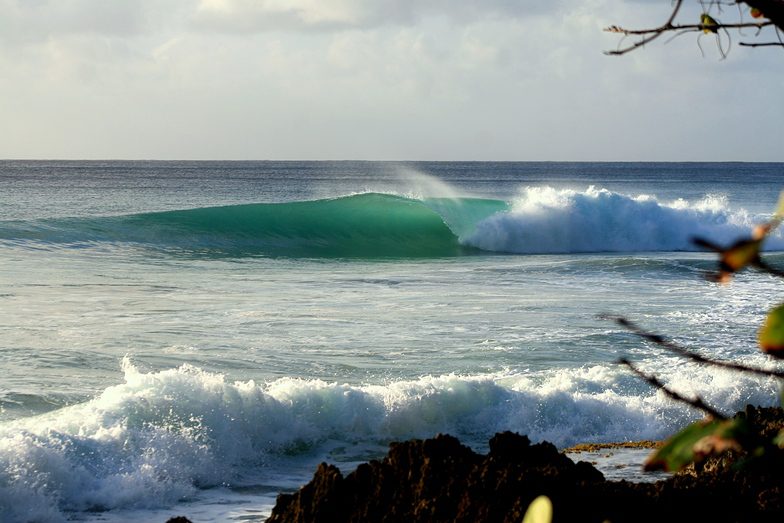
Located between Rocky Point and Pupukea along Oahu’s legendary Seven Mile Miracle, Gas Chambers (now often called simply “Chambers” by Surfline and some locals) is a fast, hollow reef break that separates those who talk from those who commit. This is not a wave where you ease into things. From waist-high to well overhead, this Ehukai area break demands immediate engagement—late drops, shallow takeoffs, and tube sections that snap shut with surgical precision.
The name itself has an ominous ring, originally referencing the claustrophobic, breathless feeling of getting slotted deep in a hollow tube over deadly shallow reef. In recent years, Surfline officially shortened the name to simply “Chambers” to avoid associations with World War II atrocities, though locals still use both names interchangeably.
What makes Gas Chambers unique among North Shore breaks is its dual personality. The wave serves up quality lefts on west-northwest to northwest swells—long, workable walls that can produce surprisingly square barrels even on small days. But when the swell angles more northerly, the rights come alive with fast, ledgy sections that require instant commitment and perfect positioning.
This is a high-performance wave built for intermediate to advanced surfers who want barrel time without the full Pipeline intensity. It’s become known as one of the best Pipeline alternative spots on the North Shore—offering legitimate tube riding experience with less crowd pressure and slightly more forgiving consequences. Groms pack surprisingly clean tubes here on small days. Experienced chargers find technical sections that reward precision. But everyone—regardless of skill level—learns the same lesson: Gas Chambers doesn’t forgive hesitation.
The Wave: What to Expect
Wave Characteristics
Gas Chambers breaks over a shallow slab of reef approximately 50-100 yards offshore. Unlike neighboring Pupukea’s relatively forgiving depth, Chambers’ reef sits dangerously close to the surface, creating the fast, hollow sections the spot is known for.
Primary Direction: Left-hander (with quality rights on northerly swells)
Peak Location: 50-100 yards offshore over shallow reef slab
Bottom: Shallow, exposed reef with extremely thin water coverage
Best Size: Chest-high to double overhead (3-10 feet Hawaiian scale)
Sections: Main peak → Fast barrel section → Quick exit or closeout
The wave’s character transforms based on swell direction. West-northwest to northwest swells produce the classic Chambers lefts—hollow, workable, barreling waves that can peel for 50-75 yards when conditions align. The lefts are what Gas Chambers is best known for, offering high-quality barrels that, while not Pipeline-famous, can rival any North Shore tube when firing.
Shift the swell more northerly, and the rights turn on. These are shorter, faster, ledgier waves—steep drops into quick barrel sections that close out rapidly. The rights require perfect positioning and instant commitment, making them ideal training grounds for surfers working toward heavier Pipeline or Backdoor sessions.
The Brutal Takeoff
Gas Chambers earns its reputation on the takeoff. This is not a wave where you ease down the face and set your line—this is a ledge that pitches, throws, and tests whether you’re actually committed or just hoping.
On overhead-plus days, the takeoff zone sits over reef so shallow you can see individual rocks and coral heads through the wave face. Late is the only option. Wait until the lip starts throwing, pivot hard, and commit to a drop that often feels like falling off a building into six inches of water.
Miss the takeoff—pull back at the last second, hesitate on your pop-up, angle wrong—and the wave will either leave you behind or throw you directly onto the reef. Make it, and you’re rewarded with one of the North Shore’s fastest, most technical barrel rides.
Local groms learn the Chambers takeoff young, using small 1-2 foot days to master the late drop, the instant bottom turn, and the commitment required. By the time they’re charging overhead Chambers, that muscle memory is hardwired.
The Shallow Reef Consequence
The reef at Gas Chambers is punishingly shallow across nearly the entire break. While Pipeline has deeper channels and Sunset offers some safe zones, Chambers maintains consistently thin water coverage from takeoff to exit.
Wipeouts here are not casual affairs. Fall wrong on an overhead day and you’re meeting the reef—sharp, uneven, and waiting just below the surface. Experienced Chambers surfers learn to bail away from the reef when possible, pushing the board out and diving deep to avoid the shallowest sections.
The shallow reef also means timing is everything for paddling out. Unlike spots with defined channels, Chambers requires you to watch the sets, find the lulls, and commit to a hard paddle through shallow water while waves break close enough to reach out and touch.
Booties are highly recommended, especially for those new to the break. While they won’t save you from a major wipeout, they provide crucial protection when scrambling over the reef to paddle out or dealing with smaller tumbles.
Barrel Sections: The Green Room
When Gas Chambers is on, it delivers some of the North Shore’s most accessible barrel-riding opportunities. The tube sections here are legitimate—not Pipeline massive, but clean, square, and surprisingly forgiving if you hold your line.
On small days (waist to chest-high), the wave produces playful, almost friendly tubes that make it one of the best intermediate barrel breaks on Oahu. Groms and intermediate surfers can pull into sections that would be suicidal at other North Shore breaks. The wave slows just enough to allow entries, yet still throws properly, creating perfect practice barrels for developing tube-riding skills before stepping up to heavier reef breaks.
As size increases, the barrels intensify. Overhead Chambers produces heavy, pitching sections that require proper positioning and commitment. Pull in too early, you’re getting axed. Too late, you’re racing a closeout. Dial it right, and you’re threading one of the North Shore’s underrated barrels.
Unlike Pipeline, where the barrel is the entire wave, Gas Chambers offers choices. You can hunt the tube, or use the open face sections for power surfing—hacks, carves, and high-performance maneuvers between barrel sections.
Optimal Surf Conditions
Best Swell Direction
Ideal: West-Northwest (WNW) to Northwest (NW) for lefts; North-Northwest to North (NNW-N) for rights
Range: 285-350 degrees
Gas Chambers is highly swell-direction sensitive. The classic Chambers setup comes from west-northwest to northwest swells, which hit the reef at the perfect angle to create long, hollow lefts. These swells refract around the outer reefs and line up clean, workable walls that peel with precision.
More northerly swells shift the energy to the rights, creating shorter, faster, ledgier waves. Pure north swells can make Chambers choppy and less organized, though the rights can still fire with the proper wind conditions.
Too much west in the swell gets blocked or refracted awkwardly by neighboring reefs, creating inconsistent shape. Too much east and the wave loses power and hollowness.
Best Wind Conditions
Ideal: Light Southeast to South (offshore)
Acceptable: East-Northeast to East (light trades)
Avoid: Strong Northeast trades or any westerly/onshore winds
Like most North Shore breaks facing northwest, Gas Chambers benefits from light offshore winds that groom the face and hold up the lip. The ideal setup is calm to light southeast winds, which create glassy conditions perfect for barrel riding.
Light to moderate east-northeast trades are workable—they add slight side-shore texture but don’t destroy the wave. However, strong trades can make the surface choppy and difficult to navigate, especially on the shallow takeoff.
Any westerly or onshore wind turns Chambers into a blown-out mess. The wave loses its hollow character, the sections become mushy, and the already-challenging takeoff becomes a guessing game.
Tide
Gas Chambers is extremely tide-dependent due to the shallow reef. Mid to mid-high tide offers the safest conditions with enough water coverage to cushion potential impacts while still maintaining the hollow character.
Low tide is for experts only—experienced locals who know every rock and can navigate the ultra-shallow sections. The barrels get more intense, the consequences multiply, and even small mistakes can result in reef contact.
High tide adds water depth but can make the wave softer and less hollow. Some surfers prefer slightly higher tides for safety, accepting the trade-off in wave quality.
Peak Season
November through March delivers the most consistent groundswell and the best conditions at Gas Chambers. December through February sees the highest frequency of quality northwest swells.
January typically offers the optimal balance of swell consistency, wave quality, and cleaner wind conditions.
Summer months (May-September) go mostly flat, with occasional small south swells that don’t work well for this north-facing reef break.
Skill Level & Crowd Factor
Who Should Surf Here?
Small Days (Waist to Chest High): Intermediate surfers with barrel experience
Even on small days, Gas Chambers requires competence. The shallow reef, fast hollow sections, and technical takeoff mean beginners should stay clear. However, confident intermediate surfers can use small Chambers sessions to develop barrel-riding skills in a relatively forgiving environment.
Medium Days (Head High to Overhead): Advanced surfers
This is Gas Chambers’ sweet spot. The wave fires with power and precision, barrels become serious business, and the shallow reef punishes mistakes. Only experienced surfers comfortable with hollow waves and reef breaks should paddle out.
Large Days (Double Overhead+): Expert only
When Chambers reaches 8-10+ feet, it becomes a legitimate heavy wave. The barrels intensify, the reef becomes even more dangerous, and positioning becomes critical. Only expert-level surfers should consider paddling out on big days.
Important Note: Gas Chambers becomes unrideable above 12 feet, as the wave closes out and the risk-to-reward ratio tips dangerously toward reef impact.
Crowds
Gas Chambers sees significantly lighter crowds than neighboring Pipeline, Backdoor, or Rocky Point. The wave’s technical nature, shallow reef, and lack of contest/media attention keep many surfers away.
Uncrowded Days: Early mornings, weekdays, and shoulder season (October, April) offer the lightest lineups. You might share the peak with 3-5 surfers or even score solo sessions.
Busier Days: When nearby spots are maxed out or blown out, experienced surfers migrate to Chambers, increasing the crowd to 10-15 people. Still manageable compared to Pipeline’s 30-50+ person scrums.
Peak Crowds: During optimal northwest swells on weekends, the lineup can reach 15-20 surfers, mostly locals and visiting pros looking for barrel time without the Pipeline circus.
The crowd at Chambers tends to be skilled and competent. You won’t find many beginners or weekend warriors here—the wave filters them out naturally. This means lineup etiquette is generally good, though respect and proper positioning remain essential.
Localism
Gas Chambers maintains moderate local presence without the heavy territorial vibe of some North Shore breaks. The wave attracts a core group of regulars who know the reef intimately and surf it year after year.
Respect the Basics: Don’t snake, don’t drop in, wait your turn, and show proper lineup etiquette. If you’re unsure about a wave, let it go—the locals will notice and appreciate the respect.
Earn Your Place: Gas Chambers rewards those who put in time learning the reef, understanding the wave, and proving competence. Show up regularly, surf well, and you’ll gradually be accepted into the rotation.
Visiting Surfers: Respectful visitors are generally welcomed, especially if they demonstrate proper skill level and barrel-riding ability. Talk story on the beach, be humble, and let your surfing speak for itself.
The vibe is less intense than Pipeline or Backdoor but more serious than beginner-friendly breaks like Chun’s Reef. Act accordingly.
Paddling Out & Navigation
The Entry
There is no defined channel at Gas Chambers—one of the break’s most challenging characteristics. Entry requires careful timing, wave reading, and commitment.
Standard Entry: Most surfers enter near the main peak area, timing their paddle to coincide with lulls between sets. Watch the sets for 5-10 minutes before paddling out to understand the rhythm and identify the safest windows.
Reef Scramble: At lower tides, some surfers walk out over the exposed reef to reach deeper water before paddling to the lineup. This requires booties and careful foot placement to avoid cuts and falls.
Set Wave Timing: Never paddle out during an active set. Wait for the lull, commit fully, and paddle hard. Hesitation means getting caught inside on shallow reef—a scenario to avoid at all costs.
Positioning in the Lineup
Without a clear channel, staying in position at Gas Chambers requires constant awareness and adjustment.
Sit Slightly Wide: Position yourself slightly wider than the main takeoff zone and let incoming swells draw you into position for waves. This reduces wasted energy fighting to stay put.
Watch the Reef: Learn to recognize reef markers—specific rocks, coral formations, or boils that indicate positioning. Locals use these visual references to stay in the optimal takeoff zone.
Respect Set Wave Rotation: On larger days, sets can swing wide and break on shallower reef sections. Stay aware of everyone’s position and give priority to surfers deeper or better positioned.
Exiting Waves
Finishing waves at Gas Chambers requires planning. Unlike spots with channels, there’s no easy exit route.
Kick Out Early: If you see a closeout section approaching or reach shallow inside reef, kick out immediately. Don’t try to milk every yard—it’s not worth the reef impact.
Paddle Wide: After completing a wave, paddle back to the outside at an angle, moving away from the impact zone before turning back toward the peak.
Watch for Sets: Getting caught inside at Chambers means taking waves on the head over shallow reef. Stay vigilant for incoming sets while paddling back out.
Safety Considerations
The Shallow Reef Reality
This cannot be overstated: Gas Chambers is dangerously shallow. The reef sits close to the surface across the entire break, with numerous rocks and coral heads creating an unforgiving bottom.
Wipeout Protocol: When you fall, try to land flat or push away from the reef. Never go hands or feet first toward the bottom. If possible, dive deep and swim horizontally away from the shallowest sections.
Reef Cuts: Sharp coral and rocks create lacerations. Bring a first aid kit, know basic wound care, and consider wearing a reef-safe rashguard for added protection.
Board Damage: The reef destroys boards. Dings, cracks, and broken fins are common. Bring backup equipment if possible, and never surf here with a brand-new, expensive board you can’t afford to damage.
Medical Preparedness
Lifeguard Services: There are no lifeguards directly at Gas Chambers. The nearest lifeguard tower is at Ehukai Beach Park (Pipeline), approximately 1/4 mile south.
Emergency Plan: Know the location of the nearest medical facility and have transportation ready. Serious reef injuries require professional treatment.
Reef Infection Risk: Hawaiian reef cuts can become infected quickly in warm water. Clean all wounds immediately with fresh water, apply antiseptic, and monitor for signs of infection.
Know Your Limits
Gas Chambers reveals your actual skill level within minutes. The wave doesn’t care about bravado or false confidence.
Be Honest: If you’re not comfortable with hollow, shallow reef breaks, sit this one out. Watch from the beach, learn from experienced surfers, and come back when your skills match the wave’s demands.
Start Small: Even experienced surfers new to Chambers should begin on smaller days to learn the reef, understand the wave’s rhythm, and dial in positioning before attempting overhead sessions.
Respect Evolution: North Shore legends didn’t start at Gas Chambers—they worked their way up from easier breaks. Follow that progression.
Best Nearby Breaks
Pupukea
Just east of Gas Chambers, Pupukea offers a friendlier, deeper reef break perfect for intermediate surfers. The wave is less hollow, more forgiving, and features better-defined channels. When Chambers is too intense or crowded, Pupukea provides a solid alternative with quality right-hand walls.
Rocky Point
A quarter-mile west, Rocky Point is one of the North Shore’s most consistent spots. Multiple peaks, both rights and lefts, and better crowd distribution make Rocky’s an excellent option when Chambers is maxed out or too shallow.
Ehukai Beach Park (Pipeline/Backdoor)
A quarter-mile south lies the most famous wave in the world. If you’re confident enough for Gas Chambers, Pipeline and Backdoor are the next step up—heavier, hollower, more crowded, and exponentially more dangerous.
Off the Wall
Between Gas Chambers and Pipeline, Off the Wall offers occasional wedging right-hand barrels. Fickle and inconsistent, but when it fires, OTW produces photogenic almond-shaped tubes worth the wait.
Sunset Beach
Two miles west, Sunset Beach represents a completely different challenge—massive, shifty, powerful waves that demand world-class paddling and wave selection. When Chambers is small or flat, Sunset might be firing.
Local Knowledge & Tips
Reading the Reef
Spend time watching from the beach before paddling out. Learn to read the boils, recognize where the shallowest sections are, and identify the best takeoff zones based on that day’s swell direction.
Local surfers can identify specific rocks and reef formations underwater, using them as positioning markers. Develop this skill over multiple sessions.
Equipment Recommendations
Board: Shortboard with moderate rocker and rail engagement for barrel riding. A step-up board (6’4″-6’8″) works well on overhead days. Avoid expensive, custom boards until you’ve proven you can handle the reef.
Fins: Medium to stiff fins for hold in hollow sections. Bring backup fins—reef contact breaks them regularly.
Leash: Quality leash rated for the wave size. Consider a comp leash for smaller days, or a thick leash for overhead sessions.
Protection: Reef booties for foot protection, especially at lower tides or when scrambling over exposed reef. Some surfers wear helmets on bigger days—no shame in protecting your head.
Best Times to Score
Dawn Patrol: Light winds, glassy conditions, and smaller crowds make early morning sessions ideal. Arrive at first light and you might score solo barrels.
Weekday Mornings: Monday through Friday before 10 AM sees the lightest crowds. Working locals are at jobs, traveling pros sleep in, and you get quality waves with minimal competition.
Post-Storm Cleanup: The day after a big storm passes, northwest swells clean up with light winds. These sessions often produce the best barrels of the season.
The Training Ground Philosophy
Gas Chambers serves a crucial role in the North Shore surf break hierarchy. It’s not the most famous wave (Pipeline), the biggest (Waimea), or the most consistent (Rocky Point). Instead, it’s the precision testing ground—the spot where surfers prove they can handle hollow, shallow, technical barrel riding before stepping up to the heaviest waves.
This is why experienced surfers often recommend Gas Chambers as the ideal intermediate-to-advanced progression spot on the North Shore. It bridges the gap between beginner-friendly breaks like Chun’s Reef and the world-class intensity of Pipeline and Backdoor.
Local groms graduate from the inside reform at Pupukea to small Gas Chambers, learning barrel-riding fundamentals on 1-3 foot hollow waves. As they improve, they progress to overhead Chambers before attempting Pipeline—a natural North Shore surfing progression that’s been followed for generations.
Visiting surfers use Chambers to assess their actual skill level. Talk is cheap in the North Shore lineup—Gas Chambers shows who can back it up.
The wave rewards commitment, punishes hesitation, and teaches humility. Every session is a reminder that the ocean doesn’t care about your ego, your Instagram following, or your home-break reputation. All that matters is whether you can make the drop, hold the line, and thread the barrel.
Practical Information
Location & Access
Nearest Landmark: Between Rocky Point and Pupukea, approximately 1/4 mile north of Ehukai Beach Park
Getting There:
- From Waikiki/Honolulu: 50-minute drive via H-1 West to H-2 North to Kamehameha Highway
- From Haleiwa: 15 minutes east on Kamehameha Highway
- No direct beach park—access via public right-of-way paths
Public Access: From Ehukai Beach Park, walk north along the beach and take the second public right-of-way path toward the break. Limited beach signage, so ask locals if unsure.
Parking
No dedicated parking lot at Gas Chambers. Most surfers park at:
- Ehukai Beach Park (1/4 mile south) – main parking area, restrooms, showers
- Roadside parking along Ke Nui Road between Rocky Point and Pupukea – limited spaces, arrive early
Important: Do not block driveways or park in private property. Towing is common, and you don’t want that headache.
Amenities
At Gas Chambers:
- No facilities, no lifeguards, no amenities
- Bring everything you need
At Ehukai Beach Park (1/4 mile south):
- Restrooms and outdoor showers
- Lifeguards on duty 9:00 AM – 5:30 PM
- Limited grass area
- Food trucks occasionally present
Nearby (within 2-3 miles):
- Sunset Beach Elementary School parking (public access when school not in session)
- Food trucks along Kamehameha Highway
- Foodland Pupukea (grocery store, prepared foods, supplies)
- Ted’s Bakery (famous for chocolate haupia cream pie)
Surf Shops & Services
Pupukea/Pipeline Area:
- Pipeline Posse (rentals, repairs, local knowledge)
- Various informal board rental operations
Haleiwa (15 minutes west):
- Surf N Sea (legendary shop since 1965, full service)
- T&C Surf
- Multiple surf shops with rentals and repairs
When to Visit
For the Best Waves
December through February offers peak swell consistency and the highest frequency of quality northwest swells. January typically provides the best balance of swell, wind, and crowd conditions.
November and March are shoulder months with good swell potential and lighter crowds. Excellent for avoiding the peak-season circus.
For Learning the Break
October and April provide smaller, more manageable swells perfect for learning the reef and understanding the wave’s characteristics without the intensity of peak winter months.
Avoid: May through September—the North Shore goes mostly flat, and Gas Chambers rarely breaks during summer months.
For Avoiding Crowds
Weekday mornings year-round offer the lightest crowds. Monday through Thursday, arriving at dawn, you’ll often share the lineup with just a handful of locals.
After big storms pass through: Most surfers wait for perfect conditions. Paddle out on the cleanup day when winds are still settling, and you might score quality waves with minimal crowd pressure.
Final Thoughts: Commitment Over Hesitation
Gas Chambers teaches a simple lesson: commit or get hurt. The wave doesn’t allow half-measures, tentative drops, or second-guessing. You either paddle hard, pop up cleanly, and hold your line through the barrel—or you meet the reef.
This is not a wave for building confidence. This is a wave for testing confidence already built at safer breaks. It’s where intermediate surfers prove they’re ready for advanced North Shore challenges. Where advanced surfers refine barrel-riding technique. Where experts hunt technical tubes without Pipeline’s overwhelming crowd pressure.
The name might have changed on some maps and forecasting sites, but the wave remains the same: fast, hollow, shallow, unforgiving, and absolutely worth every calculated risk.
Paddle out with humility. Respect the reef. Time your sets. Commit to the drop. And maybe—just maybe—you’ll thread one of the North Shore’s most underrated barrels while learning what real commitment means.
This is Gas Chambers. This is where hesitation gets punished and commitment gets rewarded.
Looking for more North Shore surf guides?
- Pipeline Surf Break Guide – The World’s Most Famous Wave
- Rocky Point Surf Break Guide – Consistent North Shore Performance
- Haleiwa Surf Break Guide – Triple Crown Opening Event
- Sunset Beach Surf Break Guide – Big Wave Challenge
- Waimea Bay Surf Break Guide – Eddie Would Go
Frequently Asked Questions
Q: Is Gas Chambers suitable for beginners? A: No. Gas Chambers is strictly for intermediate to advanced surfers. The shallow reef, technical takeoff, and fast hollow sections make this break dangerous for beginners. Start at beginner-friendly spots like Chun’s Reef or the inside at Pua’ena Point.
Q: What’s the difference between Gas Chambers and Pipeline? A: While both are hollow, shallow reef breaks, Pipeline is heavier, more powerful, and significantly more crowded. Gas Chambers offers quality barrels with less intensity and fewer surfers, making it an excellent Pipeline alternative and training ground before attempting Pipeline.
Q: Is Gas Chambers a good intermediate barrel break? A: Yes, on smaller days (waist to chest-high), Gas Chambers is one of the best intermediate barrel breaks on Oahu. The wave produces clean, accessible tubes that allow developing surfers to practice tube-riding skills in a relatively forgiving environment compared to heavier North Shore breaks.
Q: Why is it called Gas Chambers? A: The name references the claustrophobic, breathless feeling of getting deep inside a hollow tube over shallow reef—like being in a chamber with limited air. In recent years, Surfline renamed it simply “Chambers” to avoid associations with World War II atrocities.
Q: Do I need booties at Gas Chambers? A: Highly recommended, especially at lower tides. The reef is sharp and shallow, and booties provide crucial protection when entering/exiting over the reef or dealing with wipeouts.
Q: What tide is best for Gas Chambers? A: Mid to mid-high tide offers the best balance of safety and wave quality. Low tide makes the wave more dangerous with ultra-shallow sections, while high tide can reduce hollowness.
Q: How crowded does Gas Chambers get? A: Significantly less crowded than Pipeline, Backdoor, or Rocky Point. On average days, expect 5-15 surfers. The wave’s technical nature and lack of media attention keep crowds manageable.
Q: Can I paddle out through a channel? A: No. Gas Chambers lacks a well-defined channel, making paddle-outs challenging. Time your entry during lulls between sets and be prepared for a hard paddle through shallow water.
Q: What size does Gas Chambers max out? A: The wave becomes unrideable and closes out above 12 feet Hawaiian scale (roughly 20-24 feet face height). It works best from chest-high to double overhead.
Q: Are there lifeguards at Gas Chambers? A: No direct lifeguard service. The nearest lifeguard tower is at Ehukai Beach Park (Pipeline), approximately 1/4 mile south. Know your limits and have an emergency plan.
Q: What’s the best swell direction for Gas Chambers? A: West-northwest to northwest (WNW-NW) for quality lefts; north-northwest to north (NNW-N) for rights. The wave is highly swell-direction sensitive.
Sources & References
This comprehensive guide to Gas Chambers surf break was researched using the following authoritative sources:
- Surfline – Gas Chambers/Chambers Surf Guide and Forecast Information
- Surfline – Chambers Surf Report, Surf Forecast and Surf Cam
- Wikipedia – Gas Chambers Surf Break Overview
- Surf-Forecast.com – Rocky Rights/Lefts and Gas Chambers Detailed Conditions
- Hawaiian South Shore – Waves of the North Shore Series: Pupukea & Gas Chambers
- Best of Oahu – 14 Ultimate North Shore Surf Spots
- Surfer Today – The Best Surf Spots on the North Shore of Oahu
- North Shore Ohana School of Surfing – North Shore Oahu Surf Guide
- Haleiwa Town – North Shore Surf Spots Overview (From Beginner to Pro)
- Kala Grace – North Shore Oahu Surf Guide
- Lush Palm – Oahu Surf Spots Guide
- Surfline – North Shore Surf Guide Download
Last Updated: February 2026
Written by the Hawaii.Surf team with contributions from local watermen
Not sure this is the right wave for you? Compare every Oahu break by skill level and season in our guide to the best surf spots in Hawaii.
