

Jan
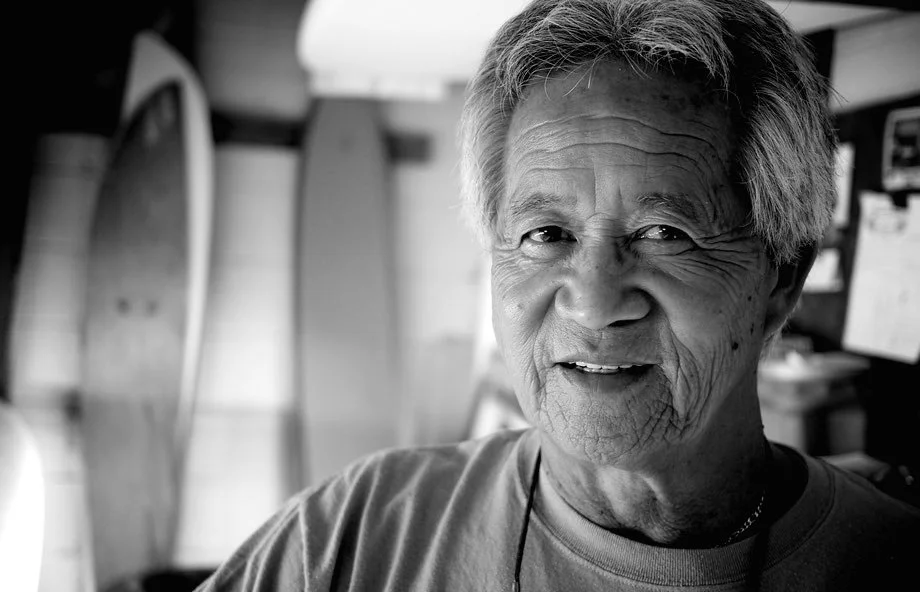
Image courtesy of hawaiitribune-herald.com
Donald Takayama: The Shaper Who Perfected the Art of Riding in Style
How a humble Hawaiian craftsman became surfing’s most influential longboard shaper and kept the soul of traditional surfing alive through the shortboard revolution
The Man Who Shaped Dreams
While some people search their entire lives for their calling, Donald Takayama found his at age 12 when he shaped his first surfboard from balsa wood in his parents’ Honolulu garage. From that moment until his passing in 2012, Takayama devoted nearly six decades to the art and craft of surfboard shaping, creating an estimated 50,000 boards that carried surfers across waves from Hawaii to California to Australia and beyond.
He didn’t just make surfboards-he crafted instruments of grace. His hands transformed foam and fiberglass into elegant machines that allowed surfers to dance on waves rather than merely ride them. His designs emphasized flow, style, and the pure joy of surfing over aggressive performance or competitive domination.
As the longboard master who bridged traditional Hawaiian surfing and modern surf culture, Donald Takayama preserved the soul of surfing during an era when many believed longboards were obsolete. His legacy reminds us that surfboard shaping is both craft and art, that innovation serves tradition rather than replaces it, and that true style never goes out of fashion. Takayama’s craft is one thread in the longer history of Hawaiian surfboard shaping.
From Honolulu Roots to Shaping Destiny
Born in Honolulu in 1943, Donald Takayama grew up during surfing’s mid-century renaissance. His Japanese-American heritage connected him to Hawaii’s multicultural community, while his Waikiki upbringing immersed him in the island’s vibrant surf culture.
A Natural Path to the Ocean
Young Donald gravitated to Waikiki Beach like so many Hawaiian keiki, learning to surf in the gentle rollers that had taught generations before him. The beach boys and local surfers became his teachers, introducing him to both wave riding technique and the deeper values of Hawaiian surf culture-respect for the ocean, generosity with knowledge, and the pursuit of style above all else.
But while most young surfers focused solely on riding waves, Donald became fascinated by the boards themselves. How did different shapes perform differently? Why did some boards glide effortlessly while others fought the wave? What made the difference between a good surfboard and a great one?
These questions led him to his first shaping attempt at age 12.
The First Board
Using scavenged balsa wood and limited tools, young Takayama shaped a crude surfboard in his family’s garage. The board wasn’t particularly good by any technical standard, but the process captivated him. The smell of wood and resin, the transformation of raw materials into a functional object, the satisfaction of riding something he’d created with his own hands-these experiences ignited a passion that would define his entire life.
He was hooked. Not just on surfing, but on shaping.
Learning the Craft
Throughout his teenage years, Takayama apprenticed himself to Hawaii’s pioneering surfboard builders. In the late 1950s and early 1960s, surfboard construction was transitioning from traditional materials like balsa wood to modern foam and fiberglass. This revolution in materials and techniques created opportunities for young shapers willing to learn.
Takayama absorbed everything he could. He learned traditional Hawaiian board building principles and aesthetics from the old-timers who still remembered the ancient ways. He picked up modern foam blank shaping techniques from the new wave of commercial builders. He studied fiberglass lamination methods and the chemistry behind resin work. He dove into hydrodynamic theory and tried to understand how water flow affected board performance. He even learned the business side of surfboard manufacturing and how to build relationships with customers.
More importantly, he developed the shaper’s eye-the ability to see the perfect board hidden within the raw blank and the skill to reveal it through careful shaping.
The California Chapter
In 1960, at age 17, Takayama made a decision that would prove pivotal to his career: he moved to Southern California. This wasn’t abandoning Hawaii-it was expanding his horizons to where surfboard manufacturing was exploding into a major industry.
The Velzy-Jacobs Years
Takayama’s big break came when he joined Velzy-Jacobs Surfboards in Venice, California. Dale Velzy and Hap Jacobs were among California’s most respected surfboard builders, and their shop served as a training ground for many shapers who would later become legends themselves.
Working at Velzy-Jacobs transformed Takayama from a talented Hawaiian kid into a serious craftsman. He refined his shaping technique under the guidance of masters who had been building boards for years. He learned production shaping methods that allowed commercial operations to serve hundreds of customers while maintaining quality. He developed relationships with top California surfers who were pushing the limits of what boards could do. He studied the regional preferences in board design, understanding that California waves and surfing styles demanded different approaches than Hawaiian conditions. Most importantly, he built his reputation among the California surf community as someone who combined authentic Hawaiian knowledge with serious technical skill.
The California surf scene of the early 1960s was electric with possibility. Beach culture was booming, surf music dominated the airwaves, and surfers enjoyed celebrity status. Takayama found himself at the creative center of this cultural phenomenon.
The Harbour Surfboards Era
In 1961, Takayama moved to Harbour Surfboards in Seal Beach, where he would work for the next three decades. This relationship with Rich Harbour became one of the most important partnerships in surfing history.
At Harbour, Takayama enjoyed the creative freedom to develop his design ideas without interference. He had access to top riders who provided honest feedback about what worked and what didn’t. He had resources for experimentation and refinement that small operations couldn’t afford. The stability of the partnership allowed him to focus on craft rather than constantly worrying about business survival. And he gained recognition as one of surfing’s premier shapers whose boards were sought by discerning surfers who valued quality, performance, and timeless style.
The Harbour years established Takayama as a master craftsman. This wasn’t just another job-it was the foundation of everything that came after.
The Art of the Shape
What made a Takayama board special? Those who rode them describe qualities that transcended mere performance metrics.
The Takayama Aesthetic
Takayama’s boards reflected a distinctive design philosophy that you could recognize immediately. They had clean lines that pleased the eye as much as they served function. The proportions created visual and physical harmony that just felt right. The rails were refined in a way that allowed smooth transitions and control without any harsh edges or awkward sections. The templates drew from both traditional and modern influences, combining the best of both eras. And every board received a meticulous finish that treated each one as a work of art, not just another product rolling off the line.
He understood that a surfboard should be beautiful to look at, not just effective to ride. When you picked up a Takayama board, you knew immediately that someone who cared had made it.
The Feel
Surfers who rode Takayama boards often struggled to articulate what made them different. The boards didn’t necessarily go faster or turn harder than others. Instead, they felt “right”-responsive without being twitchy, stable without being dead, forgiving without being sloppy.
This feel came from subtle refinements invisible to the untrained eye. The rail contours were shaped to exact specifications that Takayama had refined over thousands of boards. The rocker curves represented decades of experimentation to find the perfect balance. Weight distribution was optimized for the rider’s size and style, not based on some generic formula. The foil profiles balanced flotation and responsiveness in ways that other shapers struggled to replicate. And the bottom contours created smooth water flow that made the board feel alive under your feet.
These details, perfected through decades of experience and thousands of boards, separated good boards from great ones. You couldn’t see them, but you could definitely feel them.
The Process
Takayama approached each board as an individual creation, even when shaping production models. He insisted on personally selecting blanks to ensure quality foam. Every board was hand-shaped rather than using machines, because his hands could feel subtleties that no computer could detect. He maintained meticulous attention to symmetry and finish, spending extra time to get everything perfect. He constantly tested and refined new design ideas, never satisfied with “good enough.” And he took pride in his workmanship regardless of the board’s price point-whether someone paid top dollar for a custom or bought an entry-level model, it received the same care and attention.
This dedication to craft over mere production distinguished Takayama from shapers who prioritized quantity and profit over quality.
The Longboard Revolution
While Takayama’s career coincided with the shortboard revolution of the late 1960s, he never abandoned longboards. This decision to remain true to his vision rather than chase trends would prove both challenging and ultimately redemptive.
The Dark Ages
From roughly 1968 to 1985, longboards fell dramatically out of fashion. The shortboard revolution promised radical new possibilities in performance surfing, and suddenly the classic longboards that had dominated surfing for decades seemed obsolete and uncool.
Many longboard shapers either quit the industry or reluctantly switched to making shortboards. The market for traditional longboards essentially disappeared. Surfers who still rode longboards were dismissed as old-fashioned or out of touch. The cutting edge of surfing had moved on, or so everyone believed.
Keeping the Faith
Despite market pressure, Takayama continued making longboards throughout this period. He adapted to economic reality by shaping shortboards to pay the bills, but he never stopped making longboards entirely. He maintained his longboard skills through personal boards and the occasional custom order. He preserved classic designs for the few who still wanted them. He kept refining longboard concepts in preparation for their eventual return, believing that quality and style would eventually matter again.
This persistence through the longboard “dark ages” positioned Takayama perfectly for what came next. While other shapers had lost touch with longboard design during the 20-year hiatus, Takayama had quietly continued perfecting the form.
The Longboard Renaissance
In the mid-1980s, longboard surfing began returning to popularity. A new generation discovered that longboards offered something shortboards couldn’t-grace, style, and the ability to ride smaller waves with elegance. The aggressive performance focus of shortboarding was thrilling, but it left little room for the kind of flowing, stylish surfing that had defined the sport’s golden era.
As the longboard renaissance gained momentum, surfers seeking authentic traditional boards discovered that Donald Takayama had never stopped making them. Moreover, his decades of continuous refinement meant his longboards represented the absolute pinnacle of the form. He hadn’t just preserved old designs-he’d spent 20 years perfecting them while everyone else ignored longboards entirely.
Takayama became the most sought-after longboard shaper in the world, not because of marketing or hype, but because his boards were simply the best available.
The Hawaiian Pro Designs Era
In 1990, Takayama launched his own brand: Hawaiian Pro Designs (HPD). This move represented the culmination of three decades of shaping experience and provided complete creative control over his designs and business.
Building a Brand
HPD wasn’t just another surfboard company-it was the embodiment of Takayama’s shaping philosophy. Every decision reflected his commitment to quality over quantity. Every board upheld the standards he’d maintained throughout his career. The brand represented classic designs refined to modern standards, respecting tradition while embracing relevant innovation. Takayama remained personally involved in all aspects of production, ensuring that HPD boards met his exacting standards. And he built a team of riders who embodied style and aloha, not just competitive success.
The HPD brand became synonymous with longboarding excellence, setting the standard that other companies tried to match.
Signature Models
Takayama created several iconic models that defined modern longboarding, each representing years of refinement and accumulated knowledge.
The Model T became his most famous design. It combined classic styling with modern performance in a way that hadn’t been achieved before. With its refined rails, subtle nose concave, and balanced template, it became the standard against which other performance longboards were measured. Surfers who wanted a board that could noseriding, trim through sections, and handle critical maneuvers all chose the Model T.
The Scorpion offered a slightly narrower, more progressive approach to longboarding. It proved that traditional shapes could handle modern performance surfing, bridging the gap between pure noseriding boards and high-performance designs. Aggressive surfers who wanted the glide and style of a longboard with the responsiveness of something shorter found their answer in the Scorpion.
The In the Pink was a women’s-specific longboard ahead of its time. Takayama recognized that female surfers deserved designs optimized for their style and physiology rather than scaled-down men’s boards. The In the Pink addressed the unique needs of women longboarders, earning devoted following among female surfers who finally had a board designed specifically for them.
The DT2 was a transition board that bridged longboards and mid-lengths, pioneering what would later become the “funboard” category. It offered versatility that pure longboards couldn’t match, appealing to surfers who wanted something between traditional longboards and performance shortboards.
These designs, and many others, reflected Takayama’s ability to innovate within traditional frameworks rather than abandoning them. He never created something radical just to be different-every innovation served a purpose and improved the surfing experience.
The Team
Takayama surrounded himself with team riders who embodied his vision of stylish, progressive longboarding. Joel Tudor, the prodigy who became modern longboarding’s poster boy, demonstrated that traditional surfing could be both progressive and profitable. Jimmy Gamboa honored classic technique with smooth, flowing style that looked like it came from another era. Colin McPhillips proved longboards could perform at the highest levels with aggressive, progressive surfing. Kassia Meador pioneered women’s longboarding with grace and power. Dino Miranda represented longboarding’s soul with beautiful, effortless style.
These riders didn’t just promote Takayama boards-they demonstrated his design philosophy in action, proving that style and performance weren’t mutually exclusive.
The Competitor and Stylist
While primarily known as a shaper, Takayama was also an accomplished surfer who competed at the highest levels and helped define modern longboard style.
Competition Success
Takayama competed during longboarding’s golden era of the 1960s and its renaissance in the 1980s and 1990s. He faced the era’s best longboarders in contests at Makaha International and other prestigious Hawaiian events. He appeared at United States Surfing Championships and numerous regional competitions. He dominated masters divisions as he aged, proving that skill and style endure. And he participated in industry contests that showcased shaper skills alongside riding ability.
While he never became world champion, his competitive success proved he understood performance from a rider’s perspective, not just a shaper’s theory. You couldn’t fake these results, and Takayama never tried to.
The Style Master
More than competition results, Takayama’s surfing influenced an entire generation’s approach to riding longboards. His style emphasized smooth, flowing movements rather than jerky maneuvers. He positioned himself perfectly on waves to maximize ride length and variety of sections. He performed traditional techniques like noserides and drop-knee turns with precision and grace. His board control came from subtle weight shifts that made everything look effortless. And he surfed with grace under pressure, maintaining his style even in challenging conditions.
Watching Takayama surf was like watching a master calligrapher-every movement purposeful, economical, and beautiful. His surfing validated his shaping philosophy: that boards should allow surfers to express themselves with style, not just complete maneuvers.
The Teacher and Mentor
Beyond his shaping and surfing, Takayama profoundly influenced surf culture through teaching and mentorship.
Shaping Apprenticeships
Takayama trained dozens of shapers who went on to their own successful careers. His teaching emphasized respect for the craft and its traditions. He insisted on attention to detail in every aspect of shaping. He taught students to understand function before attempting innovation. He counseled patience with the learning process, knowing that mastery required years. And he encouraged pride in workmanship regardless of recognition or reward.
Many of surfing’s current master shapers credit Takayama with teaching them not just technique but the proper attitude toward their craft. They learned that being a shaper meant more than making boards-it meant carrying forward a tradition with integrity.
Joel Tudor Connection
Takayama’s most famous protégé was Joel Tudor, whom he began mentoring when Tudor was a teenager. Their relationship extended beyond shaper-rider to surrogate father-son, with Takayama guiding Tudor’s development as both surfer and person.
Tudor’s dominance in competitive longboarding and his role in the longboard renaissance owed much to Takayama’s mentorship, boards, and example. When Tudor won contests riding Takayama boards, it validated everything the master shaper had been saying for decades: that traditional design principles could compete at the highest levels when properly executed.
The Takayama-Tudor partnership became one of surfing’s most successful collaborations, benefiting both men while advancing longboard culture as a whole.
The Open Door
Takayama maintained an open-door policy at his shaping bay, welcoming visitors, answering questions, and sharing knowledge freely. He understood that craft traditions survive through generous transmission from master to student, not through hoarding expertise.
Young shapers could watch him work, ask questions, and learn techniques that took him decades to develop. He never worried about creating future competitors-he believed the craft benefited when more people understood proper technique and values.
This generosity created a community of shapers who honored traditional values while pushing design forward. The shapers Takayama influenced carried his legacy into the next generation, extending his impact far beyond his personal output.
The Innovation Within Tradition
Takayama’s genius lay not in revolutionary innovation but in perfecting existing forms. He innovated within tradition rather than abandoning it.
Subtle Refinements
Takayama’s design evolution occurred through incremental refinement rather than dramatic changes. He made slight template adjustments that improved turning or trim without compromising stability. He modified rail contours to enhance control or release depending on conditions. He refined rocker curves to balance speed and maneuverability more effectively. He incorporated updated materials and construction techniques while maintaining classic aesthetics. And he integrated progressive features into traditional frameworks rather than starting from scratch.
These subtle changes, accumulated over decades, resulted in longboards that honored tradition while performing better than their predecessors. A Takayama board from 1995 looked similar to one from 1965, but the refinements made all the difference in how it surfed.
The Modern Classic
Takayama proved that traditional surfboard designs weren’t obsolete-they simply needed refinement for modern surfing standards and construction methods. His boards looked classic but incorporated contemporary knowledge about hydrodynamics, materials, and construction that improved performance without sacrificing soul.
This approach-honoring tradition while embracing relevant improvements-provided a model for preserving surf culture while allowing it to evolve. You didn’t have to choose between old and new; you could take the best of both.
The Business Philosophy
Takayama ran Hawaiian Pro Designs with values increasingly rare in modern surfboard manufacturing.
Quality Standards
HPD maintained exacting quality standards that other companies found impractical. Takayama remained personally involved in shaping key models, ensuring they met his standards. He carefully selected glassers and finishers whose work reflected his commitment to excellence. Quality control happened before boards left the factory, not after customer complaints. Limited production allowed maintaining standards that mass production couldn’t support. And warranty support meant standing behind their work when issues arose.
This commitment to quality meant HPD boards cost more, but buyers knew they were getting boards built to last. The investment paid off in performance and durability that cheaper alternatives couldn’t match.
Fair Dealing
Takayama treated everyone-from team riders to first-time buyers-with respect and fairness. He offered honest advice about what board suited each surfer, even if it meant recommending a cheaper model. His pricing reflected actual value, not marketing hype or artificial scarcity. Warranty support honored commitments rather than finding excuses to deny claims. He supported team riders beyond contractual minimums, valuing relationships over contracts. And dealer relationships were built on mutual respect rather than power dynamics.
This approach built fierce loyalty among HPD customers and dealers. People knew they could trust Donald Takayama to do the right thing, even when it cost him money.
The Aloha Way
Takayama brought Hawaiian values to business, prioritizing relationships over transactions in all dealings. He thought long-term rather than maximizing short-term profit. He supported the surf community through sponsorships and donations even when business was slow. His branding and marketing showed respect for Hawaiian culture rather than exploiting it. And he demonstrated generosity when circumstances allowed, helping people because it was right, not because it benefited the bottom line.
These values reflected Takayama’s character and Hawaiian upbringing, proving that successful businesses don’t require abandoning principles. You could make a living while maintaining integrity.
The Cancer Battle
In 2008, Takayama was diagnosed with cancer. The disease would ultimately claim his life, but not before he demonstrated the same grace, courage, and determination that characterized his entire life.
Fighting with Style
Takayama approached his illness the same way he approached everything-with dignity, positivity, and concern for others. While undergoing treatment, he continued shaping when physically able, unwilling to abandon the craft that defined him. He mentored younger shapers, knowing his time for passing on knowledge was limited. He maintained relationships with team and friends, valuing connection over privacy. He stayed positive despite a difficult prognosis, refusing to burden others with complaints. And he inspired others with his courage, showing that style and grace apply to all aspects of life, not just surfing.
His battle with cancer revealed character that everyone who knew him already recognized. Donald Takayama faced death the same way he lived-with quiet strength and concern for others.
The Final Boards
Even as his health declined, Takayama continued shaping when possible. These final boards represented a lifetime of accumulated knowledge and carried special meaning for their owners. Knowing time was limited gave each board added significance.
Takayama focused his remaining energy on passing on knowledge to ensure his designs survived him. He worked to strengthen HPD so it could continue after his passing. He completed important projects while physically able. He spent quality time with family and closest friends. And he made peace with his mortality, accepting what he couldn’t change.
The Legacy Secured
Before his death in 2012, Takayama ensured Hawaiian Pro Designs would continue. He worked with trusted associates to document his designs for future production. He trained shapers in HPD techniques and standards so the quality wouldn’t decline. He established succession plans for business continuity. He protected brand integrity through proper legal structure. And he communicated his wishes for the company’s future, ensuring his vision would guide HPD even without his presence.
This foresight allowed his designs and values to outlive him, ensuring that new generations could experience authentic Takayama boards.
The Passing of a Legend
Donald Takayama died on August 20, 2012, at age 68. His passing marked the end of an era-the loss of a direct link to surfing’s golden age and one of the last master craftsmen from shaping’s pre-industrial era.
Global Mourning
The surfing world responded with an outpouring of grief and appreciation. Paddle-outs were held at surf breaks from Hawaii to California as surfers honored his memory. Memorial services celebrated his life and legacy, sharing stories that captured his character. Surf magazines published extensive tributes documenting his contributions to the sport. Social media filled with memories from thousands he touched over six decades. And the industry recognized his irreplaceable role in surfboard history.
The depth of mourning reflected not just respect for his shaping skills but genuine love for him as a person. Donald Takayama had touched lives far beyond the 50,000 boards he shaped.
The Tributes
Those closest to Takayama shared memories that revealed his character beyond the public persona.
Joel Tudor said, “Donald was more than a mentor-he was like a father to me. He taught me how to be a man, not just how to surf or shape boards.”
Rich Harbour remembered, “In all our years together, Donald never cut corners, never compromised quality, never forgot where he came from. He was a craftsman in the truest sense.”
A fellow shaper noted, “Donald could have made a lot more money if he’d been willing to mass-produce or license his name to inferior products. But that wasn’t him. Quality mattered more than profit.”
One customer shared, “I ordered my first Takayama board in 1975 and rode his boards for 35 years. Every single one was perfect. That kind of consistency over decades is almost impossible.”
What Was Lost
Takayama’s death represented the loss of accumulated knowledge from shaping 50,000+ boards over six decades. It severed a living connection to surfing’s golden era and the pioneers who defined it. His master craftsman skills, developed over a lifetime, couldn’t be downloaded or transferred-they died with him. The personal relationships he built with thousands of surfers ended. And the moral authority that came from a life lived with integrity disappeared.
While his designs survive, the man who created them cannot be replaced. Future shapers can copy his templates but not the experience and judgment that created them.
The Continuing Legacy
Hawaiian Pro Designs continues operation today, committed to maintaining Takayama’s standards and vision.
The HPD Promise
Current HPD operations honor Takayama’s legacy by maintaining the quality standards he established. They preserve his classic designs while allowing careful evolution that he would have approved. They use his original templates for signature models, ensuring authenticity. They train new shapers in proper techniques, passing forward what Takayama taught them. And they support longboard culture through team riders and events, continuing his commitment to the community.
This continuity ensures Takayama’s influence extends beyond his lifetime. New surfers can experience authentic Takayama boards, not imitations or cheap knockoffs trading on his name.
The Takayama Influence
Takayama’s impact on surfboard design remains visible throughout the industry. Classic longboard templates still reference his proportions and design elements. Performance longboards build on innovations he pioneered. Shaping techniques he developed remain standard practice. Quality standards he modeled inspire other builders. And the style surfing he embodied continues influencing new generations.
Even shapers who never met him work in his shadow, whether they realize it or not. Modern longboard design exists in the form it does largely because of Donald Takayama’s six decades of refinement and innovation.
The Riders Who Remember
Surfers who rode Takayama boards during his lifetime treasure them with an attachment that goes beyond normal equipment preferences. Vintage models command premium prices from collectors. Personal boards shaped specifically for individuals become cherished possessions passed down in families. Custom orders from the master himself are irreplaceable-you can’t get another one now that he’s gone. The distinctive feel of a Takayama remains recognizable to those who’ve experienced it. And the connection to surfing history these boards represent adds meaning beyond their functional value.
For many surfers, their Takayama board represents more than equipment-it’s a piece of surfing heritage, a tangible connection to a master craftsman who cared about their experience in the water.
Why Donald Takayama Matters Today
In an era of computer-shaped boards, CNC machines, and mass production, why does Donald Takayama’s story matter?
The Craftsman’s Path
Takayama demonstrated that mastery comes from dedication to craft over decades, not shortcuts or technology. His 50,000+ boards represented 50,000+ opportunities to learn and refine his skills. Each board taught him something, even if just confirming what he already knew.
This path-patient accumulation of knowledge through deliberate practice-offers an alternative to modern culture’s demand for instant expertise and rapid success. Some things simply cannot be rushed, and true mastery is one of them.
The Value of Quality
Takayama proved that quality finds its market, even if that market is smaller than mass production could serve. Surfers willing to pay for excellence ensured his business succeeded without compromising standards. He never had to choose between quality and profit-quality created sustainable profit.
This lesson applies beyond surfboards. There’s always demand for products made with genuine care by skilled craftspeople who take pride in their work. The market for quality may be smaller than the market for cheap goods, but it’s more loyal and sustainable.
The Power of Style
Throughout the performance-obsessed shortboard era, Takayama maintained that style mattered as much as maneuvers. He was proven right when longboarding’s renaissance occurred partly because surfers rediscovered the pleasure of riding with grace.
His vindication reminds us that what’s fashionable isn’t always what’s valuable, and that timeless qualities eventually triumph over trends. Style endures when performance metrics change with each season.
The Importance of Mentorship
Takayama’s generous mentorship multiplied his influence far beyond his personal output. The shapers he trained, riders he sponsored, and newcomers he encouraged extend his legacy through their own work. His knowledge didn’t die with him because he shared it freely during his lifetime.
This generosity with knowledge created a community rather than merely a business, ensuring his values survive through others who share them. The most lasting legacy comes from what you give away, not what you keep for yourself.
Experiencing Takayama’s Legacy Today
Surfers can still connect with Donald Takayama’s legacy in meaningful ways.
Ride the Designs
Hawaiian Pro Designs continues producing Takayama’s classic models. The Model T, Scorpion, and other signature designs remain available to surfers who want authentic Takayama boards. These aren’t replicas or interpretations-they’re built using his original templates and techniques, as close to the master’s work as possible without his personal hand.
Riding a Takayama board provides direct experience of his design philosophy and shaping excellence. The feel he built into his boards remains, connecting modern surfers to a master craftsman’s vision.
Study the Craft
Aspiring shapers can learn from Takayama’s approach even without direct apprenticeship. His career demonstrates the value of respecting tradition before attempting innovation. It shows that mastering fundamentals through patient practice creates the foundation for meaningful advancement. It proves that constant refinement rather than seeking revolution produces the best results. It teaches that pride in workmanship matters regardless of recognition or reward. And it illustrates how generosity with knowledge builds lasting community.
These principles apply to any craft, not just surfboard shaping. Takayama’s example offers a blueprint for developing mastery in any field.
Honor the Style
Surfers can embody Takayama’s values in how they approach surfing. Prioritize grace over aggression in your surfing. Respect others in the water rather than competing for every wave. Value quality over quantity in equipment choices, supporting craftspeople who maintain high standards. Share aloha with the surf community through encouragement and generosity. And remember that how you surf matters as much as your performance level.
This approach honors Takayama’s memory more than owning his boards. Living his values keeps his spirit alive in surf culture.
Visit the Heritage
At surf shops and museums throughout Hawaii and California, Takayama boards and memorabilia preserve his legacy for future generations. The Surfing Heritage and Culture Center and similar institutions maintain collections that allow people to see his work firsthand.
Seeing these boards in person connects visitors to surfing history and craftsmanship. The care and attention visible in vintage Takayama boards reminds us what’s possible when someone devotes a lifetime to perfecting their craft.
The Man Behind the Boards
Those who knew Takayama personally remember not a legendary shaper but a humble man who loved his craft and treated everyone with respect.
His wife shared, “Donald never acted like a big shot. He was just a guy who loved shaping boards and making people happy. That simplicity and authenticity defined everything about him.”
This perspective reminds us that Takayama’s greatness came not from self-promotion or seeking fame, but from six decades of quiet excellence and genuine care for his craft and the people it served. He became a legend by not trying to be one-by simply doing what he loved with dedication and integrity.
The Perfect Craftsman
If Donald Takayama had designed a perfect life, it would have looked remarkably like the one he lived. He discovered his calling at age 12 and never wavered from it. He apprenticed with masters who shared their knowledge generously. He built his skills through thousands of boards shaped with increasing refinement. He created his own brand that expressed his vision without compromise. He mentored the next generation to preserve the craft he loved. He earned respect from peers and customers through consistent excellence. He stayed true to his values despite market pressure to compromise. And he worked until the end because he loved what he did, not because he had to.
Few people achieve such alignment between calling and life. Takayama found his purpose early and pursued it with dedication, integrity, and joy for 60 years. That represents success by any meaningful measure.
The Last Word
Donald Takayama rarely spoke about his legacy or place in surfing history. He simply showed up at his shaping bay each day, selected a foam blank, and began the familiar process of revealing the perfect board hidden within.
When asked late in life about his remarkable career, Takayama offered characteristic humility: “I just tried to make good boards and treat people right. That’s all I wanted to do.”
That’s all he wanted to do-and through 50,000 boards shaped with care, knowledge generously shared, and values consistently lived, he did far more than that.
He showed us that mastery comes from patient dedication, that innovation serves tradition rather than replaces it, and that a life devoted to craft and lived with integrity creates legacy that transcends any single creation.
Honoring the Master
Honor Donald Takayama’s legacy by supporting craftspeople who prioritize quality over quantity, by riding with style and aloha, and by remembering that the perfect board isn’t the newest or trendiest-it’s the one shaped with knowledge, skill, and genuine care for the surfer who will ride it. When you paddle out on a longboard, remember the master shaper who kept the tradition alive and perfected the art of riding in style.
Sources
- Encyclopedia of Surfing – Donald Takayama Profile
- Surfer Magazine – Takayama Features and Obituaries
- The Surfer’s Journal – Longboard Renaissance Articles
- Hawaiian Pro Designs – Company Archives
- Joel Tudor Interviews and Tributes
- Harbour Surfboards Historical Records
- Longboard Magazine – Takayama Retrospectives
- Surfing Heritage and Culture Center – Takayama Collection
