
Legends
Rell Sunn: Queen of Makaha, Heart of the Sea
Apr
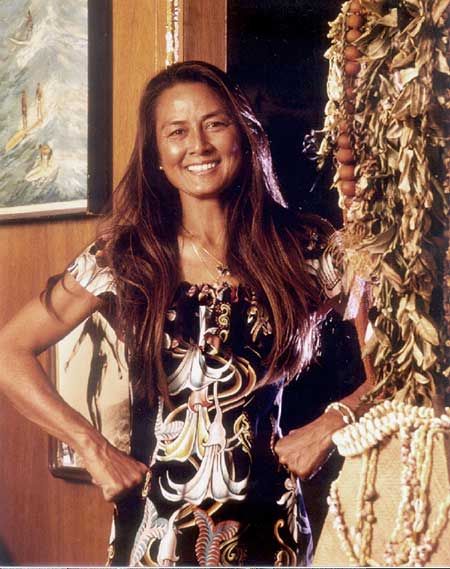
Images courtesy of Rell Sunn Foundation
Rell Sunn: Queen of Makaha, Heart of the Sea
She was born Roella, a name stitched together from her parents’ names, Roen and Elbert. She never liked it. By the time the world came to know her she had become Rell, and the name that mattered most was the one her grandmother gave her before she was even born: Kapolioka’ehukai. Heart of the Sea.
On the dry, sun-bleached west side of Oahu, where the Waianae mountains run straight down into the Pacific, that name turned out to be a kind of prophecy. Rell Sunn spent her whole life within reach of the water at Makaha, and the people there did not call her a champion or a pioneer, though she was both. They called her Aunty. They called her the Queen of Makaha. Those titles told you more about who she was than any contest result ever could.
A Makaha Childhood
Rell was born on July 31, 1950, one of five kids raised in a Quonset hut a stone’s throw from the beach. Her father was a beach boy, the old Hawaiian role that blended lifeguard, surf instructor, and waterman into one. The family did not have much. What they had was the ocean, and a single battered surfboard the kids passed between them.
She started surfing at four. By her teens she was reading the reefs at Makaha better than most grown men in the lineup, picking apart the Point and the Bowl on swells that sent everyone else to the beach. Makaha in those years was the center of the surfing world, home to the most prestigious contest on the planet before the North Shore took the crown. Rell grew up in the middle of all of it, and she grew up unafraid.
In 1966, at sixteen, she traveled to the World Championships in San Diego in the company of Duke Kahanamoku himself. It was the beginning of a life lived partly on the road, chasing contests around the globe, but Makaha was always home. She always came back.
The West Side
To understand Rell Sunn you have to understand where she was from, because on Oahu that is never a small detail.
The Waianae Coast is the dry side. It is the leeward stretch of the island, the one the tour buses do not go to, and for most of Rell’s life it carried the highest unemployment and the lowest incomes on Oahu. It is also, and not coincidentally, the most fiercely Hawaiian place on the island. People on the West Side look after their own, because for a long time nobody else was going to.
Makaha sits at the heart of it, a long point break that was the most important wave in the world before the North Shore took that title. The Makaha International drew the best surfers alive. And then the sport moved on, the contests went north, and Makaha went back to being what it had always been: a local beach, for local families.
That is the community that called Rell “Aunty.” In Hawaii the word is not a term of affection handed out lightly. It is a form of respect, and it means you belong to people and they belong to you. She earned it for forty-seven years and she never once traded on it.
Hawaii’s First Female Lifeguard
In 1975, Rell became the first female lifeguard in the state of Hawaii. In a culture that measures people by their competence in the water, that was not a small thing. It meant the establishment looked at a woman and admitted what the West Side already knew: nobody read the ocean like Rell.
It is worth being precise about what the job asked of her. A lifeguard on the Waianae Coast is not a person in a tall chair. The West Side gets serious surf, the currents run hard along the reef, and the nearest help is a long way off. The job was to swim out into the worst of it and bring people back. She did that, and she did it in an era when the professional water-safety world had simply never considered that a woman might.
Building the Women’s Tour
The other thing Rell did in 1975 was help build women’s professional surfing from nothing.
She co-founded the Women’s International Surfing Association alongside Mary Setterholm, Jericho Poppler, and MaryLou Drummy. It was the first real pro circuit for women in the sport. Four years later, in 1979, she was among a group of ten women who formed Women’s Pro Surfing, pushing again for events, for structure, and for prize money that bore some relationship to what the men were paid.
None of that existed before they made it exist. Women surfed, and women surfed brilliantly, but there was no tour to surf on and no money at the end of it. Women’s heats were run as an afterthought, when the tide had gone wrong and the crowd had thinned. Prize purses, where they existed at all, were a fraction of the men’s. Rell and the women around her did the unglamorous work of organizing, negotiating, and refusing to go away.
She was well suited to it. Rell was not a confrontational person and never presented herself as an activist. She simply kept turning up, kept surfing better than the argument against her, and kept being impossible to dislike. Doors that would not have opened for a firebrand opened for her.
By 1982 she was ranked number one in the world on a longboard, and she was widely regarded as the finest all-around waterwoman of her era. That is the part people sometimes miss when they tell her story as a story about illness. Before she was ever a symbol of anything, Rell Sunn was simply the best.
The Waterwoman
Rell’s competence did not stop at the shoreline. She free-dove and speared. She paddled. She danced hula. She worked as a radio DJ and a surf reporter, and her voice, describing the morning’s conditions, was how a good part of Oahu found out whether it was worth paddling out. Later she trained as a physical therapist and worked as a cancer research counselor.
Her surfing itself was known less for aggression than for a smooth, unhurried grace. She rode everything, from knee-high Makaha reformers to serious West Side juice, and she made all of it look like the easiest thing in the world. Style, in Hawaiian surfing, is not decoration. It is evidence that you belong out there. Nobody ever doubted that Rell belonged.
The Diagnosis
In 1982, at a professional contest in Huntington Beach, Rell was drying off when she felt a lump in her breast. She was thirty-two years old. The diagnosis was advanced breast cancer, and the prognosis was one year.
She lived fifteen more.
She surfed through chemotherapy. She kept working as a radio DJ and a surf reporter. She helped start a breast cancer awareness program on the Waianae Coast, sitting with other Hawaiian women facing the same fight she was, because that was simply what she did.
Her great fear, she once said, was that she would be remembered as a victim of cancer rather than a woman of the sea. She need not have worried. What people remember is the smile, the aloha, the way she kept paddling out long after the disease had taken most of her strength.
Fifteen Years
The fifteen years were not a remission. They were a fight, conducted more or less in public, on an island where everyone knew her.
There was surgery, chemotherapy, radiation, and the long financial grind that comes with all of it. She kept surfing anyway, on the days she could, and on the days she could not she went to the beach regardless. She raised her daughter, Jan. In 1995 she married the surfer and shaper Dave Parmenter. After roughly fourteen years of holding the disease off, the cancer reached her brain.
Through all of it she went on giving things away. It was not a performance of courage. By every account of the people who were there, it was just the way she was built.
The Keiki Contest
In 1976 Rell started a surf contest for the keiki of Makaha. It was never about trophies. It was about putting West Side kids in the water, building their confidence, teaching them to respect the ocean and each other.
The context matters. These were kids growing up on a coast with few jobs and fewer prospects, in a decade when the West Side made the news mostly for the wrong reasons. Rell’s answer was not a lecture. It was a contest, with heats and jerseys and a real event around it, run by adults who had cleared their calendars to be there. For a week, the thing the coast was known for was its children surfing well.
She fed them. She found them boards. She made sure the kid who came last got the same aloha as the kid who won, which is a harder thing to organize than it sounds.
The Rell Sunn Menehune Surf Contest still runs at Makaha every year, decades after she started it and long after she was gone. That may be the truest measure of her. A thing built for children that outlived her and keeps giving.
She summed up her own philosophy better than anyone else could.
“The aloha spirit is real simple. You give and you give and you give, and you give from here, until you have nothing else to give.”
Heart of the Sea
The honors came, and she was gracious about them, though they were never the point. In 1996 the Surfing Walk of Fame named her its Woman of the Year. A documentary, Heart of the Sea: Kapolioka’ehukai, told her story to people who had never set foot on the Waianae Coast. Today an annual Rell Sunn Award goes to a female surfer who carries something of her grace and her kindness.
Her real memorial is harder to put in a case. It is a contest for children that has run for half a century. It is the fact that a girl paddling out at Makaha this morning does not have to wonder whether she is allowed to be there.
A Paddle Out at Makaha
Rell Sunn passed away on January 2, 1998, at forty-seven.
Her memorial at Makaha drew thousands. Surfers paddled out beyond the break to scatter her ashes in the water she loved, the water that named her. The New York Times called her a state treasure. On the West Side they did not need a newspaper to tell them what they had lost. They had grown up with her. She had taught their keiki to surf. She had handed out aloha the way other people hand out small talk, freely and to everyone, until there was nothing left to give.
If you ever stand on the sand at Makaha and watch the keiki trade waves at the Point, you are watching her legacy in motion. The Queen never really left.
Questions About Rell Sunn
Who was Rell Sunn?
Rell Kapolioka’ehukai Sunn (1950–1998) was a Hawaiian surfer from Makaha, the first female lifeguard in the state of Hawaii, a co-founder of the first women’s professional surfing circuit, and the world’s top-ranked longboarder in 1982. She was known across Hawaii as the Queen of Makaha and as Aunty Rell.
What does Kapolioka’ehukai mean?
It means “heart of the sea.” Her grandmother gave her the name before she was born.
How did Rell Sunn die?
She died of breast cancer on January 2, 1998, at the age of forty-seven. She had been diagnosed in 1982 at age thirty-two and given a year to live. She lived fifteen.
Was Rell Sunn really Hawaii’s first female lifeguard?
Yes. She took the job in 1975 on the Waianae Coast, one of the more demanding stretches of water in the islands.
Does the Rell Sunn Menehune contest still run?
It does. The contest she founded for the children of Makaha in 1976 is still held there every year.
Sources
- Rell Sunn Foundation
- Rell Sunn — Wikipedia
- Rell Sunn: The Memorable Life of the Queen of Makaha — Surfer Today
- Why Hawaiian Legend Rell Sunn Was the Embodiment of Aloha — Surfer
Related Reading:
- Makaha Surf Break Guide
- Greg Noll’s Legendary Makaha Wave
- The History of Surfing in Hawaii
- Hawaiian Princes Surfing Santa Cruz
Mahalo for reading. If you want to learn more about Rell’s legacy and the keiki contest she built, visit the Rell Sunn Foundation.
Last Updated: July 2026
