Legends
Tamayo Perry: North Shore Surf Legend, Lifeguard, and Pipeline Icon
Dec
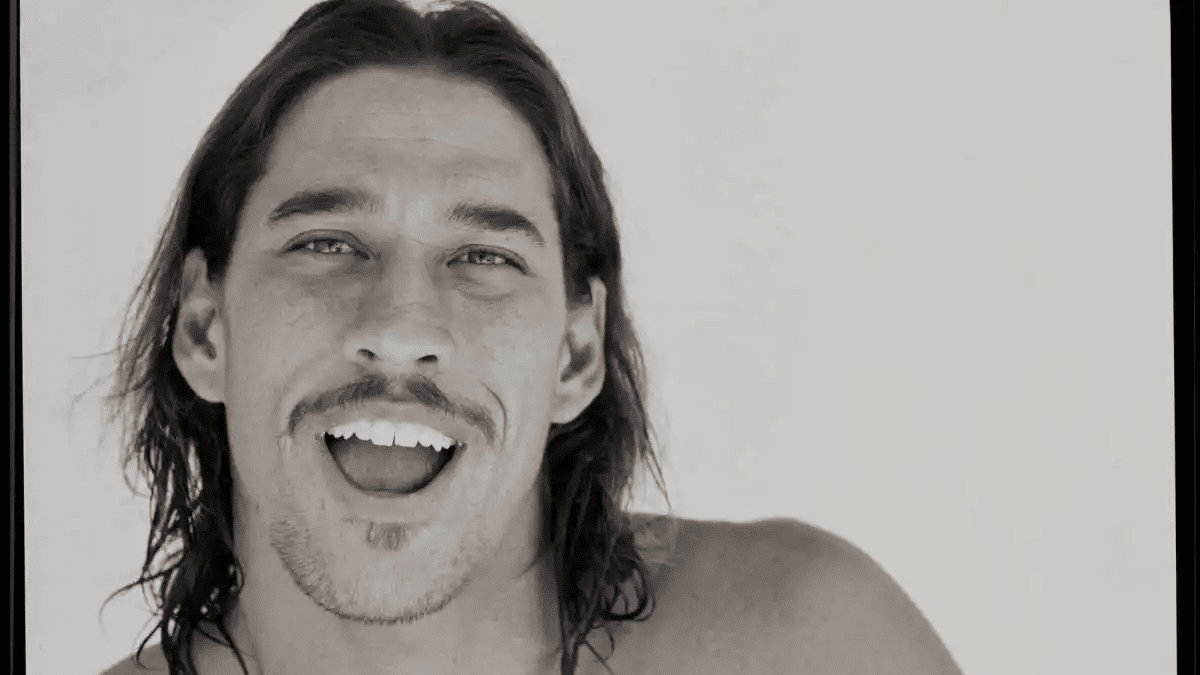
Image courtesy of IMBD
Tamayo Perry: Pipeline Icon, North Shore Lifeguard, and the Man Everyone Loved
On June 23rd, it will be two years. The North Shore keeps moving — swells arrive, the lineup fills, the sun rises over Ka’ena Point the same way it always has. But there’s a particular kind of absence that doesn’t fill in with time, and anyone who spent sessions at Pipeline in the years Tamayo Perry was out there knows exactly the kind I mean. It’s the absence of someone who made the water feel like a better place to be. A man who stood tall in ten-foot barrels and came out the other side with a smile so wide it seemed almost impossible given what he’d just survived.
Tamayo Perry was a Pipeline specialist, a North Shore lifeguard, a husband, a teacher, an actor, a born-again Christian who borrowed surfboards as a kid and became one of the most respected watermen in Hawaiian history. He was, by every account of everyone who knew him, someone who loved people more than people loved him — and people loved him deeply. The ocean took him on a Sunday morning at Goat Island, a wave he knew as well as any place on earth. He was 49. His ashes rest at Pipeline. This is his story.
East Side Beginnings
Tamayo Perry was born on April 15, 1975, in Hau’ula — a small, working-class town on Oahu’s windward east side that he would later describe as “one of the last bastions of the traditional Hawaiian ways.” Not the glamorous, heavily-photographed North Shore stretch that would later define his reputation, but a quieter, community-rooted coastline that produced its own breed of committed, self-sufficient surfer. His father was an avid surfer and city and county lifeguard — the ocean was already in the family before Tamayo picked up a board at twelve. The ocean grabbed hold of him the way it grabs certain people and never entirely lets go.
By seventh grade he had formed a tight friendship with a kid named Jack Johnson — the same Jack Johnson who would go on to become one of the most recognizable musicians in the world. The two were groms together, part of a loose crew of young surfers who used to stand on the grass at Pipeline and watch the established names work the lineup. Derek Ho. Tom Carroll. The surfers who owned that wave. Tamayo watched and filed everything away.
What he saw at Pipeline shaped everything that followed. The two surfers he idolized most were Gerry Lopez and Tom Carroll — Lopez for his uncanny stillness in the most violent possible conditions, Carroll for his commitment and raw power. By the time Tamayo was in his late teens, those influences had fused into something entirely his own: a goofy-footed tube-riding style that combined Lopez’s composure with a hard-charging fearlessness that was entirely Tamayo.
He had no sponsors. He borrowed boards. None of that slowed him down. The Pipeline lineup doesn’t care what name is on your equipment. It cares whether you can surf. Tamayo could surf.
Pipeline and the Life He Built There
By 1997 the surf media had noticed. A wiry goofyfooter with a style that looked like it belonged at the very top of the sport. In 1999 he won the Pipeline Masters Trials — a result that turned heads and confirmed what the North Shore already knew. The following year he finished fourth in the same event. He placed fifth at the Billabong Pro Trials at Teahupoʻo. He competed selectively, without the single-minded points obsession of a world tour chaser, and built his reputation the way the best North Shore surfers always have: by showing up when it was big and making it look like he had somewhere better to be inside the barrel.
By 2005, Surfing Magazine had named him most likely to get the barrel of the year — and more significantly, the Encyclopedia of Surfing noted that he was generally regarded as Pipeline’s single most dominant surfer. Not the most famous. Not the highest-ranked. The most dominant. There’s a meaningful difference, and everyone in that lineup understood it.
What made Tamayo’s Pipeline surfing remarkable wasn’t just the fearlessness. It was the composure. He stood tall in barrels that bent other surfers into survival poses. He read the wave from the moment he caught it, made his decisions early, and emerged looking as though the whole experience had been pleasant rather than terrifying. That combination — commitment without panic, aggression without recklessness — is what separates the Pipeline surfers from the Pipeline specialists. Tamayo was a specialist in the deepest sense of the word.
His faith ran alongside all of it. A devout born-again Christian, Tamayo wore his beliefs openly and without apology. When a surf magazine once asked him to name the last two books he’d read, he answered: the Bible, and a book about the end times. It wasn’t a performance. It was just who he was — a man who charged ten-foot Pipeline barrels and found them entirely compatible with a deep and sincere faith. The contradiction, if you thought it was one, dissolved pretty quickly when you watched him surf.
Hollywood, Cameras, and the North Shore
Tamayo’s authentic ocean background made him a natural for film and television work in Hawaii, and he took to it with the same ease he brought to everything else. He appeared in Blue Crush (2002), the film that brought Pipeline and North Shore culture to a mainstream global audience. He followed that with Charlie’s Angels: Full Throttle (2003), Pirates of the Caribbean: On Stranger Tides (2011), a role in Lost, episodes of Hawaii Five-0, and The Big Bounce. He appeared in ad campaigns for Nissan Xterra during the NFL playoffs and the Winter Olympics, and in a Coca-Cola commercial.
None of this changed him, by all accounts. The film work was something he did alongside his surfing and his community, not instead of it. He showed up on set with the same presence he brought to the lineup — calm, professional, ready, and genuinely pleased to be there. The people who worked with him in both worlds said the same thing: Tamayo was just like that. Everywhere.
The Injury That Changed Everything
In 2005, another surfer’s errant board found Tamayo in the Pipeline lineup. The impact opened an eight-inch gash in his scalp — it peeled his skull from ear to ear, requiring nearly fifty staples to close the wound. The incident was widely reported and, alongside the fatal injury of Malik Joyeux that same season, was cited as reason for surfers to consider helmets at heavy reef breaks. Tamayo survived. But the experience was profound, and it reshaped his relationship to the ocean and to his own sense of purpose.
Rather than step back from the water, he moved toward it differently. In 2016 he joined the City and County of Honolulu Ocean Safety Department as a lifeguard on the North Shore — one of the most demanding postings in the ocean safety system. The same reef breaks he had spent decades learning to dominate became his professional responsibility. He brought eight years of service to that role before his death.
His colleague Captain Adam Lerner remembered it simply: “If I were to jump in the water, I would look over my shoulder and I knew he was backing me up. I knew he was good at everything.” That sentence tells you something real about what Tamayo brought to that job. Not just competence. Certainty. The certainty that comes from knowing the ocean at the level Tamayo knew it.
Alongside his wife Emilia — a professional bodyboarder from Western Australia who he met at Pipeline and married in 2001 — he also co-founded the Oahu Surfing Experience, a surf school based in Kahuku on the North Shore. The school reflected everything Tamayo believed: that surfing in Hawaii required more than athletic skill. It required understanding the history of the breaks, the power of the ocean, the responsibility surfers carry to each other in the lineup.
The North Shore Knew Him
What the tributes that poured in after his death made clear — from the surf world, from Hollywood, from the lifeguard service, from the North Shore community — was that Tamayo Perry’s standing had nothing to do with accolades. It had to do with character.
Honolulu Ocean Safety Acting Chief Kurt Lager said at the press conference following his death: “He’s a professional surfer known worldwide. Tamayo’s personality was infectious, and as much as people loved him, he loved everyone else more.”
That last line is the one that keeps appearing in every remembrance. He loved everyone else more. Derrick Doerner, former lifeguard and one of the heaviest water men on the planet, said Tamayo was as well-loved as any lifeguard in Hawaii. Jack Johnson, whose friendship with Tamayo stretched back forty years to the grass beside Pipeline, said: “It doesn’t really matter how long you knew Tamayo. If you knew him for one day, two days, you would get to know him because he was so open. He was so ready for the experience of life.”
His childhood friend Jarad Makaiau remembered him as a goal-oriented kid who kept his bedroom spotlessly clean and had rules about how to play with his Star Wars and G.I. Joe collection. The discipline was always there, even before the wave selection and the composure and the lifeguard training. It was just who he was.
June 23, 2024
On a Sunday morning, Tamayo Perry paddled out to Goat Island — Mālaekahana, on the northeastern coast of Oahu, a wave he knew intimately — on his break from his shift with Ocean Safety. He was 49 years old. He was doing what he had done most of his life: surfing a wave he loved, in the ocean he had given everything to.
He did not come back. A shark attacked him in the water. He was brought to shore by jet ski by his fellow lifeguards. He was pronounced dead at the scene. It was the first fatal shark attack off Oahu in more than two decades. Hawaii Mayor Rick Blangiardi called it “a tragic loss” and described Tamayo as a “legendary waterman” whose commitment to ocean safety would not be forgotten.
Three weeks later, hundreds of people gathered at Ehukai Beach Park on the North Shore for a paddle-out at Pipeline — the wave he had defined and that had defined him. The Honolulu Fire Department dropped flowers over the hundreds of paddlers gathered in the water. Tamayo’s ashes were placed at Pipeline.
He is there still.
What He Left Behind
The North Shore doesn’t forget the people who gave themselves to it. It keeps them in the conversations at the lineup, in the names spoken with a particular tone — the tone that means something more than just a name. Tamayo Perry sits in that company now: alongside the Irons brothers, alongside the Hos, alongside Lopez and the surfers who made Pipeline what it is. He earned that place the way all of them did — by showing up, by committing, by caring about the ocean and the people in it more than he cared about recognition.
He never chased a world title. He chased the barrel. And he found it, again and again, for the better part of thirty years, in the most demanding break in the world.
If you surf the North Shore — if you paddle out at Pipeline, or Sunset Beach, or Haleiwa, or any of the breaks that made this coastline what it is — you are surfing water that Tamayo Perry gave his life to. Not just his passion. His professional service. His time, his expertise, the eight years he spent watching that coastline from a lifeguard tower and making sure other people got home safely.
That deserves to be remembered. Two years on, it is.
Mahalo, Tamayo. The North Shore carries you.
Frequently Asked Questions
Q: Who was Tamayo Perry?
Tamayo Perry (April 15, 1975 – June 23, 2024) was a professional surfer, North Shore lifeguard, and actor from Oahu, Hawaii. He was regarded as one of the greatest Pipeline specialists of all time, known for his fearless tube-riding style and calm composure in the heaviest conditions. He served with Honolulu Ocean Safety from 2016 until his death and co-founded the Oahu Surfing Experience surf school with his wife Emilia.
Q: What was Tamayo Perry’s legacy on the North Shore?
Tamayo Perry is remembered not just for his surfing, but for his character. He was a Pipeline specialist regarded as one of the most dominant surfers at that wave in the early 2000s, a dedicated Ocean Safety lifeguard who served the North Shore for eight years, a surf instructor who passed his knowledge to the next generation, and by all accounts someone who made every person he encountered feel genuinely welcomed. His ashes rest at Pipeline — the place that shaped him and that he, in turn, helped define.
Q: What movies was Tamayo Perry in?
Tamayo Perry appeared in Blue Crush (2002), Charlie’s Angels: Full Throttle (2003), The Big Bounce, Pirates of the Caribbean: On Stranger Tides (2011), and the TV series Lost and Hawaii Five-0. He also appeared in major ad campaigns for Nissan Xterra and Coca-Cola.
Q: What was Tamayo Perry’s connection to Jack Johnson?
Jack Johnson and Tamayo Perry were childhood friends who grew up together on the East Side of Oahu. Their friendship began in seventh grade and lasted for forty years. As boys, they were part of the same crew of young surfers who would stand on the grass at Pipeline watching the professionals surf. Johnson spoke at the paddle-out memorial following Perry’s death.
Q: Was Tamayo Perry a lifeguard?
Yes. Tamayo Perry joined the City and County of Honolulu Ocean Safety Department in July 2016 and served as a North Shore lifeguard for eight years until his death. He was widely respected by colleagues for his skill, calm decision-making, and deep situational awareness in heavy surf conditions.
Q: Where was Tamayo Perry’s paddle-out memorial?
The memorial paddle-out was held on July 14, 2024, at Ehukai Beach Park on the North Shore — the beach adjacent to Pipeline. Hundreds of surfers, lifeguards, and community members gathered in the water. The Honolulu Fire Department dropped flowers from above, and Tamayo’s ashes were placed at Pipeline.
Q: What made Tamayo Perry’s Pipeline surfing distinctive?
Perry was a goofy-footer whose tube-riding style drew from his two idols — Gerry Lopez’s stillness and composure, and Tom Carroll’s hard-charging commitment. He was known for standing tall in barrels where other surfers crouched in survival mode, reading the wave from the moment of takeoff, and emerging with a signature wide smile. By 2005 he was considered Pipeline’s single most dominant surfer by many in the surf world.
Sources
- Surfer Magazine — Legendary Pipeline Surfer Tamayo Perry Killed in Shark Attack
- Stab Magazine — Iconic Pipeline Surfer Tamayo Perry Killed By Shark in Hawaii
- ABC News — Pipeline surfer who appeared in ‘Blue Crush’ killed in shark attack
- CBS News — “Legendary waterman” Tamayo Perry killed in shark attack
- West Hawaii Today — Beloved Oahu surfer and lifeguard Tamayo Perry is celebrated
- Surfer Magazine — Hundreds Gather on North Shore to Honor Tamayo Perry
- KHON2 — Hundreds celebrate the life of Tamayo Perry on North Shore
- SurferToday — Pipeline specialist Tamayo Perry killed by a shark off Oahu
- Hawaii Public Radio — Lifeguard Tamayo Perry dies in shark attack
- Encyclopedia of Surfing — Perry, Tamayo
Related Guides & Stories:
- Pipeline Surf Break Guide
- Jock Sutherland: North Shore Legend and King of Pipeline
- Da Hui: History, Culture & Legacy of Hawaii’s Legendary Surf Collective
- Sunset Beach Surf Break Guide
- History of Surfing in Hawaii
Last Updated: June 2026
