Jul
For thirty years, one man decided whether the most revered event in surfing would happen at all. Not a committee. Not a sponsor. One man, standing on the sand at Waimea Bay before dawn, watching the sets come in and deciding — yes or no.
His name was George Downing, and more often than not, the answer was no.
Who Was George Downing?
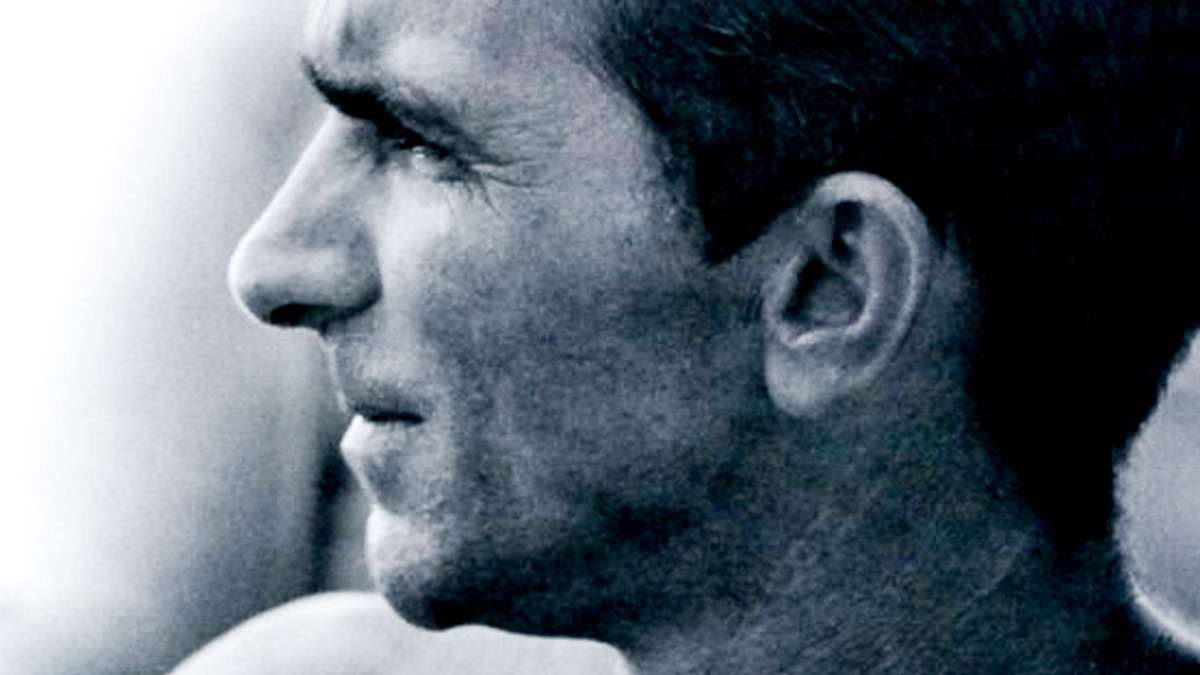
George Downing was born in Honolulu on May 2, 1930, and he died on March 5, 2018, at eighty-seven. In between, he did about as much to shape modern surfing as anyone who ever lived: he helped invent big-wave riding at Makaha, built the first surfboard designed specifically for giant surf, put a removable fin on a board before anyone else, won the Makaha International three times, coached Hawaii to a world title, and then spent three decades as the sole authority on whether Eddie Aikau’s memorial contest would run.
He was not a showman. That is part of why he is less famous than he should be, and part of why this piece exists.
Waikīkī, and Learning to Read Water
Downing started surfing at nine, in the Waikīkī of the 1930s and 40s — the Waikīkī of the Beach Boys, where a kid could learn the ocean from men who had spent their entire lives in it. He later worked as an instructor at the Outrigger Canoe Club, where he met his wife, Gildea.
What separated him, even early, was not fearlessness. It was study. Downing treated the ocean as something to be understood rather than conquered — swell direction, period, tide, the way a particular reef would handle a particular angle of energy. He was building a mental model of the sea decades before anyone had a buoy reading or a forecast model to lean on. That habit of mind is the through-line of his entire life, and it explains everything that came after.
Makaha, and the Birth of Big-Wave Surfing
In the late 1940s and early 50s, the accepted limit of what a person could ride was far smaller than it is now. Downing, still a teenager, was among the first to push into serious size at Makaha, on Oʻahu’s west side — the break that was Hawaii’s big-wave proving ground long before the North Shore became the circus we know today.
Makaha is the hinge of this story. It is where big-wave surfing stopped being an accident and started being a discipline, and Downing was one of the small handful of men who made that happen. Greg Noll’s famous 1969 ride at Makaha is the moment most people know. Downing was riding that bay seriously two decades earlier — and he was the one thinking hardest about the equipment.
The Rocket: The First Big-Wave Gun
The boards of the 1940s were not built for size. They were heavy, they were finless or barely finned, and at speed in a big wave they would slide out sideways — a spectacularly bad outcome when the wave is twenty feet.
Downing built a redwood board he called The Rocket, and it is widely regarded as the first true big-wave gun: a board conceived from the start for holding a line in serious surf rather than for cruising small waves. Then, in 1951, he did something arguably more consequential — he built the first surfboard with a removable fin.
That sounds like a footnote. It is not. A removable fin means a board is no longer one fixed thing; it means the rider can tune the board to the wave. Every surfer alive who has swapped fins before a session — every shaper who has thought in terms of fin templates and cluster setups — is working downstream of an idea George Downing had in 1951. We trace that whole lineage in the evolution of surfboard shaping.
Three Makaha Titles and a World Championship
Downing could also, straightforwardly, surf better than nearly everyone. He won the Makaha International Surfing Championship three times — 1954, 1961, and 1965, across an eleven-year span, which tells you something about longevity as well as talent. He placed seventh at the 1965 World Championships and third at the 1968 Peru International.
Then he coached. In 1968, Downing led the Hawaiian team to the World Surfing Championship title. He also opened Downing Hawaii, his surf shop in Kaimuki, which stayed in business for decades and became an institution in its own right.
The Eddie: Thirty Years of Saying No
In 1985, the contest that would become the Quiksilver In Memory of Eddie Aikau was run for the first time at Waimea Bay, in honor of the lifeguard and waterman who was lost at sea in 1978 trying to save the crew of the Hōkūleʻa. You know the phrase that grew out of it: Eddie would go.
George Downing directed that event, and for roughly thirty years he alone decided whether it ran.
This is the thing people who did not live through it find hardest to believe. The Eddie requires open-ocean swell producing sustained wave faces of roughly forty feet — a bar so high that in most years the bay simply never reaches it. The contest has run only a handful of times in its entire history. Sponsors wanted it to run. Broadcasters wanted it to run. Surfers flew in from around the world and stood on the sand waiting. And Downing, over and over, looked at the bay and said no.
He was not being difficult. He was doing exactly what he had done since he was nine years old: reading the water honestly and refusing to pretend it was something it wasn’t. He understood that the integrity of the event was the standard — that an Eddie run in marginal surf would not be an Eddie at all, and would dishonor the man it was named for. He took the hardest possible position, held it for three decades, and absorbed the disappointment personally every time.
The contest was called off again for the 2025–2026 season. That it is still called off in years when the bay doesn’t deliver is his doing. It is the standard he built.
1990: The Year He Called It On, and His Son Won
Then there is the story that sounds invented, and isn’t.
In 1990, the bay delivered. Downing called The Eddie on, into twenty-foot surf that held through every heat. And the man who won it, that day, at Waimea Bay, was Keone Downing — his son.
The father spent thirty years being the most demanding gatekeeper in surfing, and on one of the few days he opened the gate, his own son walked through it and won. That same day gave surfing another piece of folklore: Brock Little’s enormous wipeout and the improbable barrel that followed, still argued about at Waimea to this day.
The Legacy
Downing was inducted into the Surfers’ Hall of Fame in 2011, and received a Legacy Award from the Hawaii Tourism Authority. He was, in his later years, also an activist for Hawaii’s shoreline and ocean — a man who had spent his life reading the sea and was not inclined to watch it be carelessly used.
But the honors are not really the point. The point is the through-line: a nine-year-old learning to read water at Waikīkī became the man who could look at Waimea Bay on a big morning and tell the entire surfing world, with total authority, not today.
Surfing has no shortage of people who went. It had exactly one George Downing, who knew when not to.
Frequently Asked Questions
Who was George Downing?
George Downing (May 2, 1930 – March 5, 2018) was a Honolulu-born surfer, board designer, and big-wave pioneer. He helped establish big-wave surfing at Makaha, built the first big-wave gun, created the first removable fin in 1951, won the Makaha International three times, and directed the Eddie Aikau Invitational for about thirty years.
What did George Downing invent?
In 1951 he built the first surfboard with a removable fin, allowing a rider to tune a board to conditions. He also built “The Rocket,” a redwood board widely considered the first purpose-built big-wave gun.
Why did George Downing so rarely let The Eddie run?
The Eddie requires roughly forty-foot wave faces at Waimea Bay — a standard the bay meets only rarely. As sole contest director for around thirty years, Downing refused to lower that bar, holding that an event run in lesser surf would not honor Eddie Aikau.
Did George Downing’s son win The Eddie?
Yes. In 1990, Downing called the contest on in twenty-foot surf, and his son Keone Downing won it.
How many times did George Downing win the Makaha International?
Three times: 1954, 1961, and 1965. He also coached Hawaii to the 1968 World Surfing Championship title.
Keep reading: Eddie Aikau · Clyde Aikau · Waimea Bay · Buffalo Keaulana · the history of surfing in Hawaii
