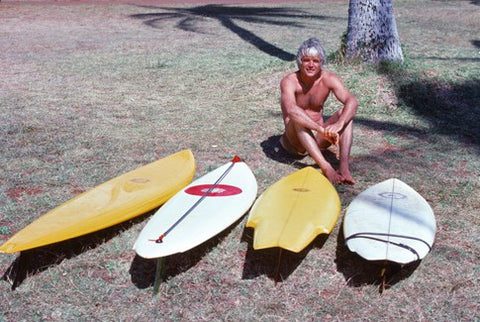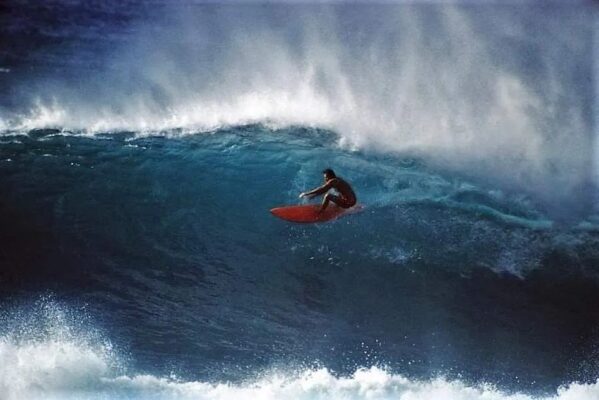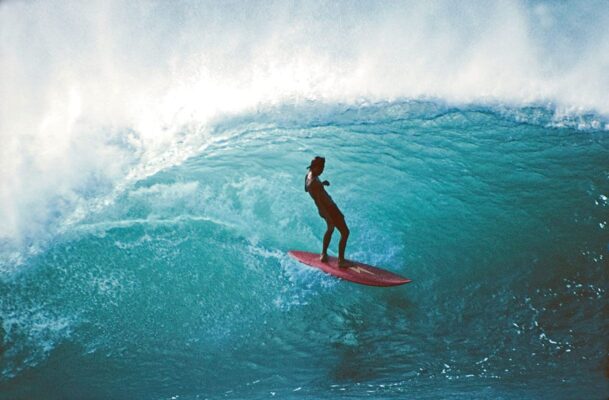

The Shaper Who Changed Everything With One Curve
California, 1967.
A 23-year-old shaper named Bob McTavish takes a saw to a perfectly good surfboard and cuts three feet off the tail. His friends think he’s insane.
The resulting board—shorter, narrower, with a radical V-shaped bottom—would turn like nothing anyone had ever ridden. Within two years, the entire surfboard industry would collapse and rebuild around this single innovation. The “shortboard revolution” would make 90% of existing boards obsolete overnight.
Shapers who had spent decades perfecting 9-foot longboards suddenly had to relearn their craft from scratch. Surf shops went bankrupt. Legends retired. But surfing would never be the same.
This wasn’t the first time surfboard design revolutionized the sport. And it wouldn’t be the last.
For over 1,500 years, surfboard shapers have been the unsung architects of surf culture—turning blocks of wood, foam, and exotic materials into vehicles that let humans dance with ocean energy. They’ve worked in dusty shaping bays, breathing toxic fumes, covered in resin, obsessing over millimeters and curves invisible to untrained eyes.
This is their story. From ancient Hawaiian master craftsmen to modern AI-assisted designers, here’s how surfboard shaping evolved from traditional craft to high-tech art form—and what’s coming next.
Ancient Hawaiian Surfboards: Masterful Craftsmanship (500 AD – 1820s)
The Three Traditional Boards of Old Hawaii
Long before fiberglass, polyurethane foam, or carbon fiber, ancient Hawaiians were crafting sophisticated surfboards from native hardwoods. These weren’t crude planks—they were precision instruments shaped with stone tools and designed for specific wave conditions.
Hawaiian surfboard culture recognized three primary board types:
1. The Paipo (Belly Board)
- Length: 3-6 feet
- Wood: Breadfruit or koa
- Rider: Commoners and children
- Style: Ridden prone (lying down)
- Purpose: Learning wave fundamentals, shorebreak fun
2. The Alaia (The People’s Board)
- Length: 7-12 feet
- Wood: Koa (primarily)
- Thickness: Thin (0.5-1.5 inches)
- Shape: No rocker, no fins, minimal nose lift
- Rider: Everyone—commoners and ali’i (royalty)
- Style: Ridden standing, kneeling, or prone
- Special feature: Extremely difficult to master, requiring perfect wave-reading and balance
The alaia was the most popular board in ancient Hawaii. Its thin, finless design meant riders controlled direction through foot placement, body weight, and subtle rail engagement. Master surfers could carve radical turns by dragging their hand in the wave face—a technique still used by modern alaia riders.
3. The Olo (The Royal Board)
- Length: 14-24 feet (some accounts describe boards up to 30 feet)
- Weight: 150-200+ pounds
- Wood: Wiliwili (lighter) or koa (for prestige)
- Thickness: 6+ inches at the center
- Rider: Exclusively ali’i (Hawaiian royalty)
- Purpose: Prestige, speed, riding the biggest waves
- Cultural significance: Ownership was a status symbol reserved for Hawaiian nobility
The Traditional Shaping Process
Ancient Hawaiian board shaping was highly skilled craftsmanship passed down through generations.
The traditional process:
- Tree Selection: Shapers would enter the forest seeking the perfect koa or wiliwili tree, observing grain patterns and growth direction to ensure the wood would perform well in water.
- Rough Shaping: Using stone adzes and coral abrasives, shapers would rough out the board shape, working with the wood’s natural grain.
- Refinement: Over days or weeks, shapers would refine curves, thin edges, and create the subtle contours that made each board unique. The best shapers could read wood grain—understanding where stress would concentrate and how flex patterns would develop.
- Finishing: Boards were sanded smooth with rough coral or volcanic rock, then rubbed with kukui nut oil until the wood developed a deep, water-resistant sheen. Some boards were stained black using charcoal from burnt kukui nut shells.
Design Sophistication Hidden in “Primitive” Boards
Modern shapers examining ancient boards have discovered remarkable sophistication:
- Subtle rocker curves: Though minimal, ancient boards had carefully planned nose lift to prevent pearling (nosediving)
- Foiled rails: Edges were carefully thinned and shaped for water release
- Thickness flow: Strategic weight distribution placed volume where needed for paddling while keeping rails thin for turning
- Template asymmetry: Some boards featured subtle asymmetrical outlines, suggesting shapers were experimenting with directional performance
Ancient Hawaiian shapers understood hydrodynamics through empirical observation—testing, failing, refining across generations. They couldn’t calculate water flow dynamics, but they could feel the difference between a board that worked and one that didn’t.
The Near-Extinction of Hawaiian Shaping
When Christian missionaries arrived in Hawaii in the 1820s, they viewed surfing as idle recreation incompatible with industrious Christian work ethic. They discouraged the practice:
- Declared surfing wasteful of productive time
- Encouraged Hawaiians to focus on farming and labor
- By the 1890s, surfing was nearly extinct, practiced by only a handful of Hawaiians
Ancient shaping knowledge—accumulated over more than a thousand years—came within a generation of being completely lost. When surfing began its revival in the early 1900s (largely thanks to Duke Kahanamoku and the Waikiki Beach Boys), most traditional shaping knowledge had disappeared. The ancient art would have to be rediscovered, reinterpreted, and reinvented for a new era.
The Rebirth: Solid Wood Boards & The Early 1900s Revival (1900-1940)
Duke Kahanamoku & The Redwood Revolution
When Duke Kahanamoku began spreading surfing globally in the 1910s-1920s, ancient koa wood was scarce and expensive. Hawaiian shapers adapted, experimenting with mainland woods.
The solution: Pacific redwood.
Redwood offered several advantages over koa:
- Readily available in California
- Lighter than koa (crucial for transport)
- Easier to shape with modern tools
- Water-resistant natural oils
- Beautiful grain patterns
Duke’s own boards during his California demonstrations were often crafted from redwood planks. These boards typically measured 8-10 feet long, weighed 60-100 pounds, and featured simple rectangular outlines with rounded noses.
Tom Blake: The First Modern Shaper-Innovator
Tom Blake (1902-1994) revolutionized surfboard design in the 1920s-1930s and deserves recognition as the first true modern surfboard innovator.
Blake’s breakthrough innovations:
1. The Hollow Surfboard (1926)
Blake examined an ancient olo board in Honolulu’s Bishop Museum and noticed it had naturally hollowed sections from decay. This sparked an idea: what if boards were intentionally hollow?
In 1926, Blake created the first hollow surfboard by drilling hundreds of holes through a solid redwood plank, then sealing it with a thin wooden veneer. The result:
- Weight dropped from 100+ pounds to about 100 pounds (still heavy, but revolutionary for the time)
- Better flotation
- Easier paddling
- More maneuverable
By 1929, Blake had refined the design, creating boards weighing just 60 pounds—nearly half the weight of traditional solid wood boards.
2. The Surfboard Fin (1935)
Perhaps Blake’s most influential innovation was adding a stabilizing fin to the bottom of the surfboard—inspired by boat keels and aircraft rudders.
Before fins, surfers controlled direction entirely through body position and rail engagement. Boards would slide sideways uncontrollably during turns. Blake’s fin provided:
- Directional stability
- Better control during turns
- Ability to angle across waves rather than just going straight
- Foundation for all modern surfboard design
The surf community initially ridiculed Blake’s fin, calling it unnecessary and awkward. Within ten years, virtually every surfboard had one.
3. The Surf Rescue Board
Blake also developed the “rescue board”—a longer, more buoyant hollow board specifically designed for lifeguard use. These boards became standard equipment for lifeguards worldwide and directly saved thousands of lives.
The Pacific System Homes Boards
During the 1930s, a California company called Pacific System Homes began manufacturing hollow wooden surfboards using Blake’s patents. These were the first mass-produced surfboards, making the sport accessible beyond Hawaii and California’s custom shapers.
Pacific System boards featured:
- Laminated redwood or pine construction
- Hollow interiors with drainage holes
- Waterproof glue
- Retail price: $35-50 (expensive for the Depression era, but far cheaper than custom boards)
While crude by modern standards, Pacific System boards introduced thousands of people to surfing who couldn’t afford or access custom-shaped boards.
The Balsa Revolution: Lighter, Faster, Better (1940-1956)
Bob Simmons: The Mad Scientist of Surfboard Design
Bob Simmons (1919-1954) was a mathematical genius, Berkeley-educated engineer, and obsessive experimentalist who transformed surfboard shaping from folk craft to applied hydrodynamics.
After a bicycle accident left him with a stiff arm (making paddling difficult), Simmons became obsessed with designing boards that required less effort to paddle and catch waves. He approached surfboard design like an engineering problem.
Simmons’ innovations:
1. Balsa-Fiberglass Composite Construction
Simmons pioneered using lightweight balsa wood cores wrapped in fiberglass and resin—creating boards that were:
- 40-50% lighter than hollow wood boards
- More durable
- Water-resistant
- Easier to shape into complex curves
This construction method became the industry standard and remained so until foam cores replaced balsa in the late 1950s.
2. Hydrodynamic Design Principles
Simmons applied mathematical principles to board design:
- Planing theory: Boards should rise up and plane across the water surface rather than pushing through it
- Aspect ratio calculations: The ratio of length to width affects speed and maneuverability
- Foil shapes: Rails and bottom contours should mirror aircraft wing profiles for optimal water flow
He filled notebooks with equations, water flow diagrams, and performance calculations—treating surfboard shaping as seriously as aerospace engineering.
3. The Wide-Tailed Speed Board
Simmons’ most radical design was the wide-tailed, twin-finned “spoon” board:
- Extremely wide tail (sometimes wider than the nose)
- Flat rocker profile for maximum speed
- Twin fins for stability
- Optimized for fast, straight-line riding on big waves
These boards were fast—blindingly fast—but difficult to turn. The surf community largely rejected them as too specialized. Decades later, the twin-fin concept would be rediscovered and refined, validating Simmons’ ahead-of-his-time thinking.
Simmons died in 1954 while surfing big waves at Windansea Beach in San Diego. He was 35. His legacy lived on through the shapers he mentored and the scientific approach he brought to board design.
Joe Quigg & The Malibu Chip
While Simmons focused on big-wave speed boards, California shaper Joe Quigg developed lighter, more maneuverable boards for smaller California beach breaks.
In 1947-1950, Quigg crafted what became known as the “Malibu chip”:
- 9-10 feet long
- Lightweight balsa core
- Narrow tail for easier turning
- Less rocker than Simmons boards
- Designed specifically for the point breaks of Malibu
Quigg also shaped some of the first women-specific surfboards, creating lighter boards with different volume distribution to accommodate female surfers’ different center of gravity and paddling style.
His most famous collaborator was Darrylin Zanuck (daughter of Hollywood mogul Darryl F. Zanuck), for whom he shaped several custom boards that helped popularize women’s surfing.
Hobie Alter & Dale Velzy: Shaping Becomes Business
As surfing exploded in popularity during the 1950s, two California shapers transformed board-making from garage hobby to legitimate business:
Dale Velzy
- Opened the first dedicated surf shop in Manhattan Beach (1950)
- Pioneered the “production shaping” model
- Known for bold, artistic resin tints and designs
- Shaped over 17,000 boards in his career
Hobie Alter
- Started shaping in his parents’ Laguna Beach garage (1950)
- Developed more refined balsa shaping techniques
- Opened Hobie Surfboards in Dana Point (1954)
- Later revolutionized foam board manufacturing
Both shapers recognized that as surfing grew, demand would outstrip custom orders. They developed semi-production techniques—shaping multiple boards simultaneously, using templates for consistency, training assistant shapers—while maintaining quality craftsmanship.
The Foam & Fiberglass Age: Surfing Goes Mainstream (1956-1967)
Gordon “Grubby” Clark & The Polyurethane Revolution
In 1956, everything changed when Gordon Clark and Hobie Alter successfully adapted polyurethane foam (originally developed for aircraft and furniture industries) for surfboard cores.
Why foam changed everything:
Compared to balsa:
- 60-70% cheaper
- More consistent density
- Easier to shape (could be cut with standard tools)
- Waterproof when glassed properly
- Unlimited supply (balsa was becoming scarce and expensive)
The Process:
- Pour liquid polyurethane into molds
- Allow it to expand and cure into foam “blanks”
- Shape the blank with planes, rasps, and sanders
- Seal with fiberglass cloth and polyester resin
- Sand smooth, add fins, apply gloss coat
By 1958, Hobie Surfboards had completely transitioned to foam. Within five years, balsa boards were essentially extinct. Clark went on to found Clark Foam in 1961, which would supply approximately 90% of the world’s surfboard blanks for the next 45 years.
The Golden Age of Longboard Shaping (1958-1967)
The foam era’s first decade was the pinnacle of longboard design. Shapers refined the classic “Malibu” template into incredibly elegant designs:
Legendary shapers of the era:
Dick Brewer (Hawaii)
- Pioneered North Shore big-wave gun designs
- Developed the “elephant gun”—ultra-long, narrow boards for 20+ foot waves
- Mentored next generation of Hawaiian shapers
Dewey Weber (California)
- Created the iconic “Performer” model
- Master of lightweight, high-performance longboards
- Known for precision craftsmanship
Greg Noll (California/Hawaii)
- “Da Bull”—shaped the boards that conquered Waimea Bay
- Heavy, thick big-wave guns built to survive beatings
- Pioneered striped resin designs
Bing Copeland (California)
- Refined the noseriding longboard
- Created the “Pipeliner” and “Lightweight” models
- Elegant, timeless designs still influential today
Donald Takayama (California/Hawaii)
- Apprenticed under Velzy
- Master of traditional longboard aesthetics
- Bridged California and Hawaiian shaping styles
Classic longboard design (circa 1965):
- Length: 9’0″-9’6″
- Width: 22-23 inches
- Thickness: 2.75-3 inches
- Single fin: 9-10 inches
- Rounded pin or square tail
- Subtle nose rocker, flat tail rocker
- 50/50 rails (equal volume top and bottom)
- Weight: 22-28 pounds
These boards excelled at noseriding, graceful carving, and looking beautiful. But they had limitations: slow to turn, difficult in critical waves, cumbersome in tight pockets.
A revolution was brewing.
The Shortboard Revolution: Everything Changes Overnight (1967-1970)
Australia Lights the Fuse
The shortboard revolution began not in California or Hawaii, but in Australia—specifically, on the east coast breaks where young surfers were pushing performance boundaries.
Nat Young & The 1966 World Championships
In 1966, Australian surfer Nat Young won the World Surfing Championships at San Diego riding a radical new design shaped by Bob McTavish called “Sam”—shorter (9’4”), narrower, and featuring a vee-bottom (V-shaped hull).
Young’s aggressive, vertical surfing style—slashing off the top, driving hard bottom turns—showed what was possible with more responsive equipment. Suddenly, the graceful glide of traditional longboarding looked outdated.
Bob McTavish & The First True Shortboards
Back in Australia, McTavish continued experimenting. By 1967, he was shaping boards under 7 feet—radical by any standard. His innovations:
- V-bottom hulls: V-shaped bottom contours that allowed boards to roll rail-to-rail like a boat
- Narrower templates: 18-20 inch widths for quicker response
- Reduced length: 6’6″-7’6″ (down from 9’6″)
- Lighter weight: 12-15 pounds (down from 25+ pounds)
McTavish’s 1967 boards—nicknamed “Plastic Machines”—turned surfing upside down. They were fast, radical, and unforgiving. You couldn’t just stand there—you had to surf actively, constantly adjusting weight and pressure.
California Catches Fire: 1968-1969
By 1968, the shortboard revolution hit California like a tsunami. Within 18 months:
- Average board length dropped from 9’6″ to under 7 feet
- Thousands of expensive longboards became worthless overnight
- Surf shops went bankrupt holding obsolete inventory
- Older shapers who couldn’t adapt retired
- A new generation of shapers emerged
Key California shortboard innovators:
Mike Hynson
- Featured in “Endless Summer” (1966)
- Pioneered transitional mid-lengths (7’6″-8’6″)
- Developed the “Red Fin” asymmetrical design
Skip Frye
- Created the “fish” design—short, wide, twin-finned
- Influenced alternative board movement
- Master craftsman who bridged eras
Terry Fitzgerald (Australia → California)
- Brought Australian innovations to California
- Refined vee-bottom designs
- Created the “Country Surfboards” brand
Wayne Lynch (Australia)
- Teenage prodigy who pushed performance to extremes
- Rode boards under 6 feet in massive surf
- Influenced entire generation with aggressive style
Hawaii Refines the Revolution
While California and Australia went radical, Hawaiian shapers took a more measured approach—refining shortboards specifically for big, powerful island waves.
Dick Brewer’s Evolution
Brewer, already legendary for longboard guns, adapted his big-wave expertise to shortboards:
- Created the “Mini-gun”—7’6″-8’6” boards for Sunset and Pipeline
- Pioneered the “down rail” (sharp, knife-like rail edge)
- Developed modern rocker profiles for tube riding
Gerry Lopez & The Lightning Bolt
Gerry Lopez, Pipeline master and shaper, founded Lightning Bolt Surfboards in 1970:
- Refined the “Pipeline gun”—narrow, thin rails, extreme rocker
- Pioneered the “stinger” tail (winged square tail)
- Created iconic lightning bolt logo that defined an era
Reno Abellira
Mentored by Brewer, Abellira developed incredibly refined performance shortboards:
- Precise foiling and rail shapes
- Mathematical approach to bottom contours
- Influenced next wave of Hawaiian shapers
The Shortboard Shakeout
By 1970, the dust was settling. The shortboard revolution had:
Destroyed:
- The longboard market (temporarily)
- Dozens of established surf businesses
- Traditional surfing aesthetics
- Noseriding as primary performance standard
Created:
- Modern high-performance surfing
- Tube riding as ultimate achievement
- Aggressive, vertical approach
- Foundation for all modern board design
Standard shortboard circa 1970:
- Length: 6’6″-7’2″
- Width: 18.5-20 inches
- Thickness: 2.5-2.75 inches
- Single fin: 7-8 inches
- Pulled-in tail (round pin or pintail)
- Significant rocker
- Down rails
- Weight: 9-12 pounds
The Innovation Era: Fins, Rails & Refinement (1970-1990)
The Twin-Fin Renaissance
By the mid-1970s, shapers were rethinking the single-fin orthodoxy. Australian shaper Mark Richards led the twin-fin revolution:
Mark Richards’ “MR” Twin-Fin (1977-1979)
- Two smaller fins instead of one large center fin
- Wider tail for more planing surface
- Looser, skateboard-like feel
- Richards won four consecutive world titles (1979-1982) riding twin-fins
The twin-fin offered:
- Faster speed generation
- Looser, more pivotal turns
- Better performance in smaller waves
- Trade-off: less control in critical situations
Twin-fins dominated competitive surfing from 1978-1981, then faded as the thruster arrived.
Simon Anderson & The Thruster: The Most Important Innovation Since the Fin
In 1980, Australian surfer-shaper Simon Anderson was frustrated. He was a powerful surfer, but twin-fins felt too loose and skatey for his aggressive style. He wanted the drive of a single fin combined with the looseness of a twin.
His solution: add a third fin.
The “Thruster” configuration placed three fins in a triangular pattern:
- Two larger side fins
- One smaller center fin
- Equal fin spacing
The thruster offered:
- Drive and control of a single fin
- Maneuverability of a twin fin
- Stability in critical sections
- Better hold in powerful waves
- Improved projection out of turns
Anderson debuted the thruster at the 1981 Bells Beach competition in Australia. He won. Then won the next event. Then won Pipe Masters later that year—on a thruster.
Within three years, virtually every high-performance surfboard had three fins. By 1985, the thruster was industry standard—a position it still holds today.
The thruster’s impact cannot be overstated. It’s arguably the most important surfboard innovation since Tom Blake added the first fin in 1935.
Channel Bottom Boards & Alternative Designs (1980s)
While the thruster dominated mainstream surfing, experimental shapers explored radical alternatives:
Al Merrick’s Channel Islands Designs
- Founded Channel Islands Surfboards (1969)
- Pioneered ultra-light, refined thrusters
- Became the dominant performance board brand
- Shaped for world champions including Tom Curren, Kelly Slater
Tom Curren’s Influence Tom Curren (3x World Champion, 1985-1990) preferred slightly fuller, more forgiving boards than other pros. His success influenced a generation toward:
- Slightly more volume
- Softer rails
- User-friendly performance
- Boards that worked in average conditions
The “Fish” Revival San Diego shaper Steve Lis revived and refined the twin-fin fish design:
- Short, wide, thick
- Swallow tail
- Twin fins
- Emphasis on speed and flow
- Perfect for small-to-medium waves
The fish became a cult favorite and remains popular today as a small-wave alternative to traditional shortboards.
Tomo (Daniel Thomson) & Asymmetrical Boards Australian shaper Tomo began experimenting with asymmetrical boards in the 1990s:
- Different rail curves on toeside vs. heelside
- Different fin setups left vs. right
- Optimization for frontside/backside differences
While never mainstream, asymmetrical designs influenced modern performance boards.
The Modern Era: Technology Meets Tradition (1990-2010)
Computer-Aided Design Enters Shaping
In the early 1990s, computer-controlled shaping machines began appearing in major surf factories. The process:
- 3D scanning: Scan an existing shaped board to create digital file
- Digital manipulation: Adjust dimensions, curves, and contours in software
- CNC shaping: Computer-controlled machine cuts foam blank to exact specifications
- Hand finishing: Shaper fine-tunes and finishes the machine-cut blank
Benefits:
- Perfect replication of proven designs
- Ability to scale designs up/down precisely
- Consistency across production runs
- Digital archive of all designs
Drawbacks:
- Loss of pure hand-craftsmanship artistry
- Homogenization of board designs
- Reduced need for master shapers
- Soul vs. science debates
By 2000, virtually all major surf brands used CNC machines for production boards, though custom hand-shaped boards remained available at premium prices.
Material Innovations
The 1990s-2000s saw explosion of alternative materials and construction methods:
Epoxy Resin & EPS Foam
- Lighter than traditional polyester/polyurethane
- More durable
- More buoyant
- Different flex characteristics
- Environmentally friendlier
Carbon Fiber & Advanced Composites
- Ultra-light construction
- Strategic carbon strips for specific flex patterns
- Increased strength-to-weight ratio
- Used primarily for competition and high-performance boards
Sandwich Construction Pioneered by surfboard companies like Firewire:
- EPS foam core
- Aerospace composite skin
- Lightweight stringers or no stringer
- Parabolic balsa rails
- Incredible strength and light weight
Soft-Top Boards
- Foam-covered deck
- Safer for beginners
- Durable for surf schools
- Mainstream acceptance (no longer just beginner boards)
The Tow-In Revolution & Specialized Big Wave Shapes
In the mid-1990s, Laird Hamilton, Buzzy Kerbox, and Darrick Doerner pioneered tow-in surfing—using jet skis to catch previously unrideable 50-80 foot waves.
This required entirely new board designs:
Tow-Board Characteristics:
- Length: 6’0″-7’6″ (shorter than traditional big-wave guns)
- Extreme narrow outline
- Foot straps for security
- Heavy glass job (durability for impacts)
- Designed for speed, not paddling
Shapers like Dick Brewer, Gerry Lopez, and newer specialists like Josh Angulo developed boards capable of handling the most powerful waves ever ridden.
The Contemporary Revolution: 2010-Present
Kelly Slater & Firewire: Industrializing Innovation
11-time World Champion Kelly Slater partnered with Firewire Surfboards to develop the “Slater Designs” line—bringing championship-level design to mass production through advanced technology:
- Helium construction (ultra-light aerospace composites)
- Computer-optimized designs
- Consistent quality control
- Performance previously available only in custom boards
Slater’s Sci-Fi model (designed with Daniel Thomson) became one of the best-selling performance shortboards ever—proving technology and tradition could coexist.
The Alternative Performance Movement
While mainstream competitive surfing refined thrusters to ever-greater extremes, a counterculture emerged celebrating alternative designs:
Rob Machado’s “Seaside”
- Designed with Firewire
- Retro-inspired fish influence
- Fat, forgiving, fun
- Huge commercial success
- Proved performance ≠ difficult
The Mid-Length Renaissance Surfers rediscovered boards in the 7’0″-8’6″ range:
- More wave-catching ability than shortboards
- More maneuverability than longboards
- Perfect for average conditions
- Old-school aesthetics with modern performance
Alaia & Finless Boards Thanks to surfers like Derek Disney and Tom Wegener, ancient finless alaia designs experienced revival:
- Traditional thin wood construction
- Ultra-challenging but rewarding
- Connection to surfing’s roots
- Cult following worldwide
The Longboard Return
After nearly dying out in the late 1960s, longboarding experienced full renaissance:
Modern Longboard Shapers:
- Joel Tudor
- Tyler Warren
- Alex Knost
- Dane Peterson
These shapers created “progressive” longboards:
- Traditional length (9’0″+)
- Modern performance features
- Ability to perform shortboard-style maneuvers
- Noseriding capability
- Beautiful, classic aesthetics
Materials Science Advances
Entropy Resins (Bio-Based Epoxy)
- Partially plant-derived resin
- Lower environmental impact
- Comparable performance to petroleum epoxy
Sustainable Foam Cores
- Recycled EPS foam
- Bio-foam from algae or plant materials
- Cardboard honeycomb cores
- Research into mushroom mycelium cores
Basalt Fiber
- Volcanic rock fiber
- Alternative to fiberglass
- Lower environmental impact
- Unique aesthetic
The AI & Digital Future: 2020-Present
Computational Fluid Dynamics (CFD) Shaping
Modern surfboard designers now use aerospace engineering software to analyze water flow:
The Process:
- Create 3D digital board model
- Simulate water flow over surfaces using CFD software
- Identify pressure points, turbulence, lift characteristics
- Optimize curves and contours for specific performance goals
- Machine-shape the optimized design
Companies like FŌAM and Firewire use CFD to develop boards that would be impossible to create through traditional trial-and-error.
AI-Assisted Design
Artificial intelligence is now entering surfboard shaping:
Hayden Shapes’ “AI” Collaboration
- Analyzed thousands of high-performance waves
- Used machine learning to identify optimal board characteristics
- Generated design recommendations
- Combined with human shaper expertise
Predictive Performance Modeling AI can now:
- Predict how design changes affect performance
- Suggest modifications based on rider weight, skill, wave conditions
- Optimize for specific goals (speed, turning, paddling)
3D Printing Experimentation
While not yet mainstream, 3D-printed surfboards exist:
Current capabilities:
- Print hollow lattice structures for cores
- Create complex internal geometries impossible with foam
- Customize flex patterns in three dimensions
- Print integrated fin boxes and channels
Limitations:
- Expensive compared to traditional methods
- Limited material options
- Structural questions remain
- Technology still emerging
Smart Surfboards
Embedded sensors are creating data-driven surfing:
Current tech:
- GPS tracking (speed, distance, wave count)
- Accelerometers (G-forces during maneuvers)
- Pressure sensors (foot placement analysis)
- Performance analytics apps
Companies like TraceUp and RipCurl’s “Search GPS” are making surfing quantifiable—providing feedback previously available only to elite athletes with video analysis.
What’s Next: The Future of Surfboard Shaping
Predicted Innovations (2025-2040)
1. Adaptive Materials
- Shape-memory materials that adjust rocker based on wave conditions
- Piezoelectric skins that generate electricity from flex
- Self-healing composite materials
2. Integrated Propulsion
- Subtle electric assist for catching waves (already emerging)
- Hydrodynamic paddles or fins
- Debate over legitimacy vs. traditional paddle power
3. Full Custom Mass Production
- Order boards with exact custom dimensions online
- AI analyzes your surfing style and recommends optimal design
- Machine shapes your unique board
- Delivered within days
- Price comparable to production boards
4. Biological Materials
- Surfboards grown from mycelium (mushroom roots)
- Algae-based foams and resins
- Fully biodegradable boards
- Closed-loop manufacturing
5. Augmented Reality Shaping
- Shapers wearing AR glasses see real-time performance data overlaid on blank
- Digital guides for perfect curves
- Blend of human artistry and computer precision
6. Molecular-Level Engineering
- Graphene-reinforced composites
- Carbon nanotube structures
- Materials science breakthroughs creating impossibly light, strong boards
The Enduring Question: Soul vs. Science
As technology advances, the surf community constantly debates: Does technology enhance surfing or diminish it?
The traditionalist view:
- Hand-shaped boards have soul and character
- Imperfections make boards unique
- Relationship between shaper and surfer is sacred
- Mass production homogenizes surfing
- Technology distances us from craft traditions
The progressive view:
- Technology democratizes performance
- More surfers can access great equipment
- Consistency means better user experience
- Innovation has always driven surfing forward
- Hand-finishing still happens on machine-shaped boards
The truth? Both perspectives have merit. The best surfboards of the future will likely combine computer precision with human artistry—machines doing the repetitive heavy lifting while master shapers add the intangible refinements that separate good boards from magic ones.
The Master Shapers: Legends Who Defined Eras
Throughout surfboard history, certain shapers transcended craft to become artists, innovators, and cultural icons. Here are the names every surfer should know:
Ancient Era
- Unknown Hawaiian master craftsmen – Whose names are lost to history but whose innovations sustained a culture
Wood Era (1900-1950)
- Duke Kahanamoku – Shaped his own redwood boards, spread surfing globally
- Tom Blake – Invented hollow boards and the fin
- Bob Simmons – Brought mathematics and engineering to board design
Balsa Era (1950-1960)
- Joe Quigg – Created the Malibu chip, shaped for women surfers
- Dale Velzy – First professional surf shop, shaped 17,000+ boards
- Hobie Alter – Built empire on balsa, pioneered foam transition
Golden Longboard Era (1960-1967)
- Dick Brewer – Hawaiian big-wave innovator
- Dewey Weber – California performance longboards
- Greg Noll – “Da Bull,” conquered Waimea
- Donald Takayama – Master of traditional aesthetics
Shortboard Revolution (1967-1970)
- Bob McTavish – Started the revolution with vee-bottoms
- Nat Young – Shaped and rode radical new designs
- Dick Brewer – Adapted expertise to create mini-guns
- Wayne Lynch – Teenage prodigy pushing extremes
Modern Performance Era (1970-1990)
- Gerry Lopez – Lightning Bolt, Pipeline perfection
- Terry Fitzgerald – Australian innovation
- Simon Anderson – Invented the thruster (three-fin)
- Al Merrick – Channel Islands, shaped for champions
Contemporary Masters (1990-Present)
- Rusty Preisendorfer – Rusty Surfboards, innovative designs
- Matt Biolos – …Lost Surfboards, progressive performance
- Timmy Patterson – T. Patterson Surfboards, shortboard refinement
- Shawn Stussy – Stüssy boards, influenced fashion/culture crossover
- Maurice Cole – Australian shaper, scientific approach
- Jason Stevenson – Modern longboard master
- Ryan Burch – Alternative design visionary
- Daniel Thomson (Tomo) – Asymmetrical and radical concepts
Hawaiian Legends Still Shaping
- John Carper – North Shore specialist
- Pat Rawson – Big-wave gun master
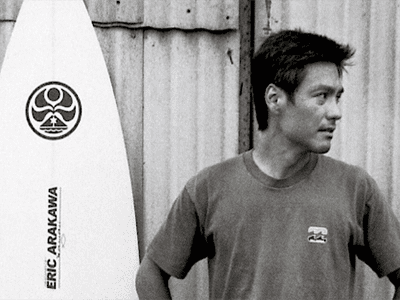
- Eric Arakawa – Pipeline authority
- Jon Pyzel – John John Florence’s shaper, modern performance
What Makes a Great Shaper?
After studying 120+ years of surfboard evolution, certain qualities separate legendary shapers from competent craftspeople:
1. Feel Over Formula
The best shapers can feel when a board is right. They run their hands over curves and rails, sensing imperfections measured in fractions of millimeters. This tactile knowledge—developed over thousands of boards—transcends measurement tools.
2. Obsessive Experimentation
Bob Simmons filled notebooks with equations. Simon Anderson tried 40+ fin configurations before finding the thruster. Innovation requires willingness to fail publicly and keep trying.
3. Deep Wave Knowledge
You can’t shape great boards without understanding waves. Master shapers are accomplished surfers who’ve ridden thousands of waves in hundreds of conditions. They shape from experience, not theory.
4. Humility to Learn
The best shapers study constantly—analyzing competitors’ designs, trying radical concepts, listening to feedback. Pride kills innovation. Curiosity creates breakthroughs.
5. Artistic Vision
Beyond hydrodynamics, great boards are beautiful. Flow lines, color work, fin placement—aesthetics matter. The best shapers are artists who happen to work with foam and fiberglass.
How Surfboards Are Made Today: The Modern Process
Whether hand-shaped or machine-cut, modern surfboard construction follows a refined process perfected over decades:
Step 1: Design & Template Creation
Traditional Method:
- Shaper sketches outline on paper
- Creates full-scale template from plywood or cardboard
- Traces template onto foam blank
Modern Method:
- Design in 3D CAD software
- Adjust curves, rocker, dimensions digitally
- Send file to CNC shaping machine
Step 2: Blank Selection
Blanks come pre-formed with basic rocker and stringer (wood spine running through center):
- Shortboards: typically 6’0″-7’0″ blanks
- Longboards: 9’0″-10’0″ blanks
- Custom thickness and density options
Step 3: Shaping the Bottom
Hand Shaping:
- Use planer to remove foam, creating bottom contours
- Work from tail to nose
- Create channels, vee, concaves as designed
- Sand smooth with block and paper
Machine Shaping:
- CNC machine cuts bottom to exact specifications
- Shaper hand-finishes subtle details
- Verify curves with templates
Step 4: Shaping the Deck
- Flip blank over
- Plane deck contours (crown, panel vee, etc.)
- Thin rails to desired thickness
- Create rail shape (hard, soft, 50/50, down rail, etc.)
Step 5: Final Sanding
- Fine-tune entire board with progressively finer sandpaper
- Remove all tool marks
- Achieve glass-smooth surface
- Blow off all dust
The shaped blank is now ready for glassing.
Step 6: Glassing (Fiberglass Lamination)
Bottom Glass:
- Cut fiberglass cloth to size (usually 6oz cloth)
- Lay cloth over bottom
- Saturate with catalyzed polyester or epoxy resin
- Squeegee out air bubbles and excess resin
- Allow to cure (4-24 hours depending on resin/temperature)
Deck Glass:
- Typically heavier glass (6oz + 4oz patch) for durability
- Same lamination process
- Add logos, color pigments, artwork in resin
Step 7: Hotcoat
- Apply additional resin layer over fiberglass
- Creates sandable surface
- Fills weave texture
Step 8: Sanding & Finishing
- Sand entire board smooth (starting ~100 grit, working to 400+)
- Level high spots, remove bumps
- Prepare surface for final coat
Step 9: Fin Installation
Glassed-On Fins (traditional):
- Shape wooden or fiberglass fins
- Glass directly onto board
Removable Fin Systems (modern standard):
- Install fin boxes/plugs during glassing
- Allows fin experimentation and replacement
- Systems: FCS, Futures, US Box, others
Step 10: Gloss & Polish (Optional)
Gloss Coat:
- Apply final clear resin layer
- Creates deep, glossy finish
Polish:
- Wet sand with 600-2000 grit
- Buff to mirror shine
- Labor-intensive but beautiful
Many modern boards skip gloss/polish for matte “sanded finish”—lighter weight, less labor, preferred for performance.
Step 11: Leash Plug & Final Details
- Install leash plug
- Add rail savers (reinforcement tape)
- Apply stickers, signatures
- Final quality inspection
Total Time: 3-7 days depending on resin cure times and finish level
Cost Breakdown (approximate):
- Materials: $80-150
- Labor (shaping): $200-400
- Labor (glassing): $150-300
- Total custom board: $500-1,000+
Production boards leverage economies of scale to offer machine-shaped, factory-glassed boards for $400-700.
How to Choose Your First Custom Surfboard
Getting a custom surfboard shaped specifically for you is a rite of passage for serious surfers. Here’s how to approach it:
Before Visiting the Shaper
Know Your Specs:
- Height and weight (affects volume needed)
- Skill level (honest assessment)
- Primary surf break (point, beach, reef?)
- Wave size typically surfed
- Current board specs (length, width, thickness)
- What you like/dislike about current board
Questions to Ask Your Shaper
- “Based on my skill and local waves, what design do you recommend?”
- “What’s the typical lead time?”
- “Can I watch you shape it?” (Many shapers welcome this)
- “What construction method? Polyester or epoxy?”
- “What fin setup works best for this design?”
Red Flags
Avoid shapers who:
- Won’t discuss design details
- Push one-size-fits-all solutions
- Can’t explain why they recommend specific dimensions
- Have no local reputation or references
- Rush the consultation
Good shapers:
- Ask detailed questions about your surfing
- Discuss trade-offs honestly
- Reference their experience with similar builds
- Set realistic expectations
- Care about your progression
Breaking In Your New Board
New boards often feel weird initially. Give it 5-10 sessions before judging. Boards “break in” as you learn their characteristics and as materials settle.
The Environmental Impact & Sustainable Future
Traditional surfboard manufacturing has significant environmental costs:
Toxic Materials:
- Polyurethane foam releases harmful chemicals during production
- Polyester resin contains volatile organic compounds (VOCs)
- Fiberglass dust and resin fumes harm shapers’ health
- Acetone and chemical solvents for cleanup
Waste:
- Shaping dust (20-30% of blank becomes waste)
- Broken/damaged boards (most end up in landfills)
- Non-biodegradable materials last centuries
- Single-use boards for beginners create massive waste
Carbon Footprint:
- Petroleum-based materials
- Energy-intensive manufacturing
- Global shipping of blanks and finished boards
Sustainable Solutions Emerging
Better Materials:
- Bio-based epoxy resins (partially plant-derived)
- Recycled EPS foam cores
- Natural fiber cloths (flax, hemp, bamboo)
- Algae-based foam research
Cleaner Processes:
- Water-based resin systems
- Better ventilation and dust collection
- Solar-powered shaping bays
- Recycling programs for broken boards
Longer-Lasting Boards:
- Improved durability through better materials
- Repair culture over replacement culture
- Modular designs allowing component replacement
Companies Leading Sustainability:
- Firewire (eco-friendly construction)
- Grain Surfboards (hollow wood construction)
- Notox (non-toxic materials)
- Entropy Resins (bio-based epoxy)
The Board Recycling Challenge
Unlike aluminum or plastic, composite surfboards can’t easily be recycled. Promising solutions:
RERIP Program (Australia):
- Collects broken boards
- Grinds into filler material
- Uses in construction and industrial applications
Upcycling Projects:
- Furniture from broken boards
- Art installations
- Decorative fins and wall hangs
Circular Economy Models:
- Board buy-back programs
- Refurbishment and resale
- Rental/subscription models
The surf industry recognizes it must become sustainable. Expect significant progress in the next decade.
Legendary Boards That Changed Everything
Certain individual surfboards transcended equipment to become cultural icons:
1. Duke Kahanamoku’s Redwood (1920s)
- Saved 8 lives at Newport Beach (1925)
- Proved surfboards were life-saving tools
- Legitimized surfing for mainland America
2. Tom Blake’s Hollow Board (1929)
- First practical lightweight surfboard
- Displayed at Bishop Museum, Honolulu
- Blueprint for modern construction
3. Bob Simmons’ Spoon (1950s)
- Wide-tailed, twin-finned speed machine
- Decades ahead of its time
- Validated scientific approach to design
4. Nat Young’s “Sam” (1966)
- Won World Championships
- Showcased vee-bottom design
- Triggered shortboard revolution
5. Simon Anderson’s First Thruster (1981)
- Changed competitive surfing overnight
- Three-fin setup became industry standard
- Still dominant design 40+ years later
6. Gerry Lopez’s Lightning Bolt Pipeline Gun (1970s)
- Defined ultimate tube-riding aesthetic
- Yellow lightning bolt logo became cultural symbol
- Shaped how world views Pipeline
7. Kelly Slater’s Channel Islands “K” Models (1990s-2000s)
- Boards that won 11 world titles
- Al Merrick’s masterpieces
- Set performance standard for generation
8. The Wavestorm (2000s)
- $100 soft-top sold at Costco
- Introduced millions to surfing
- Democratized surf access
- Ironically beloved by pros as fun alternative
What the History Teaches Us
Looking back across 1,500+ years of surfboard evolution, clear patterns emerge:
1. Innovation Meets Resistance
Every major advancement—the fin, hollow boards, foam, shortboards, thrusters—faced initial ridicule. The surf community resists change, then embraces it completely once proven. Today’s radical experiment becomes tomorrow’s standard.
2. Materials Drive Progress
Access to new materials (redwood, balsa, foam, epoxy, carbon fiber) enabled design leaps impossible with previous materials. Future breakthroughs will likely come from materials science, not just shape innovation.
3. Surfers Shape, Shapers Surf
The best innovations came from people who both shaped and surfed at high levels. Bob Simmons, Simon Anderson, Dick Brewer, Gerry Lopez—they understood performance because they lived it.
4. Specialization Follows Popularization
As surfing grew, boards became specialized: big-wave guns, small-wave grovelers, tow boards, fish, hybrids. Early boards were generalists by necessity. Modern surfers own quivers targeting specific conditions.
5. The Pendulum Swings
Surfing oscillates between extremes—heavy to light, long to short, single fin to multi-fin. When design reaches one extreme, counter-movements emerge. Today’s mid-length renaissance reflects this pattern.
6. Geography Shapes Design
Hawaiian boards evolved for powerful reef breaks. California boards for point breaks. Australian boards for beach breaks. Florida boards for mushy waves. Regional differences persist despite globalization.
7. Economics Democratize
Each manufacturing advance (hollow boards, foam, machine shaping) made surfboards more accessible. What cost $200 in 1950 (adjusted for inflation: $2,400 today) now costs $500. Technology benefits everyone.
The Sacred Relationship: Surfer & Shaper
Beyond mechanics and materials, surfboard shaping maintains something profound—a sacred relationship between craftsperson and wave rider.
When you order a custom surfboard, you’re not just buying equipment. You’re:
Trusting someone with your ocean experience. The shaper’s decisions—adding a quarter-inch of width here, softening a rail there, adjusting rocker by a millimeter—will affect hundreds of your future sessions.
Participating in tradition. Every custom board connects you to Duke Kahanamoku working redwood with hand tools, to Bob Simmons calculating curves in a garage, to ancient Hawaiian craftsmen selecting koa trees.
Supporting local craftsmanship. In an age of mass production and globalization, custom shapers maintain human-scale craft traditions.
Creating partnership. The best surfer-shaper relationships span decades. Your shaper learns your style, progression, preferences. Each board builds on the last. It’s collaboration, not transaction.
This relationship is why surfboard shaping survives despite technology that could eliminate it entirely. We could all ride identical AI-optimized boards manufactured by robots. We don’t—because surfing isn’t just about optimization.
It’s about connection. Between surfer and ocean. Between craftsperson and creation. Between tradition and innovation.
That’s what makes a shaper’s signature on your rail more than a name. It’s a promise. A piece of their knowledge, experience, and care—embedded in foam and fiberglass, waiting to carry you across waves.
The Future Is Being Shaped Right Now
In shaping bays from Hawaii to Australia to California to Indonesia, shapers are currently creating tomorrow’s breakthroughs:
- A teenager in Brazil is experimenting with asymmetrical fins that will revolutionize backside surfing
- A materials scientist in San Diego is testing graphene-infused foam that’s 50% lighter than anything available
- A veteran Hawaiian shaper is hand-shaping a big-wave gun using techniques learned from Dick Brewer, carrying knowledge forward
- A computer programmer in Australia is training AI on 50 years of board design data, finding patterns humans never noticed
- An environmental engineer is growing mushroom-based foam that could replace petroleum products entirely
The history of surfboard shaping isn’t finished. It’s being written right now, in thousands of shaping bays worldwide, by people who care deeply about helping humans ride waves better.
Experience Surfboard Shaping History in Hawaii
Want to connect with shaping history in person? Hawaii offers unique opportunities:
Bishop Museum (Honolulu)
- Ancient Hawaiian surfboards on display
- Traditional koa olo boards
- Educational exhibits on surf culture history
Surf Museums
- North Shore Surf Museum (Haleiwa)
- Surfing Heritage & Culture Center (San Clemente, CA)
Watch Master Shapers Work
Many shapers welcome visitors:
- John Pyzel (North Shore)
- Eric Arakawa (North Shore)
- Jon Carper (North Shore)
Call ahead and ask if you can watch a shaping session. Most shapers are happy to share their craft with respectful, genuinely interested observers.
Take a Shaping Class
Several programs teach basic shaping:
- Foam-E-Z Shaping Workshop (San Diego)
- Various Hawaii shaping schools (search locally)
- Learn to shape your own board in 2-3 days
There’s no better way to appreciate shaping than trying it yourself. You’ll gain massive respect for the skill required.
Quick Facts: Surfboard Shaping Timeline
500-1000 AD: Ancient Hawaiians develop sophisticated wood surfboard craft 1905: Duke Kahanamoku and Waikiki Beach Boys revive dying surf culture 1926: Tom Blake creates first hollow surfboard 1935: Tom Blake adds first fin to a surfboard 1946: Bob Simmons pioneers balsa-fiberglass construction 1950: Dale Velzy opens first surf shop in Manhattan Beach 1956: Gordon Clark and Hobie Alter develop polyurethane foam boards 1966: Nat Young wins World Championships on Bob McTavish’s vee-bottom 1967-1969: Shortboard revolution reduces average board length by 30% 1970: Single-fin shortboard becomes standard 1977: Mark Richards popularizes twin-fin design 1981: Simon Anderson invents thruster (three-fin setup) 1990s: Computer-aided design enters surfboard manufacturing 1992: Tow-in surfing requires specialized board designs 2000s: Alternative materials (epoxy, EPS, carbon) go mainstream 2010s: AI and CFD analysis optimize board designs 2020s: Sustainable materials and 3D printing emerge
Sources
This comprehensive history draws from multiple authoritative sources on surfboard evolution and shaping:
- Encyclopedia of Surfing – Matt Warshaw’s definitive surf history encyclopedia covering boards, shapers, and innovations
- Surfboard Design and Construction – Technical analysis and historical documentation
- Legendary Surfers – Biographical and historical archives
- Wikipedia: Surfboard – Comprehensive technical and historical overview
- The Surfer’s Journal – Long-form historical articles and shaper profiles
- Surfer Magazine Archives – Decades of equipment evolution documentation
- Tom Blake Biographies – Historical features on early innovations
- Bishop Museum Collections – Ancient Hawaiian surfboard artifacts and documentation
- Surfing Heritage and Culture Center – Physical archives and oral histories
- The History of Surfing by Matt Warshaw – Comprehensive book covering cultural and technical evolution
- Surf Science: An Introduction to Waves for Surfing by Tony Butt – Technical analysis of hydrodynamics
- Stoked: A History of Surf Culture by Drew Kampion – Cultural context for design evolution
- Channel Islands Surfboards – Modern shaping innovation and Al Merrick history
- Firewire Surfboards Technology – Contemporary materials and construction methods
- Clark Foam History – Industry impact and blank manufacturing
- Simon Anderson Thruster Innovation – First-person account of three-fin development
- Grain Surfboards – Hollow wood construction revival
- SHACC Oral Histories – First-person accounts from legendary shapers
Mahalo for reading. May your next board be shaped with aloha and ridden with stoke. 🏄♂️🌊