

Surf Breaks
Ala Moana Bowls Surf Break Guide | Oahu’s Iconic Town Left
May
Ala Moana Bowls Surf Report
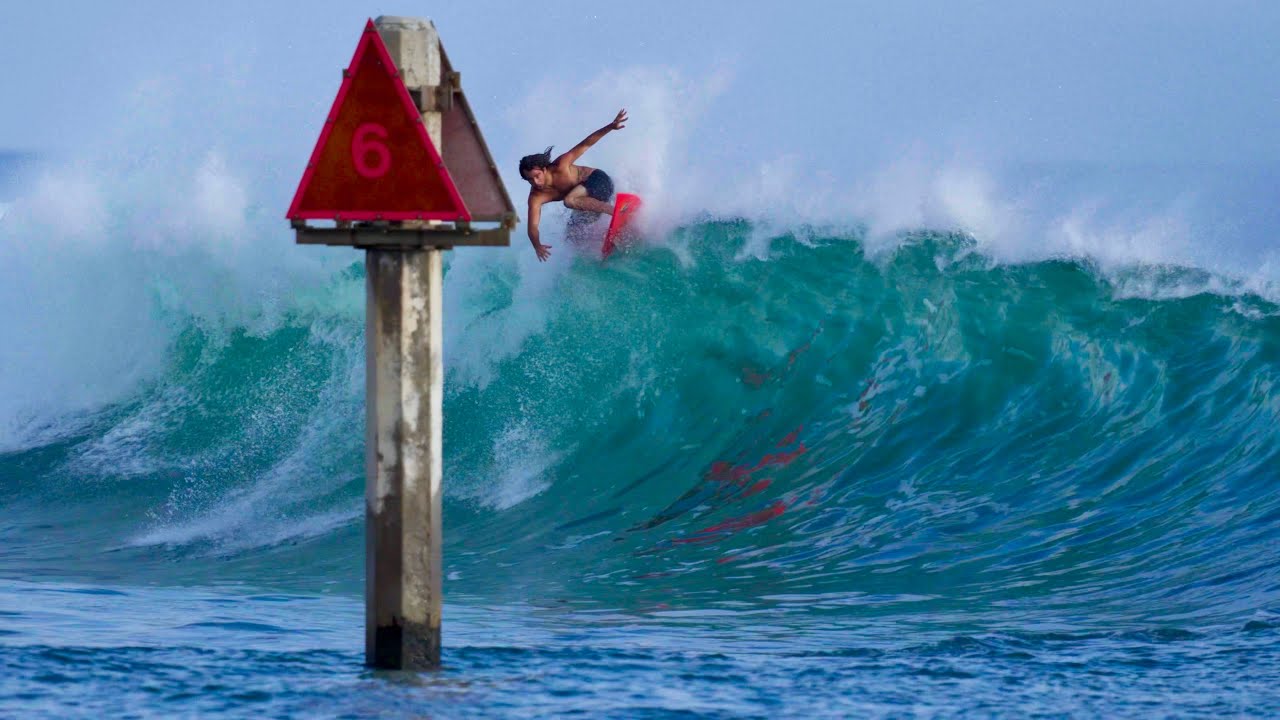
Updated …Image courtesy of youtube.com
Ala Moana Bowls Surf Break Guide: Oahu’s Most Iconic Town Left
There is a version of Oahu surfing that exists entirely outside the North Shore calendar. No contest jerseys, no media circus, no rental car traffic backed up past Foodland on a solid swell day. Just a reef break that has been doing its thing through every south swell season for generations, in the middle of the most urban stretch of coastline in Hawaii. Ala Moana Bowls is that break. It sits right there in plain sight, fronting one of Honolulu’s most visited beach parks, visible from the Nimitz on a clear day — and most people who drive past it every morning have no idea what they’re looking at.
The surfers in the water know. They have always known. Bowls is town surfing’s home reef, the wave that built generations of serious Honolulu surfers who never needed to drive to the North Shore to find something real. It is not the most famous break in Hawaii. It is not the heaviest, or the most photographed, or the one that ends up in highlight reels. But it is consistent, it is demanding, and it has shaped the approach of more Oahu surfers than any break outside of Waikiki. That matters. That is worth knowing the full story of.
This guide covers everything: the wave mechanics, the history, the optimal conditions, how to approach the lineup, what to expect when you get there, and a few things you genuinely need to know before you paddle out.
The Place: Ala Moana Bowls and Its Setting
Ala Moana Bowls sits on the reef shelf fronting Ala Moana Beach Park, a 76-acre city park that runs along Ala Moana Boulevard between the Ala Wai small boat harbor and Magic Island to the west. The park occupies one of the most strategically central positions on Oahu’s south shore — a few minutes from downtown Honolulu in one direction and from the heart of Waikiki in the other. The break itself is located roughly in front of the middle section of the park, accessed via paddle from the beach through the channel that runs between the surf zone and the shoreline.
The geography here is the product of deliberate engineering. The Ala Wai Canal, dredged across the base of Waikiki in the 1920s, fundamentally reshaped the south shore of Honolulu by rerouting streams that had fed the wetlands behind Waikiki. The dredged material was used as fill, and Ala Moana Beach Park was built on that reclaimed land, opening in 1934. Magic Island — the peninsula that forms the western boundary of the park and defines one wall of the channel that runs past the surf break — came later. It was created in the 1960s as part of an ambitious but ultimately abandoned resort development project. The planned island never became what its developers intended, but the land was retained as a public park and has been a fixture of the Bowls landscape ever since.
The reef predates all of this. It was there before the canal, before the park, before the city. Hawaiian watermen read this reef for generations, and the bowl-shaped formation that gives the break its name is not a product of construction — it is the original character of the reef itself, a concave shelf that has been catching south swells and throwing lefts since long before anyone named them.
Understanding the Wave: The Bowl and the Left
The defining feature of Ala Moana Bowls as a surf break is the concave reef formation that creates the wave’s signature shape. Unlike a straight reef section that produces a predictably uniform wall, the bowl creates a gathering effect — south and southwest swells funnel into the depression in the reef and throw with more power and vertical face than the wave’s size alone would suggest. This is why Bowls can feel heavier and faster than the Hawaiian scale reading implies. A three-foot day at Bowls is more consequential than a three-foot day at Waikiki’s sandy-bottom breaks.
The wave itself is a left. It breaks from the main peak and runs toward Magic Island, offering sections that open up, reform, and allow experienced surfers to string together multiple maneuvers across a long ride. On a clean south swell with light offshores, the left can wall up beautifully — offering a fast initial section off the takeoff, a brief flatter mid-section where speed generation matters, and then a reforming wall toward the inside that rewards surfers who have kept their momentum. On the best days, it is as satisfying a town wave as Oahu produces.
There is also a right, though it is shorter, less consistent, and not what most surfers are there for. The peak at Bowls can produce a brief right-hand section before closing out toward the beach, and on certain swell angles it can be legitimate — but the left is the wave, and the left is what the lineup organizes itself around.
The reef is shallow. On lower tides, it is very shallow. The bowl formation that creates the wave’s shape also concentrates the swell’s energy, which means the reef directly under the peak is taking the full force of every set. Surfers who fall at Bowls on an overhead day are not falling into deep water. This is not Waikiki. The consequences here are real, and the break makes no apologies for that.
Optimal Conditions
Swell Direction and Size
Ala Moana Bowls is a south shore break and responds to south and south-southwest swells as its primary driver. The sweet spot is a south to south-southwest direction (roughly 170 to 210 degrees), which sends swell energy directly into the bowl and produces the most organized, quality waves on the reef. Southwest swells tend to wrap into the break with more angle and can produce excellent, long-walled lefts. True south swells tend to be more direct and can generate more vertical faces on the peak.
The working range is approximately 3 to 8 feet on the Hawaiian scale. In the 3-to-5-foot range, Bowls is at its most enjoyable for experienced intermediate and advanced surfers — the reef is covered, the left walls up consistently, and the crowd, while always present, is manageable. At 6 to 8 feet, Bowls becomes a serious wave. The bowl section throws harder, the current intensifies across the break, and the reef demands full respect. Above 8 feet, the wave begins to close out across the bowl and loses its shape — the outer sections become more unpredictable and the current along the reef makes positioning difficult.
Southeast swells can also produce rideable waves at Bowls, though they tend to be smaller and less organized than pure south swells. Easterly swell energy gets partially blocked by the Koko Head and Diamond Head coastline before it reaches Ala Moana and rarely produces quality surf at the break.
Wind
The ideal wind for Bowls is light offshore, which at Ala Moana means northeast to east winds behind the south-facing reef. Trade winds from the east-northeast, which are the dominant wind pattern on Oahu through much of the year, are effectively offshore at Bowls and clean the wave face considerably. This is one of the break’s real strengths — on a good south swell morning with established trades, Bowls can be genuinely glassy with groomed faces and clean conditions through the early session.
By midday, the trades typically strengthen. As wind speed increases, the wave face gets choppy and the quality drops. South or kona winds, which are less common but occur several times per season, are onshore at Bowls and turn the break into a messy, bumpy surface that is not worth the paddle out. Morning sessions are almost always the call here. The window between dawn and 10 a.m. on a solid south swell day with established trades is when Bowls shows its best.
Tide
Mid-tide is the most consistently surfable condition at Bowls. On lower tides, the reef becomes dangerously shallow at the peak and the entry and exit over the nearshore reef become more technical and more consequential. Lower tide sessions are not recommended for surfers unfamiliar with the break — the dry reef sections visible between sets are not a visual you want to be surprised by mid-session. On higher tides, the wave loses some of its sharpness and the bowl effect is less pronounced, but the added water cushion makes wipeouts more forgiving. For beginners or anyone surfing Bowls for the first time, a higher tide is preferable to a lower one. For experienced surfers looking for the wave at its sharpest and most vertical, a mid-tide incoming produces the best combination of shape and safety.
Best Times of Year
Bowls is primarily a summer break. The south swell season runs from May through September, with June, July, and August typically delivering the most consistent surf at the break. Southern Hemisphere storm systems generate the long-period groundswells that produce Bowls at its best — organized, powerful south swells with enough period to make the bowl section throw properly. May and September can be excellent transition months with active south swell activity and thinner crowds than the peak summer weeks.
Winter months see south swell activity drop significantly. The break does not go completely flat — storm swells and trade wind swells can generate occasional small surf — but winter is not the time to plan a session at Bowls. If you are visiting Oahu in winter and want to surf, the North Shore is where you should be looking: Pipeline, Sunset Beach, Waimea Bay, Velzyland, and Gas Chambers all come alive in the October through April window when the south shore is sleeping.
Who Should Surf Ala Moana Bowls
Beginners
Bowls is not a beginner wave. This is worth stating clearly, because the accessibility of Ala Moana Beach Park — easy parking, a beautiful beach, a wide channel — can give first-time visitors the impression that the surf break offshore is equally approachable. It is not. The shallow reef, the competitive local lineup, and the genuine power of the wave on anything above a small day make Bowls inappropriate for surfers who are still learning fundamentals. If you are new to surfing or new to reef breaks, Queens in Waikiki is a far better starting point. The sandy bottom, the gentle wave energy, and the established beginner presence at Queens make it the right introduction to surfing on Oahu’s south shore.
If you are an absolute beginner and the beach park is where you find yourself, the inside channel area and the beach itself are fine for bodyboarding on small days, but the main Bowls lineup is not the place to be on your first or fifth session.
Intermediate Surfers
Intermediate surfers — comfortable on a reef break, confident with pop-ups and basic maneuvering, with some experience reading lineups — will find Bowls genuinely rewarding on smaller days. A 2-to-4-foot south swell with light trades is an ideal entry point for someone at this level. The left walls up consistently enough to practice rail work and linking turns, and the wave’s shape gives you something to work with rather than just a close-out section to survive. The channel provides a clear paddle-out route and a reference point for positioning.
Be aware that the lineup at Bowls is predominantly local. Intermediate visitors who approach with awareness, take their time reading how the peak works before paddling to the takeoff zone, and wait their turn will generally have a fine experience. Aggressive paddling or dropping in on local surfers will not be tolerated and should not be attempted.
Advanced Surfers
On a solid south swell — head high and above, clean conditions, established trades — Bowls is a genuinely excellent wave for experienced surfers. The bowl section on a 6-foot day throws with authority, the left wall opens up for serious rail surfing and carving, and the occasional reform section inside rewards surfers who can read the wave’s energy and keep their speed. This is the caliber of wave that has trained competitive surfers and produced serious talent across decades of Honolulu surfing.
Advanced surfers who know the break will also recognize when to move to alternate positioning on the reef on bigger days, how to manage the current that runs across the break on larger swells, and when the bowl is throwing versus closing out. That knowledge comes from time in the water here, and there is no shortcut for it. First-time visitors who are advanced surfers should spend the first part of a session reading the lineup from the channel before committing to the peak.
From the Water: What Bowls Actually Teaches You
I have surfed Bowls more times than I can count — on days that were fun and days that were humbling, in crowds and in the occasional quiet morning when the wave felt like it belonged entirely to whoever showed up first. It is one of those breaks that becomes part of your surfing vocabulary whether you plan for it or not if you spend enough time on Oahu’s south shore.
What Bowls teaches you, specifically, is pace. The left does not wait for you. You cannot hesitate on the takeoff, and you cannot back off mid-turn without losing the momentum the bowl section gave you. Surfers who grew up on forgiving sand-bottom breaks or slow point breaks often find Bowls frustrating at first because the wave requires you to commit fully and immediately. Once you have that wired, it makes you better everywhere else.
The other thing Bowls will eventually teach you is wana. The black-spined sea urchins colonize the cracks and shelves of the reef out there, and on the reef breaks of Oahu’s south shore, getting wana is an occupational hazard rather than a freak occurrence. I have gotten wana at Bowls — a foot full of spines from a wipeout that puts you into the reef at the wrong angle. The spines break off under the skin and dissolve slowly, but if you do not treat it immediately the area can stay inflamed and painful for weeks, sometimes months. The local knowledge fix is simple: keep a bottle of white vinegar in your truck or your bag. Get out of the water, pour the vinegar directly on the affected area immediately. The acetic acid starts breaking down the spines and significantly reduces the inflammatory response. It is one of those things every regular Bowls surfer knows and that nobody tells visitors until after the fact. Now you know before.
Practical Information
Getting There
Ala Moana Beach Park is located at 1201 Ala Moana Boulevard, Honolulu, between the Ala Wai Small Boat Harbor to the east and Magic Island to the west. From Waikiki, the park is approximately 10 to 15 minutes by car depending on traffic. From downtown Honolulu, it is 5 minutes. The park is directly adjacent to Ala Moana Center, one of the largest shopping centers in Hawaii, which means the surrounding road network is well-marked and easy to navigate.
Check current Oahu surf conditions before making the drive — on small or flat days, the drive is not worth it and Waikiki’s breaks may be more active.
Parking
Ala Moana Beach Park has a large free parking lot running the length of the park along Ala Moana Boulevard, with additional parking areas near the Magic Island entrance. The lot is generally spacious on weekdays. On weekends, particularly during peak summer south swell days, it fills early. Arrive before 7 a.m. if you want a guaranteed spot close to the beach on a busy morning. Do not leave valuables visible in your vehicle — car break-ins occur throughout Oahu beach parks and Ala Moana is no exception. Take your valuables with you or leave them at your accommodation.
Lifeguards
Ala Moana Beach Park has City and County of Honolulu lifeguard coverage at the beach. However, the lifeguard towers serve the designated swim area, which is separated from the surf break by the channel. Surfers paddling out to the Bowls lineup are operating outside the guarded swim zone. Treat your session accordingly — surf with a partner when possible, know your limits, and do not paddle out in conditions that exceed your ability level. The presence of lifeguards at the park does not mean you have a safety net in the surf zone.
Facilities
The park has full restroom facilities, outdoor showers, picnic areas, and grassy lawn stretching the length of the beach. The Magic Island section of the park has additional restrooms and a circular walkway around the peninsula that is popular with joggers and families. Outdoor showers to rinse off after a session are located at multiple points along the park.
Ala Moana Center is a five-minute walk from the beach and has restaurants, a food court, and every practical amenity you could need. Local plate lunch spots, Japanese restaurants, and the full range of Honolulu dining options are all within easy reach after a session.
Surf Shops and Rentals
Local Motion has long been a fixture of Honolulu surf retail and is a reasonable starting point for board rental if you are visiting without gear. For Bowls specifically, bring a board appropriate for the conditions — attempting to rent a foamboard and paddle out to the Bowls lineup is not an appropriate approach to this break.
Gear Recommendations
Board Selection
For intermediate surfers on standard south swell days (3 to 5 feet Hawaiian): a mid-length board in the 6’8″ to 7’4″ range handles the left well and gives enough volume to catch the bowl section without sacrificing too much maneuverability. A higher-volume performance shortboard or a fish works well in this range for surfers comfortable on shorter boards.
For advanced surfers: a performance shortboard in the 5’8″ to 6’2″ range is appropriate on standard overhead days. When the swell pushes above 6 feet and the bowl section starts throwing harder, stepping up to a 6’4″ to 6’8″ board with more drive and hold is worth considering. Bowls on a legitimate 8-foot south swell is a powerful wave and a dedicated step-up board is not overkill.
Reef Safety
The reef at Bowls is shallow enough to take seriously. Reef booties in the 2 to 3mm range are a reasonable precaution, particularly if you are unfamiliar with the reef or prone to falls near the entry and exit sections. Cover your head when wiping out in shallow water. Do not try to stand on the reef in less than waist-deep water — the surface is uneven and covered in urchins. When a set catches you inside, go limp over the reef rather than fighting it, and protect your head.
A leash is non-negotiable at Bowls. The current that runs across the break on bigger days is real, and losing your board means a swim that can carry you significantly down the reef before you can recover. Use a leash appropriate for the conditions — a 7-foot standard leash for moderate days, a heavier surf leash for bigger days.
Sun and Reef Protection
Hawaii law prohibits sunscreens containing oxybenzone and octinoxate due to their documented harm to reef ecosystems. Use a reef-safe, mineral-based sunscreen only. Apply before you leave your vehicle — not on the beach where residue enters the water directly. A rashguard or UV shirt is practical for longer sessions and any midday surf, when the Hawaiian sun at this latitude is intense enough to burn through a short session.
Respecting Ala Moana Bowls
The Bowls lineup is a local lineup. It has been a local lineup for as long as there have been surfers in Honolulu, and the surfers who surf it daily have built a relationship with this wave across years and decades of sessions. Visiting surfers are guests in that space, and the standard principles of respectful surfing apply here with real force.
Do not drop in. The pecking order at a break like Bowls is earned through time and consistency, and a visitor who drops in on a local surfer in the takeoff zone is not going to have a good session. Wait your turn, read the lineup, and take the waves that come to you through legitimate rotation. One quality wave caught correctly is worth more than three waves taken out of turn.
Do not paddle to the peak immediately. Spend the first part of your session in the channel reading the break — where the sets are hitting, how the bowl section is throwing, where the current is running, and how the existing lineup is organized. That five minutes of observation will make the rest of the session better and reduce the chance of a conflict or a dangerous situation.
Take your trash with you. Ala Moana Beach Park is a public resource for the entire community of Honolulu, and the beach and the water deserve the same respect as any natural space in Hawaii.
Frequently Asked Questions
Q: Is Ala Moana Bowls good for beginners?
No. Bowls is an intermediate to advanced reef break with a competitive local lineup and a shallow reef that is unforgiving of mistakes. Beginners should surf Queens in Waikiki, which offers a sandy bottom, gentle wave energy, and a well-established beginner presence. Once you have solid fundamentals and some reef break experience, Bowls becomes an appropriate next step.
Q: What swell does Bowls need to work?
Bowls needs a south to south-southwest swell in the 3-foot-plus Hawaiian range to produce quality surf. The sweet spot is a clean south-southwest groundswell in the 3-to-6-foot range with light northeast trade winds. Pure south swells also work well and can produce the most vertical bowl sections.
Q: How do I treat wana if I get it at Bowls?
Get out of the water and pour white vinegar directly on the affected area immediately. The acetic acid starts breaking down the spines and significantly reduces the inflammatory response. Do not try to dig the spines out with a needle or tweezers — the spines are brittle and will break further into the skin. Vinegar, rest, and time handle most wana encounters. If the area shows signs of serious infection or you have spines deeply embedded near joints, see a doctor.
Q: When is the best time of year to surf Bowls?
June through August is the peak season, driven by Southern Hemisphere groundswells that produce consistent south swell energy. May and September are good shoulder months with active swell and thinner crowds. The break goes largely dormant through winter when the south swell season ends.
Q: Is the lineup at Bowls crowded?
Yes, consistently. Bowls is one of the most accessible performance reef breaks in Honolulu and it attracts a committed local contingent year-round. On a quality south swell morning, expect a full lineup. Early sessions before 8 a.m. are the best window for thinner crowds. Afternoon sessions after the trades kick up are typically less crowded but lower quality.
Q: How does Bowls compare to Waikiki’s breaks?
Bowls is a fundamentally different experience from Queens or Canoes. Waikiki’s main breaks are long, rolling waves over sandy and coral bottom that favor longboards and produce forgiving, beginner-appropriate surf. Bowls is a fast, punchy, shallow reef break that rewards performance surfing and punishes hesitation. The two exist in close geographic proximity but occupy completely different territory in terms of the surfing they produce.
Q: Is there parking at Ala Moana Beach Park?
Yes — the park has a large free parking lot running along Ala Moana Boulevard, with additional spaces near Magic Island. Arrive early on weekend south swell days, as the lot fills by mid-morning.
Ala Moana Bowls in the Context of Oahu Surfing
Bowls occupies a unique position in the Oahu surfing map. It is the primary performance break on the south shore between Waikiki and the airport corridor — the break where town surfers who outgrew Queens and the Waikiki longboard scene made the transition to serious shortboard surfing on reef. For decades it has served that function quietly and consistently, producing surfers who then took that foundation up the coast to the North Shore breaks that get the headlines: Sunset Beach, Pipeline, Waimea Bay. The path from Waikiki to the North Shore, for many generations of Oahu surfers, ran directly through Bowls.
It also serves a different function for experienced surfers who know the south shore — as the reliable, year-round constant that is always there in summer when the North Shore is flat and the swell is coming from the south. While mainland visitors are watching the North Shore go quiet and wondering where the surf went, Honolulu locals are checking the buoys for south swell and heading to Bowls. That seasonal rhythm is part of what makes Oahu surfing unique: the island has two entirely separate surf seasons running in parallel, one facing north and one facing south, and surfers who understand both are never really without options.
Bowls is not as glamorous as Pipeline, or as historic as Waikiki. It does not draw contests or cameras or the international surf industry machine. What it draws is the same crew of Honolulu surfers, session after session, year after year, who have made this reef break their home water. That consistency is its own form of significance.
If you are visiting Oahu in summer, show up at Bowls on a clean south swell morning before the trades kick up. Paddle out through the channel, sit in the lineup, and watch how the bowl section throws. You will understand immediately why this wave has held the attention of serious Honolulu surfers for as long as anyone can remember.
Mahalo for reading. Go with respect, go early, and treat the reef and the people in the water the way you would want your own home break treated.
Sources
- Surfline — Ala Moana Bowls Surf Report and Break Profile
- Encyclopedia of Surfing — Matt Warshaw
- City and County of Honolulu — Ala Moana Beach Park
- NOAA National Weather Service — Honolulu Marine Forecasts
- Surf-Forecast.com — Ala Moana Bowls
- Hawaii Department of Health — Reef-Safe Sunscreen Information
Related Surf Break Guides:
- Queens Surf Break Guide
- Pipeline Surf Break Guide
- Sunset Beach Surf Break Guide
- Waimea Bay Surf Break Guide
- Velzyland Surf Break Guide
- Gas Chambers Surf Break Guide
- History of Surfing in Hawaii
Last Updated: May 2026
Not sure this is the right wave for you? Compare every Oahu break by skill level and season in our guide to the best surf spots in Hawaii.
