
Legends
Jeff Hakman: Mr. Sunset and the Surf Legend Who Built an Empire | Hawaii.surf
May
Image courtesy of surfsplendorpodcast.com
Jeff Hakman: Mr. Sunset and the Surf Legend Who Built an Empire
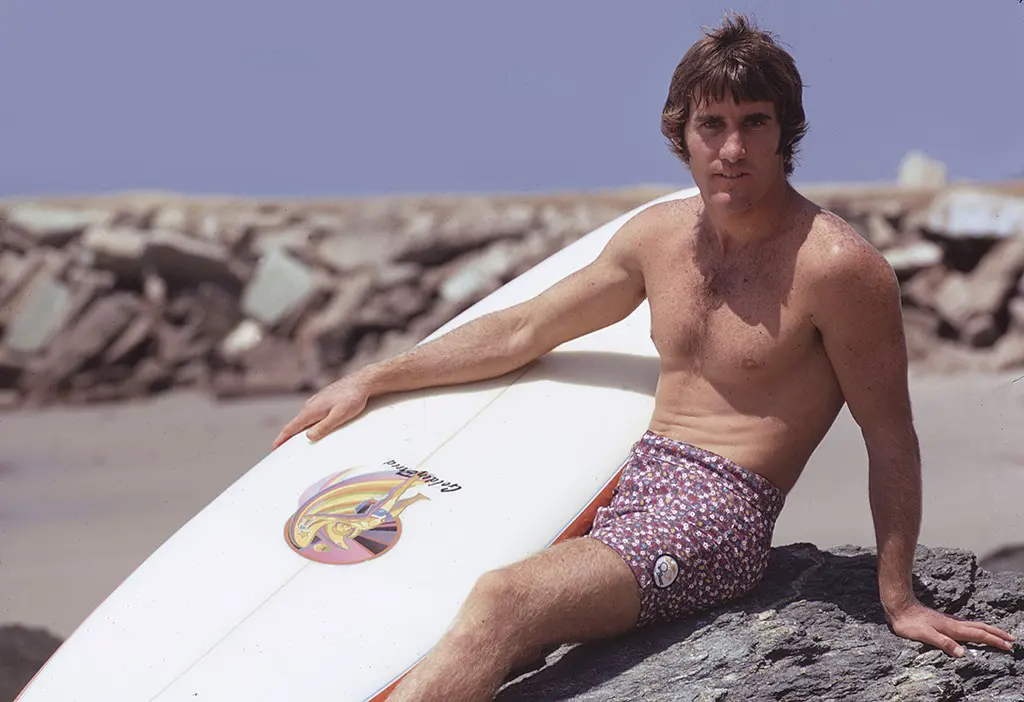
He was seventeen years old, standing on the beach at Sunset in 1965, invited to compete in a brand new contest named after the greatest waterman who ever lived. Every heavy hitter in Hawaiian surfing was in the water that day. Jeff Hakman paddled out and beat them all.
That win — at the inaugural Duke Kahanamoku Invitational — announced a surfer who would spend the next decade redefining what it meant to be great on the North Shore. It also began one of the most remarkable stories in surfing history: world titles, industry empire, near-total collapse, and a comeback that left him standing on the other side with his dignity and his stoke intact.
From Palos Verdes to the North Shore
Hakman was born in Redondo Beach, California in 1948, the son of an aeronautical engineer who also surfed. His father handed him a board at age eight. By the time the family relocated to Oahu when Jeff was ten, surfing was already in his blood. He was riding Waimea Bay at thirteen, which tells you everything you need to know about his appetite for big water.
Hawaii shaped him fast. The North Shore in the early 1960s was its own world — a tight community of surfers pushing into bigger and more dangerous surf, guided by legends like Greg Noll and fueled by the belief that Hawaiian waves were the truest test of a surfer’s worth. Hakman absorbed all of it. By the time he was invited to the inaugural Duke Kahanamoku Invitational at seventeen, he was already a known quantity on the North Shore. What nobody expected was what happened next.
Winning the Duke at 17
The Duke Kahanamoku Invitational was the most prestigious surf contest in the world. Run at Sunset Beach, it drew the best surfers on the planet and carried the name and blessing of Duke Kahanamoku himself — the father of modern surfing, a man whose legacy loomed over every Hawaiian wave. Winning it as a teenager was almost incomprehensible.
Hakman won it anyway. His surfing that day was powerful and instinctive, built for Sunset’s long walls and shifting peaks. More than the trophy, he later said, was the moment Duke himself passed on his aloha to the young winner. That exchange carried weight that no ranking or rating could measure.
Dominating Sunset for a Decade
The 1965 Duke win wasn’t a fluke — it was a preview. Through the late 1960s and into the 1970s, Jeff Hakman became the dominant competitive surfer on the North Shore, his name synonymous with Sunset Beach. He won the Duke again in 1970 and 1971. He won the inaugural Pipeline Masters in 1971. He took the Hang Ten American Pro in 1972 and 1973, added the Gunston 500 in 1972, and in 1974 finished runner-up at the Smirnoff at Waimea Bay in thirty-foot surf — a result that, in the context of the day, was considered nearly as impressive as a win.
He rode boards shaped by Dick Brewer, whose designs were perfectly matched to the demands of heavy Hawaiian surf. The Brewer-Hakman combination was a recurring theme of that era: a shaper who understood the ocean at a molecular level, and a surfer who could make the most of every inch of rail. Together they helped push performance surfing forward on the North Shore in ways that are still felt in board design today.
By 1976, when Hakman became the first non-Australian to win the prestigious Bells Beach event in Victoria, he had quietly assembled one of the greatest competitive records in the history of Hawaiian surfing. The Surfer’s Journal would later note that between the ages of twenty-one and twenty-seven, he won more major surfing titles than anyone in the world.
The Quiksilver Story
The Bells Beach win in 1976 was the last competitive event of Hakman’s career — and the starting gun for his second act. On that same trip to Australia, he sat down with Alan Green and John Law, the founders of a small Torquay boardshort brand called Quiksilver, and asked if he could have the license to bring their brand to America.
They said yes on a handshake.
Back in the States, Hakman partnered with Bob McKnight to launch Quiksilver USA. The timing was right, the product was excellent, and Hakman’s credibility in the surf world was priceless. The brand grew fast. By the early 1980s, Quiksilver was on its way to becoming the largest surf company on the planet.
Then the bottom fell out. Hakman’s struggle with heroin addiction — detailed unflinchingly in Phil Jarratt’s biography Mr. Sunset: The Jeff Hakman Story — cost him the Quiksilver USA license and very nearly everything else. It was a brutal chapter for a surfer who had seemed almost immune to failure.
The Comeback
Hakman went to rehab. He came out clean. And in 1984, with characteristic stubbornness, he co-founded Quiksilver Europe alongside Harry Hodge, Brigitte Darrigrand, and John Winship — building a second empire from scratch. When Quiksilver Europe eventually merged with the US operation, he cashed out financially sound.
He settled on Kauai with his family. He still surfs big waves.
In 2009 he was inducted into the Surfers’ Hall of Fame in Huntington Beach. The surfing world had long since forgiven the detour — and recognized the full arc for what it was: a life that moved through grace, disaster, and redemption without ever losing the thing that started it all at a beach break in Palos Verdes when he was eight years old.
Why Jeff Hakman Matters
The legend of Jeff Hakman is easy to reduce to a highlight reel: teenage Duke winner, Sunset master, Quiksilver founder. But the real story is about someone who was shaped by Hawaii at its most demanding — by Sunset Beach, by the North Shore code, by the culture Duke Kahanamoku built — and who carried that foundation through decades of extremes without losing his footing entirely.
The nickname Mr. Sunset belongs to him permanently. But the fuller story is bigger than any one break.
Sources
- Surfing Walk of Fame: Jeff Hakman
- The Surfer’s Journal: Soundings — Jeff Hakman
- Encyclopedia of Surfing: Jeff Hakman
- Wikipedia: Jeff Hakman
- Phil Jarratt, Mr. Sunset: The Jeff Hakman Story
