

Informational, Surf Break Series
Sunset Beach Surf Break Guide | History, Conditions & North Shore Power
Jan
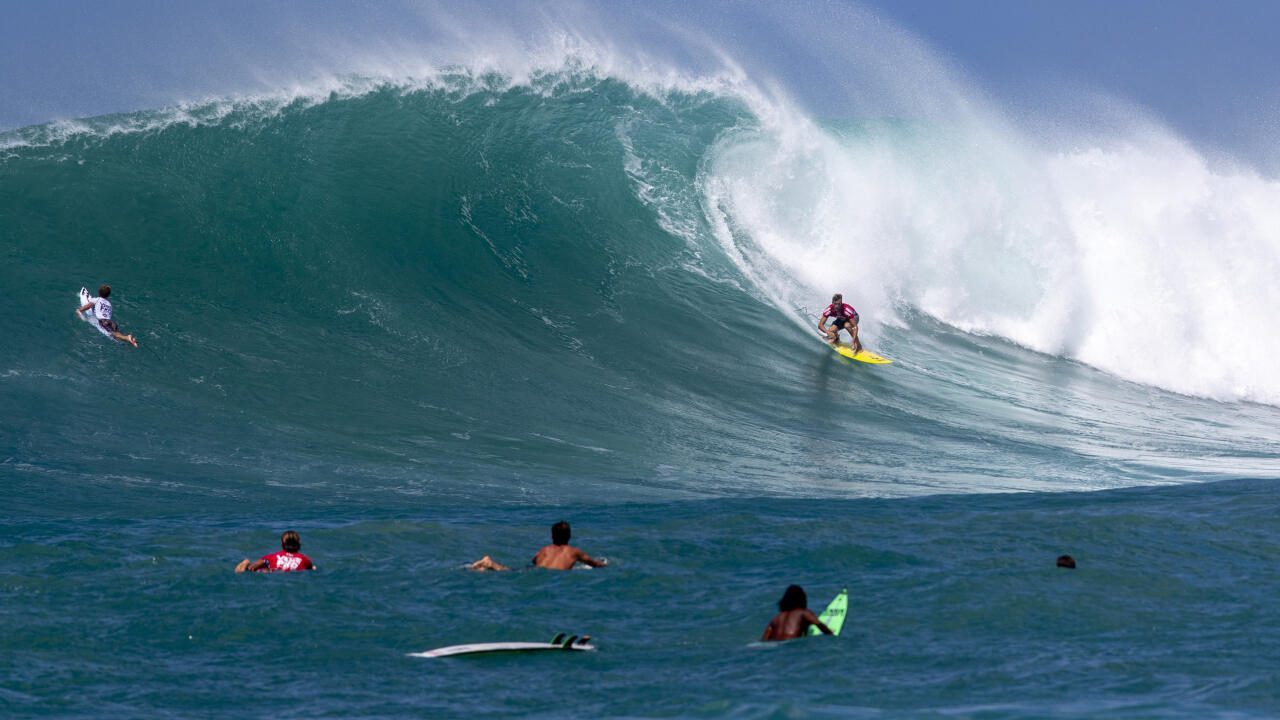
Image courtesy of worldsurfleague
Sunset Beach Surf Break Guide: Mastering Oahu’s Ultimate Big Wave Training Ground
Picture this: You’re sitting on the beach at Sunset Beach, watching waves march in from deep water like liquid mountains, each set transforming the playing field. What was calm inside suddenly erupts as triple overhead peaks appear seemingly out of nowhere, shifting, wedging, and challenging even the most experienced surfers. Welcome to Sunset Beach, the North Shore’s most unpredictable, unforgiving, and ultimately rewarding surf break. Dubbed “the ultimate training ground for big wave surfing,” Sunset has humbled world champions and launched careers in equal measure.
Unlike Pipeline’s photogenic barrels or Waimea’s raw power, Sunset demands something different: wave reading wizardry, positioning mastery, and the mental fortitude to commit when bombs loom on the horizon. This comprehensive guide covers everything from Sunset’s complex peak system and optimal conditions to its storied history, safety protocols, and why professional surfers who master Sunset gain an edge at big waves worldwide.
Whether you’re an advanced surfer plotting your first Sunset session, a big wave enthusiast studying the North Shore’s legendary breaks, or a spectator seeking to understand what makes this wave so special, this guide provides the knowledge you need.
The Legacy of Sunset Beach: Where Champions Are Forged
Sunset Beach’s history intertwines with the evolution of big wave surfing itself, serving as the proving ground where generations of surfers have tested their skills against nature’s most unpredictable canvas.
Early Pioneers and the Golden Era
While Hawaiians surfed the North Shore for centuries, modern big wave surfing at Sunset Beach gained momentum in the 1950s and 1960s. Pioneers like Greg Noll, Fred Van Dyke, Pat Curren, and Buzzy Trent ventured into increasingly larger conditions, developing the techniques and equipment that made riding Sunset’s powerful walls possible.
The 1960s and 1970s represented Sunset’s golden era, when it served as the North Shore’s primary big wave destination before Waimea Bay’s closeout style gained favor for truly massive days. During this period, Sunset hosted some of professional surfing’s most prestigious competitions, with the Smirnoff Pro (later the World Cup) establishing Sunset as the ultimate competitive testing ground.
Mr. Sunset: Jeff Hakman
No discussion of Sunset Beach is complete without honoring Jeff Hakman, who earned the title “Mr. Sunset” through his mastery of the break’s complexities. Hakman’s approach combined patience, positioning excellence, and commitment, allowing him to dominate the lineup during the late 1960s and 1970s. His performances at Sunset proved that understanding the wave’s mechanics mattered as much as raw talent or fearlessness.
Other legends of this era included Reno Abellira, whose smooth style made Sunset’s walls look effortless; Tom Carroll, whose fierce competitiveness and powerful surfing suited Sunset perfectly; and Roger Erickson, whose big wave prowess made him a force at Sunset during its most challenging days.
Modern Era and Evolution
Contemporary Sunset Beach remains a critical component of North Shore surfing culture and professional competition. The break has played host to numerous World Surf League events, including the Vans World Cup of Surfing, part of the legendary Triple Crown of Surfing series.
Local heroes have continued Sunset’s tradition of excellence. Pancho Sullivan, Mike Ho, Johnny-Boy Gomes, Sunny Garcia, Andy Irons, and Levi Hodel all built their reputations partially on performances at Sunset, demonstrating the wave’s enduring importance as a proving ground.
Interestingly, Sunset Beach represents one of the few major competitions that Kelly Slater, surfing’s most decorated champion with 11 world titles, never won. This fact alone demonstrates how fickle, difficult, and specialized Sunset Beach can be. Even the world’s greatest surfers struggle with Sunset’s unpredictability and complexity.
Why Sunset Matters for Big Wave Surfing
Sunset Beach is often called “the ultimate training ground for big wave surfing,” and for good reason. The break teaches crucial skills that transfer to bigger, heavier waves worldwide:
Wave Reading: Sunset’s shifting peaks and unpredictable sets force surfers to develop exceptional wave reading abilities Positioning: Knowing where to sit in Sunset’s massive playing field determines success or getting caught inside Commitment: Hesitation at Sunset results in missed waves or dangerous late drops; committing to uncertain takeoffs builds confidence Paddling Endurance: Sunset’s long paddle battles and distances build cardiovascular capacity needed for all big wave surfing Mental Fortitude: Handling Sunset’s beatings and frustrations prepares surfers mentally for heavier consequences elsewhere
Many of the world’s best big wave surfers credit Sunset Beach with developing their skills and confidence for places like Mavericks, Jaws, and Puerto Escondido.
Understanding Sunset Beach: The Complex Peak System
Sunset Beach isn’t a single peak but rather a massive reef system producing multiple distinct breaks across an enormous playing field. Understanding these different zones is essential for both surfing and appreciating Sunset’s complexity.
The Reef Structure and Layout
Sunset’s reef structure consists of lava formations that slowly drop away offshore, creating the conditions for waves to jack up and break across a broad area. The reef bottom features varying depths and contours that warp and refract incoming swells, giving Sunset its distinctive shifting peaks and unpredictable nature.
The overall Sunset Beach zone extends from Backyards to the north down to the channel separating Sunset from Kammieland to the south. This represents roughly 0.4 to 0.5 miles of coastline where waves can break, an enormous area compared to most surf breaks.
Sunset Point: The Inside Section
Sunset Point sits nearest to shore on the northern end of the main peak system. This inside section works best when surf is smaller, typically in the head-high to several feet overhead range. Sunset Point offers a more manageable introduction to the Sunset Beach experience, with shorter rides and less power than the outer sections.
Characteristics of Sunset Point include breaking closer to shore with easier paddle-out, making it best for progression toward the bigger outside peaks. It’s less powerful than main peaks but still demanding, and can produce fun, rippable walls when conditions align. It’s particularly popular with intermediate to advanced surfers building toward the outside.
Middles: The Transition Zone
As swell size increases to overhead range, a section called Middles begins breaking. This area sits between Sunset Point and the main outside peaks, offering walls with increasing power and length. Middles represents where Sunset Beach starts showing its true character, with waves that can produce quality barrels and require solid big wave skills.
Middles works best at overhead to double overhead size range with moderate to long-period northwest swells, lighter wind conditions, and mid to high tide.
Inside Bowl and West Peak: Prime Time Sunset
When swells reach double overhead or larger, the legendary Inside Bowl and West Peak activate, producing the waves that define Sunset Beach. This is where professional competitions occur, where locals establish dominance, and where Sunset shows both its beauty and brutality.
Inside Bowl sits on the southern end of the main peak system and produces one of the North Shore’s most deceptively attractive rights. The wave can be slabby and hollow with potential for crazy barrels, but it flops and pinches more often than not, frustrating even expert surfers. Reading which waves will offer makeable sections versus closeouts becomes critical.
West Peak forms on larger swells and sits further outside. When West Peak breaks, it can produce exceptionally long rides that connect through multiple sections all the way to the inside. However, waves at West Peak can break nearly half a mile from shore, requiring a grueling paddle back out after each ride.
Characteristics of Inside Bowl and West Peak include breaking during double overhead to triple overhead plus conditions and producing the longest, most powerful rides at Sunset. They demand excellent positioning and wave selection, can hold massive swells that would close out other breaks, and are where the majority of professional surfing action occurs.
Backyards: The Northern Extension
Past Sunset Point, headed northeast, sits an area known as Backyards, where waves break across a broad lava platform that slowly drops away offshore. Backyards can produce excellent rights and lefts, particularly at head-high to a few feet overhead.
Double overhead+ sets can break far off the beach at Backyards, but the best shape tends to occur in the smaller to medium size range. This makes Backyards a good option when main Sunset is too big or crowded.
The Kammieland Rip and Channel System
Understanding Sunset’s current system is crucial for efficient paddle-outs and lineup positioning. The Kammieland Rip runs through the channel separating Sunset from Kammieland (to the south), providing the primary paddle-out route. Using this rip current intelligently makes getting back to the lineup manageable even after long rides.
However, larger and more westerly angled swells can sweep the rip back toward the inside of Sunset, making exits difficult and energy-draining. Misreading the current can result in getting flushed over shallow inside reef while taking water on the head. Local knowledge about how specific swell directions and tides affect the channel system provides a significant advantage.
Optimal Conditions for Sunset Beach
Sunset Beach is famously fickle, working well only when multiple factors align. Understanding these conditions helps surfers time sessions and spectators plan viewing.
Swell Direction and Size
Sunset Beach’s primary swell window is northwest (310-340 degrees), with the ideal direction being straight northwest around 315-320 degrees. These swells wrap and refract around the reef structure properly, creating the organized peaks and walls that make Sunset rideable.
More westerly swells (280-310 degrees) can work at Sunset but tend to create less organized, choppier conditions with more closeouts. North swells (340+ degrees) may work depending on period and size but often favor breaks further east like Rocky Point and Velzyland.
Size requirements vary by section. Sunset Point starts working around 4-6 feet and is optimal at 6-8 feet. Middles requires 6-8 feet minimum and is best at 8-12 feet. Inside Bowl and West Peak need 8-10 feet minimum and are optimal at 12-20 plus feet. Sunset can handle enormous swells exceeding 25 plus feet on the face, making it one of the few North Shore breaks that remains rideable when everywhere else is maxed out.
Swell period significantly impacts Sunset’s quality. Long-period swells (14+ seconds) from northwest storms produce the most organized, powerful waves. Shorter-period swells (10-13 seconds) create choppier, less predictable conditions, though Sunset can still work if other factors align.
Wind Conditions
The ideal wind for Sunset Beach is south-southeast (offshore), which grooms the face and holds up the lip. Light east to southeast trade winds can also work well, especially early morning before they strengthen.
Wind scenarios at Sunset range from light offshore SSE-SE winds at 0-10 mph creating perfect conditions with clean faces, to light onshore NE-E at 5-10 mph which is manageable if swell is solid. Moderate onshore NE-E at 10-15 mph brings deteriorating quality and chop, while strong onshore from any direction at 15 plus mph means poor blown-out conditions. Kona winds from SW-W can create unusual but sometimes epic conditions.
The best Sunset sessions typically occur during early morning glass-offs before trade winds fill in, usually between 6:00 AM and 10:00 AM. Winter frontal systems can also produce favorable wind patterns with light offshore flow lasting into afternoon.
Tide Considerations
Sunset Beach works across most tidal stages but shows preferences depending on size and specific peaks being surfed. Generally:
Low to Mid Tide (-0.5 to +1.0 feet): Best for Inside Bowl and critical sections, as less water over the reef makes waves stand up more vertically and hollow out. However, lower tides also increase danger of reef contact.
Mid to High Tide (+0.5 to +2.0 feet): Better for Sunset Point and when learning the break, as extra water provides slightly more forgiveness. Higher tides can make outside peaks mushier but safer.
Tide Transitions: Changing tides affect current patterns significantly. Incoming tides can create additional water movement that complicates positioning, while outgoing tides may enhance the Kammieland Rip for paddle-outs.
Seasonal Timing and Consistency
Sunset Beach’s prime season runs November through March, coinciding with the North Pacific’s peak storm activity. January statistically represents the best month, with clean surfable waves approximately 30% of the time, though winds can be challenging with blown-out conditions occurring 51% of the time.
November-December: Early season swells, building consistency, moderate crowds January-February: Peak swell frequency, highest consistency, maximum crowds during competitions March: Late season but can produce excellent conditions, decreasing crowds April-October: Summer flat season with rare rideable swells
Sunset Beach is considered quite reliable for a North Shore break, working more consistently across a wider range of conditions than more finicky spots. However, “reliable” is relative—perfect Sunset days remain special and worth chasing.
Difficulty Rating and Required Skills
Sunset Beach earns a solid 8-9/10 difficulty rating, placing it firmly in expert-only territory but slightly more accessible than Pipeline or Waimea Bay. The challenges at Sunset are less about raw power or shallow reef (though both exist) and more about wave reading, positioning, and mental game.
Technical Skills Required
Elite Wave Reading: Sunset’s peaks shift and change constantly based on subtle swell angle variations, reef contours, and tide. Waves may stand up far outside, disappear, then reform as wedging teepees somewhere unexpected. Reading which waves will be rideable versus closeouts, and which will connect through sections, represents Sunset’s primary challenge.
Positioning Mastery: The enormous playing field means being 20 yards too far inside or outside can determine whether you catch sets or get caught inside. Learning where to sit for different sections, swell sizes, and tide stages requires extensive experience.
Committed Paddling: Sunset waves often require early, aggressive commitment to catch them in the right spot. Hesitation results in late drops into precarious positions or missing waves entirely. The paddle power needed increases with size.
Strong Duck Diving: Getting through the impact zone requires solid duck diving skills, particularly when caught inside by cleanup sets. Larger days demand repeated deep dives through overhead to double overhead whitewater.
Big Wave Rail Work: Sunset is “all about the rail game” rather than tube riding. Powerful bottom turns, committed carves, and speed management down the line define successful Sunset surfing.
Endurance: Rides can be exceptionally long, sometimes exceeding 200+ yards from takeoff to channel. The distance back to the lineup after each wave means serious paddling. Sessions commonly involve more paddling than wave riding, testing cardiovascular fitness.
Mental Prerequisites
Patience: Sunset demands extraordinary patience. Sets are inconsistent, good waves are selective, and you may wait 20-30 minutes between rideable opportunities. Impatient surfers who chase marginal waves get punished.
Commitment Under Uncertainty: Unlike Pipeline where the barrel is visible, Sunset waves often look uncertain—will it wall up? Close out? Shift? You must commit to drops without knowing exactly what will happen.
Composure During Beatings: Getting caught inside at Sunset means taking multiple waves on the head, potentially over shallow reef, while watching more bombs approach. Maintaining composure while being ragdolled is essential.
Ego Management: Sunset humbles everyone eventually. World champions struggle here. Accepting frustration and learning from each session rather than forcing results improves performance.
Physical Requirements
Surfing Sunset demands exceptional upper body and cardiovascular endurance for paddling strength, powerful legs for critical bottom turns and rail work, flexibility for range of motion in deep carves and recovery from awkward positions, breath-hold capacity of 30 plus seconds for a safety margin (while not as critical as Pipeline), and overall fitness since big wave surfing at Sunset is exhausting and proper conditioning prevents injury.
Who Should Surf Sunset Beach
Sunset Beach is appropriate for advanced to expert surfers with extensive big wave experience, those comfortable surfing overhead to double overhead waves, surfers with solid reef break background, athletes with exceptional paddling fitness, and individuals possessing mental fortitude for challenging conditions.
Who should avoid Sunset Beach includes beginners and intermediate surfers, those lacking big wave experience, surfers uncomfortable in powerful conditions, anyone unfamiliar with heavy reef breaks, and those unwilling to respect the lineup hierarchy.
Starting at Sunset Point during smaller days (6-8 feet) provides a reasonable introduction for advanced surfers looking to progress toward the outside peaks. However, even Sunset Point demands respect and solid skills.
Essential Gear for Surfing Sunset Beach
Proper equipment selection significantly impacts success and safety at Sunset Beach.
Board Quiver
Head-High to Overhead (6-8 feet): Shortboards in the 6’0″ to 6’6″ range with moderate volume work well at Sunset Point. These boards offer maneuverability for rippable waves.
Overhead to Double Overhead (8-12 feet): Step-ups in the 6’6″ to 7’6″ range provide the paddle power and stability needed for Inside Bowl and Middles. Extra foam helps catch waves in critical spots.
Double Overhead to Triple Overhead+ (12-20+ feet): Guns ranging from 7’6″ to 9’6″ become necessary, with size depending on surfer weight and swell magnitude. These guns should feature low rocker for paddle speed, refined rails for hold and control, adequate volume for paddling into fast-moving swells, and strong glass job to handle punishment.
Extra Volume: Most surfers ride boards with 2-5 liters more volume at Sunset than at other breaks, as the open-ocean feel and paddling demands reward extra foam.
Backup Boards: Always bring multiple boards, as damage from reef contact or wipeouts is common. Having backups ensures you don’t miss sessions.
Safety and Protection Equipment
Leash: Heavy-duty comp or big wave leashes rated for the conditions. Standard leashes will snap. The leash should approximately match board length, and pre-session inspection for wear is mandatory.
Reef Booties: While not universally worn at Sunset like at Pipeline, booties provide valuable protection during entries/exits and reef contact. 3mm booties with grippy soles work well.
Rashguard/Wetsuit: Water temperatures of 75-80°F mean most surfers wear long-sleeve rashguards or spring suits. Some prefer full 2mm suits for reef protection during larger days.
Impact Vest: Increasingly common at Sunset, particularly during bigger conditions. Vests protect ribs and vital organs during wipeouts.
Sunscreen: Reef-safe, mineral-based sunscreen protects skin and reef ecosystems. Hawaii restricts certain sunscreen ingredients due to environmental impacts.
Additional Essentials
You’ll also need multiple leashes and fin sets as backups for when equipment breaks, a ding repair kit for minor board repairs, wax appropriate for warm water, first aid supplies including wound cleaning materials, a hydration system with water bottles and electrolyte drinks, and towels and dry clothing for post-session.
Safety Protocols and Hazard Management
While not as immediately dangerous as Pipeline’s shallow reef, Sunset Beach presents serious hazards that demand respect and preparation.
Primary Hazards
Powerful Waves and Hold-Downs: Sunset’s waves pack tremendous power. Wipeouts can result in extended hold-downs, particularly when caught inside by cleanup sets. While the reef is generally deeper than Pipeline, the power is comparable or greater.
Reef Contact: The lava reef sits closer to the surface than many surfers realize, especially at Inside Bowl and certain inside sections. Falls can result in reef rash, cuts, and more serious injuries. Lower tides increase this danger.
Massive Playing Field: The enormous area where waves break means getting caught inside can require exhausting paddle battles through multiple waves. The distance from shore increases when outside peaks activate.
Shifting Peaks and Cleanup Sets: Sunset’s unpredictable nature means cleanup sets can appear seemingly from nowhere, catching entire lineups inside. Waves may break far outside one moment, then shift to a different location entirely.
Currents: The Kammieland Rip and other currents can push surfers significant distances. Larger westerly swells create particularly challenging current patterns.
Crowds: While less crowded than Pipeline, Sunset still attracts skilled surfers who compete aggressively for waves. Board collisions and dropped-in waves create danger.
Exhaustion: The paddling demands and long sessions can lead to dangerous fatigue, impairing decision-making and physical performance.
Wipeout and Emergency Protocols
When You Wipe Out:
- Protect your head with both arms
- Relax rather than tensing up
- Wait out the turbulence; hold-downs end eventually
- Surface carefully, watching for other surfers and their boards
- Get to your board quickly
- Prepare for potential additional waves
When Caught Inside:
- Use the Kammieland Rip/channel if accessible
- Duck dive deep and powerfully through approaching waves
- Conserve energy; don’t panic-paddle
- Accept you may need to take several waves on the head
- If severely caught inside, consider ditching board and diving deep (only as last resort)
Injury Situations: For self-injury, assess severity, signal for help if needed, and get to shore safely. When witnessing others’ injuries, alert nearby surfers and lifeguards and provide assistance if qualified. For serious injuries, bystanders should call 911 immediately to contact emergency services.
Professional lifeguards staff Sunset Beach during daylight hours. They’re highly trained in water rescue and emergency response.
Buddy System and Communication
Never surf Sunset alone. A buddy or group provides monitoring of your sessions and wave count, immediate assistance during emergencies, additional eyes for set waves and positioning, moral support during challenging sessions, and shared stoke and experience.
Establish clear communication before sessions about how long you plan to surf, emergency signals and protocols, meeting points on shore, and what to do if someone doesn’t return.
Spectator Guide: Watching Sunset Beach
Sunset Beach offers exceptional viewing opportunities for spectators, with the massive playing field creating a spectacular show.
Best Viewing Locations
Sunset Beach Park: The primary beach access and parking area provides excellent viewing of the entire peak system. The beach allows you to move along the sand to follow the action or find optimal perspectives.
Sunset Beach Park offers easy parking (arrive early during big days or competitions), restrooms and outdoor showers, picnic tables and open lawn areas, close proximity to the action, and accessibility for all ages and abilities.
Elevated Viewpoints: Several roadside pullouts along Kamehameha Highway provide elevated views of Sunset Beach. These spots offer perspectives that help appreciate the wave’s scale and the distance surfers travel.
Food Trucks and Nearby Amenities: Food trucks often set up along Kamehameha Highway during good surf days, providing refreshments while you watch. Ted’s Bakery (famous for chocolate haupia cream pie) sits just down the road.
Viewing Tips and Etiquette
Timing: Arrive early morning (sunrise to 10:00 AM) for the best conditions, most activity, and optimal light for photography. Afternoon trade winds often deteriorate surf quality.
What to Bring: Pack chairs or beach blankets, binoculars for distant action, a camera with telephoto lens, sunscreen, hats, and protective clothing, water and snacks, and shade such as an umbrella or pop-up tent.
Spectator Etiquette: Don’t block beach access points, respect private property boundaries, pack out all trash, keep noise levels reasonable, don’t interfere with surfers’ beach access or equipment, and follow any lifeguard or official instructions during competitions.
Safety: While Sunset Beach is safer for spectators than Pipeline (due to greater distance from shore to breaks), powerful shore break can exist during large swells. Keep a safe distance from the waterline, and never turn your back on the ocean.
Competition History and the World Cup
Sunset Beach has hosted professional surf competitions for decades, with the Vans World Cup of Surfing representing its most prestigious modern event.
The Vans World Cup Legacy
The World Cup (previously sponsored by various brands including Smirnoff, OP, and Vans) has run at Sunset Beach for over 40 years, making it one of surfing’s longest-running professional contests. The event is part of the Vans Triple Crown of Surfing, along with the Haleiwa Pro and the Pipe Masters/Billabong Pro.
The World Cup typically runs during late November to early December, utilizing a waiting period to capture optimal conditions. Contest organizers call the event when forecasts predict quality surf in the 8-15+ foot range, ensuring the world’s best surfers face Sunset at its finest.
Why Sunset Suits Competition
Sunset’s characteristics make it ideal for competitive surfing. Multiple peaks allow many heats to run simultaneously, variety of wave sizes within sessions reward versatility, long rides provide ample opportunity for maneuvers, challenging conditions separate elite surfers from pretenders, and spectator accessibility enables fans to watch from shore.
However, Sunset’s fickleness also makes it frustrating for competitors. Heat strategies become crucial—should you sit outside for bombs or take inside waves? The mental chess game adds drama.
Notable Performances and Upsets
Sunset Beach has witnessed countless memorable performances and upsets over the decades. The break’s difficulty means seeded favorites often struggle while dark horses excel, creating unpredictable results that fans love.
The fact that Kelly Slater never won a Sunset competition despite 11 world titles demonstrates how specialized Sunset expertise is. Meanwhile, local North Shore surfers often dominate due to intimate knowledge of the break’s quirks.
Training and Progression Path to Sunset
For surfers aspiring to ride Sunset Beach, a systematic progression helps develop necessary skills safely.
Skill Building Sequence
- Master Smaller Reef Breaks: Build expertise at less consequential reef breaks with overhead waves
- Develop Paddling Endurance: Train specifically for extended paddling sessions through swimming and paddleboarding
- Learn Wave Reading: Study how swells wrap and refract around reef structures
- Build Confidence in Size: Progressively surf larger waves at various breaks
- Visit as Observer: Spend time watching Sunset from shore, understanding peak locations and wave patterns
- Sunset Point Introduction: On smaller days (6-8 feet), attempt Sunset Point with experienced guides or mentors
- Gradual Progression: Slowly work toward Middles and outside peaks as skills develop
Physical Training Program
Paddling: Build paddling strength through pool swimming with freestyle and distance work, ocean paddling sessions focusing on endurance, paddle surfing or SUP for cross-training, and interval training to simulate set wave paddling.
Strength: Develop core exercises for stability and power, leg strength for driving bottom turns, upper body work for paddling power, and functional fitness rather than isolated muscle work.
Cardiovascular: Maintain fitness through running or cycling for base fitness, high-intensity interval training, ocean swimming in variable conditions, and beach running in sand.
Flexibility: Practice yoga for range of motion and recovery, dynamic stretching before sessions, static stretching post-surfing, and focus on hip and shoulder mobility.
Mental Preparation
Mental preparation includes visualization through mental rehearsal of successful Sunset waves, proper positioning, and handling challenges. Practice patience training by waiting and being selective in everyday surfing to build patience for Sunset’s demands. Engage in study sessions by watching footage of expert Sunset surfers, noting positioning, wave selection, and technique. If possible, seek local mentorship by connecting with experienced Sunset surfers who can provide guidance and insights.
Sunset Beach and North Shore Culture
Sunset Beach sits within a tight-knit North Shore community that deserves respect and understanding from visitors.
Respecting the Hierarchy
Like all North Shore breaks, Sunset has an established hierarchy with local surfers commanding priority. This isn’t arbitrary elitism but rather a system that rewards commitment, respect, and years of dedication to the break.
As a visitor, wait your turn patiently, don’t drop in on locals, yield priority when appropriate, demonstrate proper etiquette, be humble and respectful, and earn respect through surfing ability and attitude.
Aggressive behavior or entitlement will make your Sunset experience miserable and potentially dangerous.
The Broader North Shore Community
The North Shore community includes surfers, lifeguards, local families, and businesses that have called this area home for generations. Tourism and surf contests bring economic benefits but also create stress on infrastructure and culture.
As a visitor, contribute positively by supporting local businesses, respecting residential areas and private property, learning about and honoring Hawaiian culture, minimizing environmental impact, engaging respectfully with locals, and leaving the North Shore better than you found it.
Related North Shore Breaks
While visiting for Sunset Beach, explore other nearby breaks that work on different conditions:
Pipeline and Backdoor: The world’s most famous barrel, completely different character than Sunset but equally iconic
Waimea Bay: Big wave mecca that activates on largest swells
Gas Chambers: Hollow barrels over shallow reef between Pipeline and Rocky Point
Rocky Point: Shifty peaks offering both rights and lefts, popular with professional surfers and photographers
Velzyland: Draining right-hand barrel when conditions align, though heavily localized
Haleiwa: Harbor and Puaena Point offer alternatives during different swell directions
Kammieland: Just south of Sunset, works on similar swells but different sections
Environmental Stewardship
Protecting Sunset Beach’s reef ecosystem ensures future generations can enjoy this natural wonder.
Reef-Safe Practices
Sunscreen: Use only mineral-based, reef-safe formulations free from oxybenzone and octinoxate. Hawaii banned harmful sunscreen ingredients, but enforcement varies. Do your part.
Reef Contact Minimization: Beyond personal safety, avoiding reef contact protects fragile coral and marine life. Proper entries/exits and careful foot placement matter.
Leave No Trace: Pack out all trash and found litter, avoid single-use plastics, use reef-safe products exclusively, don’t disturb marine life, and stay on designated paths and access points.
Marine Life and Ocean Awareness
Sunset’s reef ecosystem hosts diverse marine life including sea turtles, tropical fish, octopus, eels, and occasionally sharks. Understanding proper behavior around ocean animals ensures both their safety and yours. Give sea turtles wide berth since federal law prohibits harassment. Don’t feed, touch, or chase marine life. If you encounter a shark, remain calm and move deliberately toward shore. Report unusual marine life behavior to lifeguards.
Practical Planning Information
Getting to Sunset Beach
From Waikiki/Honolulu: The drive time is 50-70 minutes depending on traffic via route H-1 West to H-2 North to Kamehameha Highway (99/83). Best timing is early morning before 7:00 AM to avoid traffic.
From North Shore Accommodations: Sunset Beach is centrally located on the North Shore with most accommodations within 5-20 minutes. Kamehameha Highway provides sole access.
Parking: The Sunset Beach Park lot offers limited parking. Arrive before 7:00 AM during good surf or competitions. Roadside parking is available along Kamehameha Highway but watch for restrictions and respect private property and residential areas.
Public Transportation: TheBus routes 55 and 60 serve the North Shore from Honolulu, but schedules are infrequent. Rental cars offer more flexibility for surfers carrying boards and gear.
Best Times to Visit
Peak Season: November through March for most consistent swells Optimal Months: December and January for frequency and quality Competition Season: Late November through early December for World Cup Crowd Avoidance: Weekday mornings in November or March, outside competition windows Summer: April through October offers limited surf; Sunset rarely breaks
Accommodations and Lodging
North Shore Options: Vacation rentals through VRBO and Airbnb are available throughout the area, along with Turtle Bay Resort as a luxury option with amenities, Backpackers Vacation Inn for budget-friendly stays, and various small hotels and hostels.
Booking Timing: Reserve 6+ months in advance for winter season, especially during Triple Crown competitions
Budget Considerations: North Shore winter accommodations command premium prices. Expect to pay $150-500+ per night depending on property and proximity to beaches.
Weather and Packing
Weather: Temperatures range from 70-80°F daytime to 60-70°F nighttime. Rain consists of occasional winter showers that are mostly brief. Trade winds blow ENE at 10-20 mph most days. The sun is intense, making protection essential.
Packing Checklist: Bring multiple surfboards and backup equipment, a full complement of surf gear including leashes, fins, wax, and ding repair supplies, reef booties and protective wear, reef-safe sunscreen and after-sun care, first aid supplies, camera equipment, casual clothing for town, a light jacket for evening, and a hydration system.
Frequently Asked Questions About Sunset Beach
Q: What skill level do I need to surf Sunset Beach?
A: Sunset Beach requires advanced to expert skills with substantial big wave experience. You should be comfortable surfing overhead to double overhead waves, possess strong paddling fitness, and have experience at other serious reef breaks. Beginners and intermediate surfers should avoid Sunset entirely.
Q: When is the best time of year to surf Sunset?
A: November through March provides the most consistent winter swells, with December and January offering peak frequency. However, conditions remain unpredictable, and perfect days can occur anytime during the winter season.
Q: How big do waves get at Sunset Beach?
A: Sunset Point works from 6-8 feet, Middles from 8-12 feet, and the main peaks from 12-25+ feet on the face. Sunset is one of the few North Shore breaks that remains rideable when swells exceed 20+ feet, making it a go-to spot when other breaks are maxed out.
Q: Is Sunset Beach more dangerous than Pipeline?
A: Sunset presents different dangers than Pipeline. While Pipeline’s shallow reef creates more immediate physical hazards, Sunset’s challenges lie in its size, power, distance from shore, unpredictability, and exhausting paddle battles. Both are extremely dangerous and demand expert skills.
Q: Can I learn to surf at Sunset Beach?
A: Absolutely not. Sunset Beach is exclusively for experienced surfers. Attempting to learn here would endanger yourself and others. Waikiki, White Plains, and numerous other Oahu breaks welcome beginners.
Q: Where should I position myself in the Sunset lineup?
A: Positioning at Sunset depends on which section you’re surfing, current swell direction and size, tide stage, and where other surfers are sitting. This complexity is why local knowledge and experience matter tremendously. Starting at Sunset Point during smaller days helps you learn positioning before progressing outside.
Q: How long are rides at Sunset Beach?
A: Rides at Sunset can be exceptionally long, sometimes exceeding 200+ yards from takeoff to the channel. West Peak waves that connect through multiple sections can provide 30+ second rides covering significant distance. The long rides are followed by long paddles back.
Q: What’s the difference between Sunset Beach and Sunset Point?
A: Sunset Point is the inside section that works on smaller days (6-8 feet), while Sunset Beach generally refers to the entire complex peak system. The main Sunset peaks (Inside Bowl, West Peak) require much larger swells and sit much further outside.
Q: Are there lifeguards at Sunset Beach?
A: Yes, professional North Shore lifeguards staff Sunset Beach during daylight hours. They’re highly trained water safety experts who have saved countless lives.
Q: Why is Sunset Beach called the ultimate training ground for big wave surfing?
A: Sunset develops crucial big wave skills including wave reading, positioning, paddling endurance, commitment, and mental fortitude. The experience gained at Sunset transfers directly to heavier breaks worldwide like Mavericks, Jaws, and Puerto Escondido. Many of the world’s best big wave surfers credit Sunset with preparing them for bigger challenges.
Conclusion: The Sunset Challenge
Sunset Beach represents surfing’s ultimate wave-reading examination, a break that rewards patience, positioning, and progression while humbling even the world’s greatest surfers. Unlike Pipeline’s immediate visual drama or Waimea’s raw power, Sunset’s challenge lies in subtlety, strategy, and stamina.
For those qualified to surf it, Sunset offers experiences unlike any other break. The long walls, the strategic positioning battles, the unpredictable peaks, and the satisfaction of threading a perfect line through shifting sections create an addictive challenge that calls surfers back season after season.
For spectators, Sunset provides accessible viewing of world-class big wave surfing, particularly during the Vans World Cup when the planet’s best surfers tackle this legendary arena.
Whether you’re working toward your first Sunset session, studying the break to improve your big wave skills, or simply appreciating what makes this wave special, approach Sunset Beach with respect, preparation, and humility. The break has been testing surfers for over 60 years and will continue long into the future.
May your Sunset sessions be filled with long walls, perfect positioning, and the deep satisfaction that comes from mastering one of surfing’s most complex puzzles. And may the aloha spirit guide your interactions with this sacred place and its community.
Stay safe, surf smart, and honor the wave.
Sources and Further Reading
- Surfline – Sunset Beach Surf Guide
- Surf-Forecast.com – Sunset Surf Forecast
- Hawaiian South Shore – Waves of the North Shore Series: Sunset Beach
- 16 Streets – How Does Sunset Beach Work?
- World Surf League
- Vans Triple Crown of Surfing
- Encyclopedia of Surfing – Jeff Hakman
- Encyclopedia of Surfing – Roger Erickson
- City and County of Honolulu – Ocean Safety Division
- Surfrider Foundation – Reef-Safe Sunscreen Guide
- Go Hawaii – North Shore Oahu
- TheBus Oahu Transit
Related Guides:
- Pipeline Surf Break Guide
- Waimea Bay Surf Break Guide
- Gas Chambers Surf Break Guide
- History of Surfing in Hawaii
Last Updated: February 2026
