

History, Legends
Ben Aipa, Buttons Kaluhiokalani, and Dane Kealoha: The Evolution of Hawaiian Surf Expression
Jan

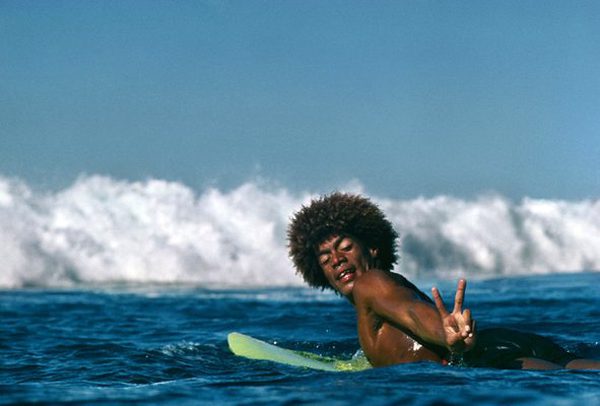
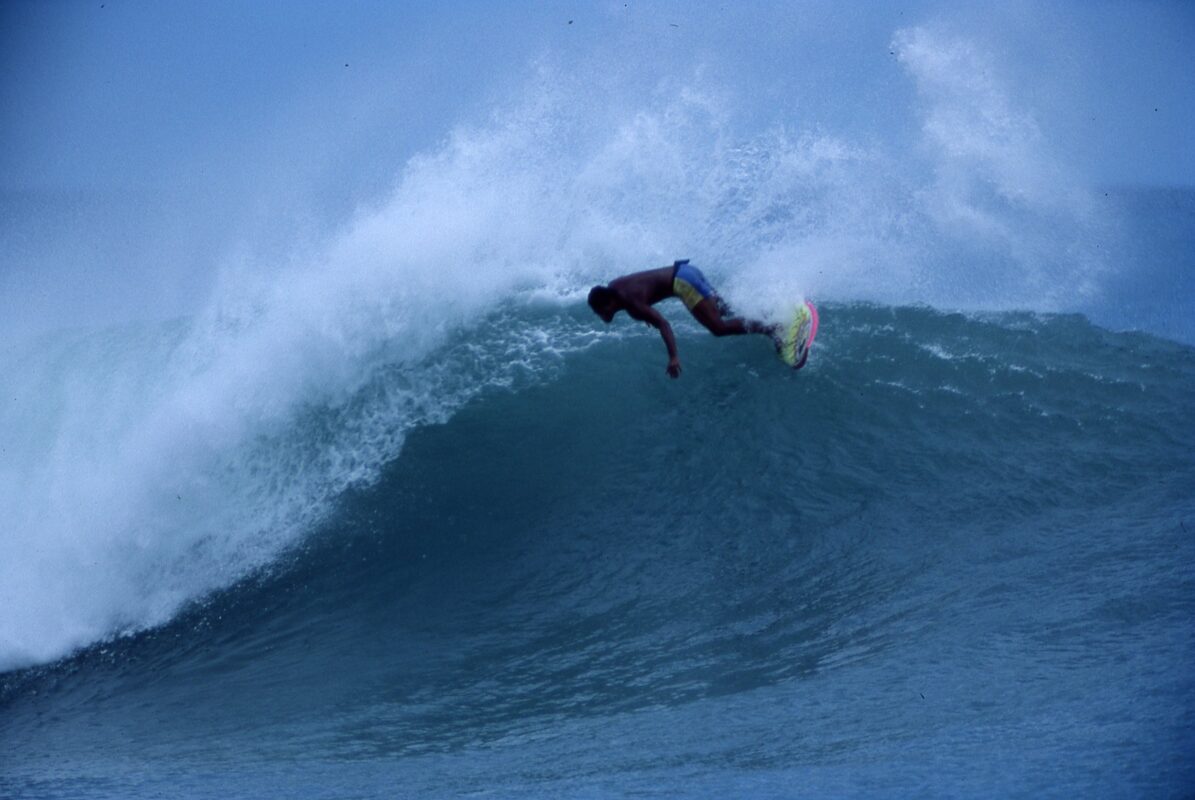
Image courtesy of wsl
The Lineage of Hawaiian Power: From Aipa’s Vision to Kealoha’s Refinement
Hawaiian surfing has never been about following paths. It has been about clearing them. The movement from Ben Aipa’s shaping revolution through Buttons Kaluhiokalani’s explosive expression to Dane Kealoha’s polished articulation represents not a replacement of styles but a deepening of the same cultural current.
This is a story of three men connected by place, philosophy, and the understanding that Hawaiian surfing carries something mainland approaches cannot replicate. It is about how design enables freedom, how freedom demands expression, and how expression can be refined without being diluted.
What follows is not a ranking. It is a record of continuity.
Ben Aipa and the Architecture of Freedom
Before Ben Aipa, surfboards were designed around limitation. The longboard era had given way to the shortboard revolution, but early short designs were often exercises in control rather than release. Boards were made to manage waves, not to dance with them.
Aipa understood that Hawaiian waves required Hawaiian solutions. The power of North Shore swells and the speed of South Shore walls demanded equipment that could absorb force and redirect it. His designs did not simply respond to existing techniques. They created space for techniques that had not yet been imagined.
The split tail, the sting, the swallow—these were not aesthetic choices. They were functional explorations of how water moves under pressure and how a rider’s body could work with that movement rather than against it. Aipa shaped for drive and pivot, for the ability to hold a vertical face and then release into a turn that felt like falling and flying at once.
He shaped for riders who wanted to engage the wave as a partner, not dominate it as an opponent. His boards were responsive to weight shifts, sensitive to rail pressure, alive under the feet of surfers who understood how to speak the same language the ocean was already speaking.
Hawaiian surfers had always ridden with power. Aipa gave them tools that let that power become precision.
Buttons Kaluhiokalani and the Unfiltered Expression
Lawrence Kaluhiokalani did not need to explain himself. His surfing was the explanation.
In an era when competitive surfing was beginning to codify what good surfing looked like, Buttons offered something else entirely. His approach was not defiance for its own sake. It was the continuation of a cultural understanding that surfing was about mana, about channeling the energy of the wave through your own body and letting that energy dictate the ride.
He rode Aipa’s boards the way they were meant to be ridden. With commitment. With presence. With a physicality that came from growing up in the water, not from studying film or mimicking champions. Buttons understood rail-to-rail transitions as instinct, not instruction. His bottom turns were not setups for maneuvers. They were statements of arrival.
What the surf world saw as raw or unpolished was actually the opposite. It was clarity. Buttons rode without pretense, without the performance layer that competitive surfing was beginning to demand. He was not trying to make surfing look like anything other than what it was: a conversation between a human being and a moving wall of water.
His style carried the weight of generations who had ridden these same breaks long before surfing became a global industry. There was no separation between the surfer and the culture. Buttons was not representing Hawaiian surfing. He was continuing it.
The power in his approach was not aggression. It was certainty. He knew where he was from, and he knew what the wave was asking. Everything else was noise.
Dane Kealoha and the Readable Revolution
Dane Kealoha grew up watching Buttons. He understood the foundation. But he also understood that Hawaiian surfing was being misread by audiences who did not know how to see it.
What looked unrefined to judges trained on Australian precision or Californian flow was actually a different grammar entirely. Kealoha realized that if Hawaiian power could be articulated in a way that remained true to its essence but became legible to a broader audience, the entire conversation would shift.
His surfing was not a departure. It was a translation.
Kealoha retained the drive, the rail work, the commitment to the critical section that defined Hawaiian style. But he brought a fluidity to his transitions, a roundness to his arcs, a way of linking maneuvers that allowed observers to follow the logic of the ride. He made Hawaiian power readable without making it soft.
This was not commercialization. It was communication. Kealoha understood that style evolves not by abandoning its roots but by making those roots visible to people who had not been taught to see them. His backside attack on Sunset Beach was still rooted in the same principles Buttons embodied. But where Buttons rode for the wave and for himself, Kealoha rode for the wave, for himself, and for the understanding that what he was doing mattered beyond the moment.
He competed at the highest levels and won. But his victories were not validation of a new approach. They were confirmation that Hawaiian surfing had always been world-class. It had simply been waiting for the world to catch up.
Kealoha’s influence was profound not because he changed Hawaiian surfing but because he proved it did not need to change. It needed only to be seen clearly.
The Continuity Beneath the Surface
From Aipa’s shaping bay to Buttons’ uncompromising presence to Kealoha’s refined articulation, the thread remains unbroken. Each figure built on what came before without erasing it. Each carried forward a philosophy rooted in place, in the understanding that Hawaiian waves demand Hawaiian responses, and that those responses are not tactics—they are expressions of culture.
Aipa gave form to possibility. Buttons gave voice to power. Kealoha gave clarity to what had always been there.
The evolution was not in the surfing itself. Hawaiian surfers had always ridden with drive, with presence, with an understanding of the wave as a force to be met fully. The evolution was in how that surfing was recognized, documented, and understood by those outside the lineage.
This is what continuity looks like. Not stasis. Not nostalgia. But a deepening, a refining, a handing down of knowledge that allows each generation to speak in its own voice while honoring the voices that came before.
Hawaiian surf expression did not change between the 1970s and the 1980s. The world’s ability to perceive it did. And that shift happened because three men—a shaper, an expressionist, and a translator—each played their part in making the invisible visible.
Hawaiian surfing is not a style. It is a lineage. It moves through generations not as imitation but as inheritance, each surfer adding their chapter to a story that began long before surfboards were made from foam and fiberglass. Ben Aipa, Buttons Kaluhiokalani, and Dane Kealoha did not invent Hawaiian power. They carried it forward, shaped it, expressed it, and refined it in ways that allowed others to see what had always been there. The wave does not care about trends. It asks only for presence, commitment, and respect. These three men answered that call, each in their own time, and the lineage continues.
Related Reading on hawaii.surf
- The Steersman and the Soul Surfer: Eddie Aikau’s Cultural Legacy Beyond Big Wave Riding
- How the Hui O He’e Nalu Shaped Modern Hawaiian Surf Identity
- The Lost Influence of Rell Sunn on Women’s Surfing in Hawaiʻi
- Duke Kahanamoku and the Myth of the Surfing Ambassador
Sources Referenced:
- Warshaw, Matt. The Encyclopedia of Surfing. Harcourt, 2003.
- Kampion, Drew. Stoked: A History of Surf Culture. Gibbs Smith, 1997.
- Marcus, Ben. The Surfboard: Art, Style, Stoke. Voyageur Press, 2007.
- Oral histories and interviews from the Bishop Museum’s Hawaiian surfing collections.
