
Informational, Surf Break Series
Laniakea Surf Break Guide: North Shore’s Beloved Longboard Paradise (2026)
Feb
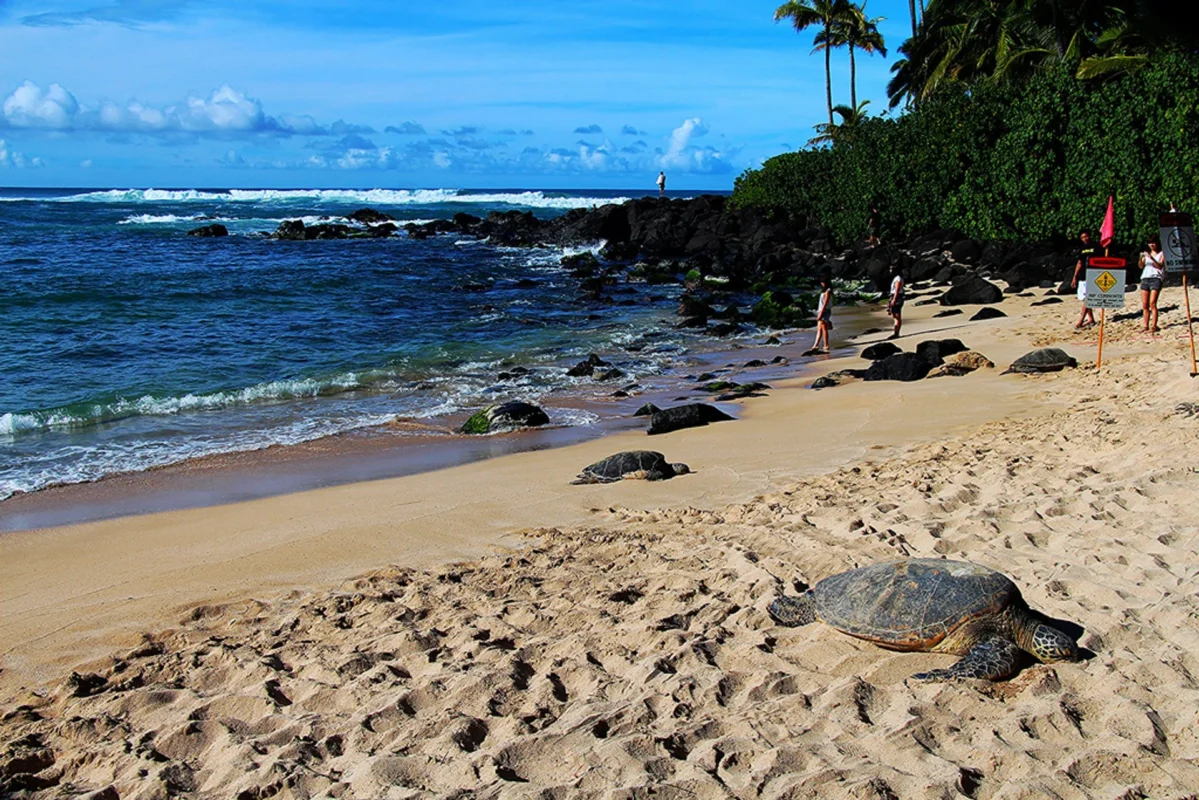
Image courtesy of rove.me
Introduction: Where Aloha Spirit Meets North Shore Swell
Picture this: It’s a mellow December morning on Oahu’s North Shore, and the Seven Mile Miracle is humming with energy. While Pipeline draws the world’s best shortboarders and Waimea Bay commands the big-wave elite, a different kind of magic unfolds just a mile and a half south of Sunset Beach. Here, graceful longboarders carve long, sweeping arcs on perfectly peeling walls while, just offshore, Hawaiian green sea turtles (honu) glide through the crystal-clear shallows. Welcome to Laniakea, the North Shore’s soulful counterweight to all that power and intensity.
Laniakea (pronounced lah-nee-ah-KAY-ah) means “immeasurable heaven” in Hawaiian, and on a good day, the name earns itself. Known affectionately as “Lani’s” among locals, this reef and sand break is one of the North Shore’s most consistent and accessible quality waves: a beloved spot where longboarding tradition runs deep, where families gather to watch the turtles from the beach, and where photographers capture some of the most graceful surfing imagery on the island.
Situated between the high-performance arena of Rocky Point and the big-wave grandeur of Sunset Beach, Laniakea holds a unique and irreplaceable place in North Shore culture. It’s not trying to be Pipeline. It’s not trying to be Waimea. It’s entirely and unapologetically itself: a wave for those who appreciate trim lines, cross-stepping footwork, hang-tens, and the timeless pleasure of riding a wave from peak to sand.
This comprehensive guide draws from local knowledge, surf forecasting data, and North Shore waterman insight to give you everything you need to understand, respect, and surf one of Hawaii’s most iconic and culturally significant waves. Whether you’re a traveling longboarder planning your North Shore debut, an intermediate surfer seeking a more manageable entry point to Hawaiian reef breaks, or simply a visitor hoping to witness world-class surfing alongside ancient sea turtles, Laniakea deserves your attention.
Location and Geographic Context: The Soul of the Seven Mile Miracle
Finding Laniakea
Laniakea Beach sits on Oahu’s North Shore at approximately 21.6755 degrees N, 158.0620 degrees W, along Kamehameha Highway (Highway 83) near the small community of Haleiwa. You’ll find it roughly 1.5 miles north of Rocky Point, 0.7 miles south of Chun’s Reef, 5 miles north of Haleiwa town, and about 38 miles (approximately 55 minutes) north of Honolulu and Waikiki.
The break sits directly in front of a wide, open stretch of beach that’s among the most beautiful and accessible on the North Shore, and one of the only spots where you’re virtually guaranteed to share the water with Hawaiian green sea turtles on any given day.
Access Points and Parking
Laniakea is one of the more accessible North Shore surf breaks for visitors. A small, informal parking area sits directly across Kamehameha Highway from the beach. This lot fills quickly on good swell days, typically by 8 AM during winter months. Street parking is available along the highway shoulder in designated areas. Never park on private property or block access to residential driveways.
The beach itself is a short walk across the sand. There are no formal facilities at Laniakea: no lifeguard tower, no restrooms, no showers. The closest facilities are at Haleiwa Beach Park about 5 miles south. Pack in everything you need and pack out all trash.
One critically important note for visitors: Laniakea Beach is one of the most popular turtle-viewing spots on Oahu. Volunteers from the non-profit organization Malama na Honu regularly patrol the beach to protect resting turtles. Always maintain at least 10 feet of distance from any resting or swimming honu, and never touch or enter the water to interact with them. This is both respectful and Hawaii state law.
Geographical Features
The Laniakea surf break sits over a combination of reef and sand, producing a wave that’s more forgiving than the sharp volcanic reef breaks found at Pipeline or Rocky Point. The reef here is lower-profile and more widely distributed, creating longer, more gradual swell refraction and less of the sudden ledging that characterizes heavier North Shore spots.
The bathymetry produces a left-dominant wave that peels consistently from the takeoff zone toward the beach. The break generally features an outer peak that catches the first energy from arriving swells, an inside section that reforms and peels further on smaller days, and a wide channel on the north side that provides the primary paddle-out route.
Seasonal sand movement plays a significant role at Laniakea. Summer months typically see sand accumulation that softens the break further and can shift peak position. Winter erosion exposes more reef and sharpens the wave’s form. Smart surfers note these seasonal changes and adjust expectations accordingly.
Wave Mechanics: Understanding Laniakea’s Character
The Lani Left: Long, Graceful, and Purpose-Built for Longboards
The left-hand wave at Laniakea is the reason the break has earned its legendary status in longboarding culture. When conditions align, this wave peels for 100 to 200 yards with a pace and wall that seems almost designed for noseriding and classic longboard maneuvers.
The left typically breaks at moderate speed, fast enough to stay in front of the section and slow enough to execute deliberate footwork. The wall is generally open-faced rather than hollow, making it ideal for drawing long, arcing bottom turns, walking to the nose, cross-stepping back for cutbacks, and executing the kind of flowing, connected surfing that defines the longboard tradition.
On an optimal swell (3 to 5 feet Hawaiian, light offshore winds, mid-tide), the Lani left provides multiple distinct sections: a steep-ish takeoff zone that establishes speed and angle, a long open wall section perfect for working the board, and an inside section that offers one final maneuver before the wave fades onto the sand. This structure makes Laniakea arguably the finest performance longboard wave on the North Shore.
Rights and Secondary Peaks
Laniakea also offers right-hand waves, though they’re shorter and less consistent than the lefts. Rights tend to be more bowly, breaking into a quick section before flattening out. They’re perfectly enjoyable on a longboard or mid-length, but they don’t match the quality or length of the left.
On larger swells (5-plus feet Hawaiian), secondary peaks activate further outside, offering longer rides with more power. These outside peaks are better suited to experienced surfers comfortable with the added consequence that comes with size on a North Shore reef break.
On smaller days, Laniakea’s inside section provides a mellower, more forgiving option where intermediate surfers and even strong beginners on longboards can find quality waves with less intensity. The inside is where many North Shore newcomers take their first meaningful Hawaiian reef break steps.
The Longboard Factor
Laniakea is fundamentally a longboard wave. This shapes everything about the lineup: the culture, the pace, the hierarchy, the etiquette, and the energy. Unlike the intense, combat-style atmosphere at Pipeline or Rocky Point, Laniakea’s lineup tends to be more relaxed, more communicative, and more community-oriented, a reflection of longboarding’s inherently social and generous ethos.
This doesn’t mean anything-goes. Longboard lineups have their own rules, priorities, and politics. A 9’6″ noserider paddling for a wave can be every bit as territorial as a shortboarder at Pipe. But the general vibe at Laniakea is notably warmer than the heavier breaks nearby, which contributes significantly to its appeal for visiting surfers of all types.
Optimal Conditions: When Laniakea Comes Alive
Swell Direction and Period
Laniakea responds best to Northwest swell, similar to most North Shore breaks, but with a slightly wider window than more directionally selective spots. Optimal swell directions run from West-Northwest (285 to 305 degrees) through Northwest (310 to 330 degrees). More northerly swells from 330 to 350 degrees still produce quality waves but tend to be less defined.
Swell period is important, but Laniakea is somewhat more forgiving here than at heavier breaks. Standard groundswells with 12 to 15 second periods produce quality waves. The sweet spot tends to be 14 to 16 second period swells that create well-organized lines and defined takeoff zones. Very long period swells (18-plus seconds) can cause the wave to jack too steeply for comfortable longboarding at size.
Wind: The Make-or-Break Factor
Like all North Shore breaks, wind is critical at Laniakea. Ideal conditions feature light south or southwest winds (offshore for this north-facing break), typically under 10 mph. These conditions groom the wave face and make walking the board a pleasure rather than a battle.
Northeast trade winds, the prevailing Hawaiian pattern, blow onshore at Laniakea and can quickly deteriorate wave quality. Strong trades above 15 mph create choppy, blown-out conditions that are particularly unfavorable for longboarding. The best sessions typically occur early morning before trades pick up, or during southerly wind events common in winter.
Tide Considerations
Laniakea works across a range of tides, but mid-tide (2 to 4 feet) is generally the sweet spot. At this level, the reef provides enough structure to shape quality waves while maintaining sufficient water depth for safety and comfortable noseriding.
Low tide (0 to 2 feet) can produce more defined, hollow waves, but the shallower reef increases the risk of fin and fin-box damage on bigger longboards, and wipeouts become more consequential. High tide (4 to 6-plus feet) softens the break further, which can be ideal on medium swells but may cause waves to fat out or close out on larger days.
Size Sweet Spot
Laniakea handles a meaningful size range, but its optimal zone is narrower and smaller than the heavier breaks on the North Shore.
- 1 to 3 feet Hawaiian (2 to 6 foot faces): Playful and accessible, fun for all levels of longboarders and a gentle introduction to North Shore surf.
- 3 to 5 feet Hawaiian (6 to 10 foot faces): The prime performance window. World-class longboard waves with enough power for meaningful maneuvers and enough length for full noseriding sequences.
- 5 to 7 feet Hawaiian (10 to 14 foot faces): More powerful with increased consequences. Best left to expert surfers and experienced local chargers who know the break intimately.
- 7-plus feet Hawaiian (14-plus foot faces): Laniakea begins to max out. Attention shifts to Sunset Beach and outer reefs.
Seasonal Windows
The prime season runs from November through February, aligning with the North Shore’s winter swell season. The shoulder seasons of October and March can deliver quality uncrowded sessions. Summer months (April through September) see Laniakea go mostly flat on north swell, though the beach remains beautiful and turtle activity continues year-round. The shoulder seasons are particularly appealing for visiting longboarders who want quality waves without peak winter crowds.
The Crowd Factor: Navigating Laniakea’s Longboard Lineup
Understanding Lineup Dynamics
Laniakea draws a notably different crowd than the adjacent performance breaks on the North Shore. Where Pipeline attracts elite shortboarders and Rocky Point draws performance surfers, Laniakea is the domain of longboarders, from North Shore legends riding classic single-fins to traveling noseriding enthusiasts chasing trim lines across the Pacific.
The lineup operates with its own hierarchy. A core group of 5 to 15 North Shore longboard locals and regulars command priority on set waves. A second tier of experienced visiting longboarders and known figures in the longboard world occupy the mid-lineup. Everyone else, including traveling surfers, intermediates, and beginners on rental longboards, fills in around the edges.
Peak crowd times run November through February on quality swell days, when the lineup can hold 30 to 50 surfers. Weekends see heavier crowds. Morning sessions before 9 AM offer the best opportunity for quality waves with manageable lineups.
Who’s Out There
The Laniakea lineup on a quality day is a fascinating cross-section of surfing culture. You might paddle out alongside North Shore longboard legends who’ve surfed this break for decades, visiting professional longboarders from California, Australia, or Japan, photographers documenting the art of noseriding, families and recreational surfers enjoying a more mellow North Shore experience, and groms learning the longboard tradition under the guidance of parents and coaches.
Lineup Etiquette Essentials
Surfing Laniakea well requires understanding longboard-specific etiquette alongside universal North Shore lineup rules. Key principles: longboards have deeper paddle speed and can commit to waves much earlier than shortboards, so give them priority space. Never paddle around a longboarder to steal the inside position, as this is a cardinal sin in any lineup but especially here. Communicate with a nod or call to prevent drop-ins. Be patient: longboard waves are longer and slower to recycle, and the pace of the lineup reflects the wave.
What earns you respect: riding a wave all the way through with control and style, noseriding with genuine commitment, knowing when to kick out and paddle back around rather than straightening off, and acknowledging locals with simple courtesy.
What gets you in trouble: paddling shortboards aggressively into a predominantly longboard lineup without reading the room, snaking more maneuverable boards, taking waves one after another without sharing the peak, and showing disrespect to local surfers.
Safety Considerations: Respecting Laniakea’s Power
Reef Hazards
Laniakea’s reef is more forgiving than many North Shore breaks, but it’s still a Hawaiian reef and demands respect. The reef here is generally broader and less sharply ledged than Pipeline or Rocky Point’s volcanic basalt shelves, but wipeouts can still result in reef contact and cuts, particularly at low tide when certain sections become dangerously shallow.
Reef booties are recommended for all surfers at Laniakea. One hazard that’s often overlooked: longboards are large, heavy objects. In a wipeout on a set wave, a 9-foot board on a leash becomes a serious projectile. Hold your board as long as safely possible on wipeouts rather than bailing, and always look before surfacing after being held under.
Current Systems
Laniakea sits within the North Shore’s complex current environment. A primary longshore current runs along the beach, and rip channels on both sides of the break provide paddle-out access as well as potential drift zones. Managing currents here is straightforward for experienced ocean swimmers: use the north channel for paddle-out, exit via the beach or channel rather than against the current, and stay calm in all circumstances. There is no dedicated lifeguard station at Laniakea. The closest service is at Haleiwa Beach Park approximately 5 miles south.
The Turtle Factor
This is unique to Laniakea among North Shore surf breaks: Hawaiian green sea turtles (honu) are present in the water essentially every day. They surface in the lineup, rest on shallow reef sections, and occasionally ride waves themselves.
Hawaiian sea turtles are federally protected under the Endangered Species Act. Do not chase, touch, block, or harass turtles in any way. If a turtle is resting on reef in the lineup, give it wide clearance. Keep surfboards away from turtles. These animals are not entertainment, and they are protected members of the ocean community with the right to go about their lives undisturbed.
Equipment Recommendations: What to Bring
Board Selection
Laniakea is longboard territory, and your equipment should reflect that.
- 1 to 3 feet Hawaiian: Any well-designed longboard from 8’6″ to 11″+ will shine. Classic single-fin logs are ideal for noseriding in this size range.
- 3 to 5 feet Hawaiian: A performance longboard measuring 9′ to 10′ with moderate rocker and a 2+1 or single fin setup provides the best combination of paddle power and maneuverability.
- 5 to 7 feet Hawaiian: A bigger, heavier board (10″+) for paddle power and stability. Only experienced surfers should be out at Laniakea in this size range.
Mid-length boards (7′ to 8’6″) also work extremely well at Laniakea, particularly for surfers who want the flow and glide of a longer board with more maneuverability. Shortboards are not prohibited, but they’re somewhat out of place culturally and will earn you less wave priority from the locals.
Essential Gear
Must-have items include reef booties, a strong longboard leash (at least 9 to 10 feet with a coil design to reduce drag during noseriding), a rash guard or light wetsuit top, quality tropical-temperature surf wax, and reef-safe sunscreen as required by Hawaii law.
Recommended additional items: a GoPro or action camera, a waterproof watch for tracking tides, a board bag for transport, and a basic first aid kit with antiseptic and bandages for reef cuts.
Historical Context: Laniakea’s Role in Surf Culture
Roots in Hawaiian Surfing Tradition
The stretch of North Shore coastline that includes Laniakea has been surfed by Native Hawaiians for centuries. He’e nalu (wave sliding) was a deeply integrated part of Hawaiian culture, and the North Shore’s powerful north swells provided ideal conditions for the long wooden boards that Hawaiians crafted from koa and wiliwili trees. In many ways, the longboarding tradition that defines Laniakea today is a continuation of that ancient Hawaiian practice: riding long boards, seeking long waves, and connecting with the ocean at a pace that honors the water rather than fights it.
The Longboard Revival (1980s to 1990s)
When the longboard revival swept through surf culture in the 1980s, Laniakea found its moment. As performance longboarding began to differentiate itself from shortboard surfing as its own distinct discipline, with its own contests, its own stars, and its own aesthetic values, Laniakea emerged as one of the premier showcase waves on the island.
North Shore legends like Donald Takayama and Rell Sunn surfed here regularly, and the break became associated with a certain kind of soulful, graceful surfing that stood in deliberate contrast to the high-performance shortboarding happening a mile south at Rocky Point and Pipeline.
Modern Era (2000s to Present)
Today, Laniakea remains central to the North Shore’s longboarding identity. Professional longboarders from around the world use it as a training and showcase spot. Photographers combine longboard surfing with sea turtle imagery for some of the most distinctive content on the island. And a steady stream of visiting surfers use it as their gateway to the North Shore, a genuine Hawaiian reef experience at a scale that doesn’t require Pipeline-level skill or courage.
The break has been featured in numerous surf films celebrating longboard culture, and its combination of wave quality, cultural weight, and the presence of honu make it one of the most-photographed and filmed breaks on the island.
Local Knowledge: Insider Tips from North Shore Watermen
Reading the Signs
Experienced Laniakea surfers read environmental cues to predict conditions. Palm trees bending inland signal south (offshore) winds arriving. Flags pointing seaward indicate Northeast trades (onshore) that typically deteriorate conditions. Check the ocean surface from the highway as you drive by. If the water looks smooth and organized rather than choppy and windblown, it’s worth stopping.
Crowd predictions follow patterns: when Pipeline and Rocky Point are firing on medium swells, Laniakea draws more overflow. On smaller swells where the heavier breaks aren’t working, Laniakea is often the best wave on the North Shore and will be busy accordingly. Weekday mornings, particularly Tuesday through Thursday, are your best bets for lighter crowds.
Best Paddle-Out Strategies
The north channel is the standard paddle-out route at Laniakea: wider, deeper, and away from the main impact zone. On smaller days, a more direct paddle through lulls works fine. On larger days (5-plus feet Hawaiian), always use the channel and time your paddle to avoid incoming sets. Watch where experienced surfers paddle out. The channel shifts seasonally with sand movement, and locals instinctively follow the current path of least resistance.
Maximizing Your Session
Spend your first 10 minutes observing the peak pattern before paddling for anything. Identify which part of the reef is producing the best lefts and position accordingly. Don’t go for every wave, be selective and commit fully when you paddle. Laniakea rewards patience and smart positioning far more than aggressive wave-chasing.
Energy management is particularly important on longboards. Paddling a 9 to 10 foot board requires significantly more energy than a shortboard. Pace yourself, rest during lulls, and don’t stay out until exhausted. Tired longboarders lose control of heavy boards, which creates danger for everyone.
Lesser-Known Spots Nearby
If Laniakea is too crowded or conditions aren’t working, experienced surfers know alternatives within 15 minutes. Chun’s Reef, about 0.7 miles north, is a mellow, community-oriented break that also works well on longboards with typically lighter crowds. Jocko’s, between Laniakea and Rocky Point, offers a different peak that can be excellent in the right conditions. Haleiwa harbor, about 5 miles south, provides protected and consistent waves and is a great alternative when the North Shore is too big.
Beyond the Surf: Practical Information for Visiting Surfers
Where to Stay
North Shore accommodations near Laniakea range across price points. Ke Iki Beach Bungalows ($150 to $300 per night) are beachfront cottages within 10 minutes of Laniakea, ideal for surf-focused trips with kitchen facilities and a community atmosphere. Book 3 to 6 months ahead for winter. Turtle Bay Resort ($300 to $600 per night) sits about 15 minutes north along the coast, offering full resort amenities. Haleiwa vacation rentals ($100 to $400 per night) place you in the North Shore’s historic surf town 5 miles south, better for longer stays. Backpackers Vacation Inn ($30 to $100 per night) in Pupukea is budget-friendly and walkable to multiple North Shore breaks.
Dining and Provisions
Post-session essentials include Foodland Pupukea (closest full grocery, excellent poke bar), Haleiwa Joe’s Seafood Grill, and Giovanni’s Shrimp Truck in Haleiwa town (a North Shore institution). For breakfast and coffee, Sunrise Shack serves early-rising surfers well. Ted’s Bakery is a must for chocolate haupia cream pie and plate lunches.
Surf Shops and Rentals
Unlike the heavier North Shore breaks, Laniakea is accessible enough that longboard rentals can be a viable option for visiting surfers. Surf ‘N Sea in Haleiwa (about 5 miles south) offers longboard rentals. Inspect any rental carefully before committing and ask specifically about fin setup and leash attachment quality. They also do repairs, which is useful if you ding a board on the reef. Traveling surfers planning to surf Laniakea seriously should consider bringing their own boards or purchasing a used board locally for the duration of their trip.
Transportation
A rental car is highly recommended for any North Shore surf trip. Laniakea is accessible and the parking situation, while imperfect, is manageable with an early start. Book ahead, as rental cars sell out quickly during winter. Public bus service reaches the North Shore from Waikiki but takes 2 to 3 hours and is impractical with a longboard. Ride-share services are available but expensive from Waikiki ($60 to $100 each way) and unreliable for the return trip.
Environmental and Cultural Considerations
Protecting North Shore’s Reefs and Marine Life
Reef-safe sunscreen is required by Hawaii law. Traditional sunscreens containing oxybenzone and octinoxate are banned statewide. Bring reef-safe alternatives (Raw Elements, Stream2Sea, All Good, and Badger are all excellent options) or purchase locally. Never stand on the reef. Pack out all trash, including broken leash strings, wax residue, and bottle caps.
The sea turtles at Laniakea deserve special mention. These animals have likely been visiting this beach for decades. Their presence is a privilege, not a given. The Malama na Honu volunteers who protect them do so out of genuine love for these creatures and for the North Shore’s natural heritage. Support their work: maintain distance, follow their guidance without argument, and model respectful behavior for those around you.
Respecting Hawaiian Culture
The North Shore is the ancestral home of Native Hawaiian communities with a deep, unbroken connection to the land and ocean. Surfing (he’e nalu) is an indigenous Hawaiian practice that predates Western contact by over 1,000 years. When you surf Laniakea, you’re participating in that tradition.
Cultural respect basics include learning foundational Hawaiian words, aloha, mahalo (thank you), honu (turtle), and pono (righteousness and balance), and using them genuinely. Support Hawaiian-owned businesses. And remember that kuleana (rights and responsibilities) means your presence at Laniakea comes with obligations: respect those who live here, leave the break better than you found it, and honor the ocean’s power.
Sustainable Tourism Practices
Be a responsible surf tourist: use reef-safe products exclusively, carpool when possible, eat at local restaurants, buy from local surf shops, and follow all parking rules. Consider participating in a beach cleanup organized by Sustainable Coastlines Hawaii or Kokua Hawaii Foundation during your visit.
Frequently Asked Questions
1. What skill level do I need to surf Laniakea?
Laniakea is more accessible than most North Shore breaks, but it still requires a solid foundation. Intermediate-to-advanced longboarders can surf Laniakea comfortably on smaller days (1 to 3 feet Hawaiian), provided they have experience with reef breaks, basic crowd navigation skills, and longboard control in waist-to-head-high surf. Advanced surfers are needed for larger days (4-plus feet Hawaiian). Beginners should gain experience at Waikiki or Haleiwa Beach Park first.
2. When is the best time to surf Laniakea?
The optimal window runs from November through February when consistent North Pacific groundswells arrive. Target days with Northwest swell (300 to 330 degrees), 12 to 16 second period, light south or southwest winds under 10 mph, and mid-tide (2 to 4 feet). Early morning sessions from 6 to 9 AM offer the best combination of clean conditions and lighter crowds. October and March can deliver quality uncrowded sessions, making them excellent alternatives for flexible travelers.
3. How crowded does Laniakea get?
Laniakea draws significant crowds during prime winter swells, typically 30 to 50 surfers on quality days. However, the longboard-dominant lineup tends to be more spacious in practice than the numbers suggest, since longboards need more room between surfers, which naturally spaces things out. Weekends are significantly more crowded than weekdays. Arriving before 7:30 AM provides the best chance of manageable crowds and available parking.
4. Can I see sea turtles at Laniakea?
Almost certainly yes. Hawaiian green sea turtles (honu) are present at Laniakea on virtually every day of the year. From shore, Malama na Honu volunteers are typically present to help visitors observe turtles responsibly. In the water, turtles may surface near you in the lineup. Always maintain at least 10 feet of distance and never pursue or touch them. Their presence is one of Laniakea’s most magical features, so treat it as the privilege it is.
5. Is Laniakea dangerous?
Laniakea is one of the more forgiving North Shore reef breaks, but it still carries real hazards. The reef can produce cuts and abrasions on wipeouts, particularly at low tide. Strong currents exist during larger swells. A crowded lineup with heavy longboards creates collision and equipment hazards. That said, Laniakea is significantly less dangerous than Pipeline, Waimea, or even Rocky Point, making it an excellent entry point to North Shore reef break surfing for skilled longboarders who respect the ocean.
6. Can I take surf lessons at Laniakea?
Laniakea is not a beginner lesson break, and no reputable surf school should be taking complete novices here. However, experienced surfers can hire local North Shore coaches for lineup coaching: positioning, wave reading, etiquette, and longboard-specific technique. This assumes you already have the skills to handle a reef break. For true beginner lessons, Waikiki and Haleiwa Beach Park are the appropriate locations.
7. What type of surfboard is best for Laniakea?
A performance or classic longboard in the 9′ to 10’6″ range is ideal for most surfers. Classic single-fin logs (9’6″ to 11″) excel for noseriding on smaller, slower days. Performance longboards with 2+1 or thruster fin setups offer more versatility across a range of conditions. Mid-lengths (7’6″ to 8’6″) are also excellent here, particularly in the 3 to 5 foot Hawaiian range. While shortboards will catch waves at Laniakea, they’re out of place culturally and will receive lower priority in the lineup.
8. Where should I park at Laniakea?
Park in the small informal lot directly across Kamehameha Highway from the beach, or along the highway shoulder in designated areas. The lot fills by 8 AM on quality swell days. Never block driveways or park on private property. Arrive before 7:30 AM for the best chance of a spot close to the break.
9. Are rentals available for longboards near Laniakea?
Yes, with caveats. Surf ‘N Sea in Haleiwa (about 5 miles south) offers longboard rentals, though availability and quality vary by season. Always inspect any rental board carefully before committing. Traveling surfers planning to surf Laniakea seriously should consider bringing their own boards or purchasing a used board locally for the duration of their trip.
10. How do I show respect in the Laniakea lineup?
Surf competently and within your ability. Honor priority rules: whoever is deepest and committed first has the wave. Don’t over-paddle or go for every wave. Acknowledge locals with a nod or “mahalo.” Share the peak generously. Handle wipeouts without panic, retrieve your board quickly, and paddle back out via the channel. Perhaps most importantly, slow down and be present. Laniakea rewards the surfer who takes time to read the break, connect with the lineup’s rhythm, and approach every wave with intention.
Conclusion: Your Laniakea Journey Begins
Laniakea occupies a singular space in the ecology of North Shore surfing. In a stretch of coastline defined by consequence, power, and intensity, it offers something different: beauty, grace, longevity, and a connection to the most ancient traditions of Hawaiian wave riding. It’s the break where you can surf alongside legends who’ve been walking the nose on this wave since before you were born, share the water with sea turtles that have been visiting this reef for decades, and participate in a living lineage of surfing culture that runs from ancient Hawaii to the present day.
Before you paddle out, prepare properly. Study the break from shore. Watch how experienced surfers read the peak and position themselves. Understand the etiquette. Be honest about your ability. And come with genuine humility and respect, not the performed kind, but the real kind that comes from understanding what Laniakea is and what it means to the community that calls it home.
The North Shore’s Seven Mile Miracle is one of the great gifts of the surfing world. Laniakea, positioned at its heart, offers an entry point that honors both the ocean’s power and the aloha spirit of the Hawaiian Islands. When you’re ready, paddle out with patience, commitment, and stoke.
The lineup awaits. Mahalo and safe travels.
Sources and Additional Resources
- Surfline: Laniakea Surf Report and Forecasting (real-time surf conditions and forecasts)
- NOAA National Data Buoy Center: Waimea Buoy (51201) (official swell, wind, and ocean condition data)
- Encyclopedia of Surfing (historical context compiled by Matt Warshaw)
- University of Hawaii Sea Level Center: Honolulu Tide Predictions (official tidal data for Oahu coastal zones)
- Malama na Honu, Hawaiian sea turtle conservation organization active at Laniakea Beach
- World Surf League (WSL) (professional longboarding competition results and athlete profiles)
- Sustainable Coastlines Hawaii (environmental conservation programs and volunteer opportunities)
- NOAA Fisheries: Hawaiian Green Sea Turtle (federal protection regulations and species information)
- Stormsurf: North Shore Oahu Forecast Discussion (technical surf forecasting for the Hawaiian Islands)
- Hawaii.surf Archives (historical profiles and break guides for Oahu surf spots)
