
Informational, Surf Break Series
Waimea Bay Surf Break Guide | Where Big Wave Surfing Was Born
Dec
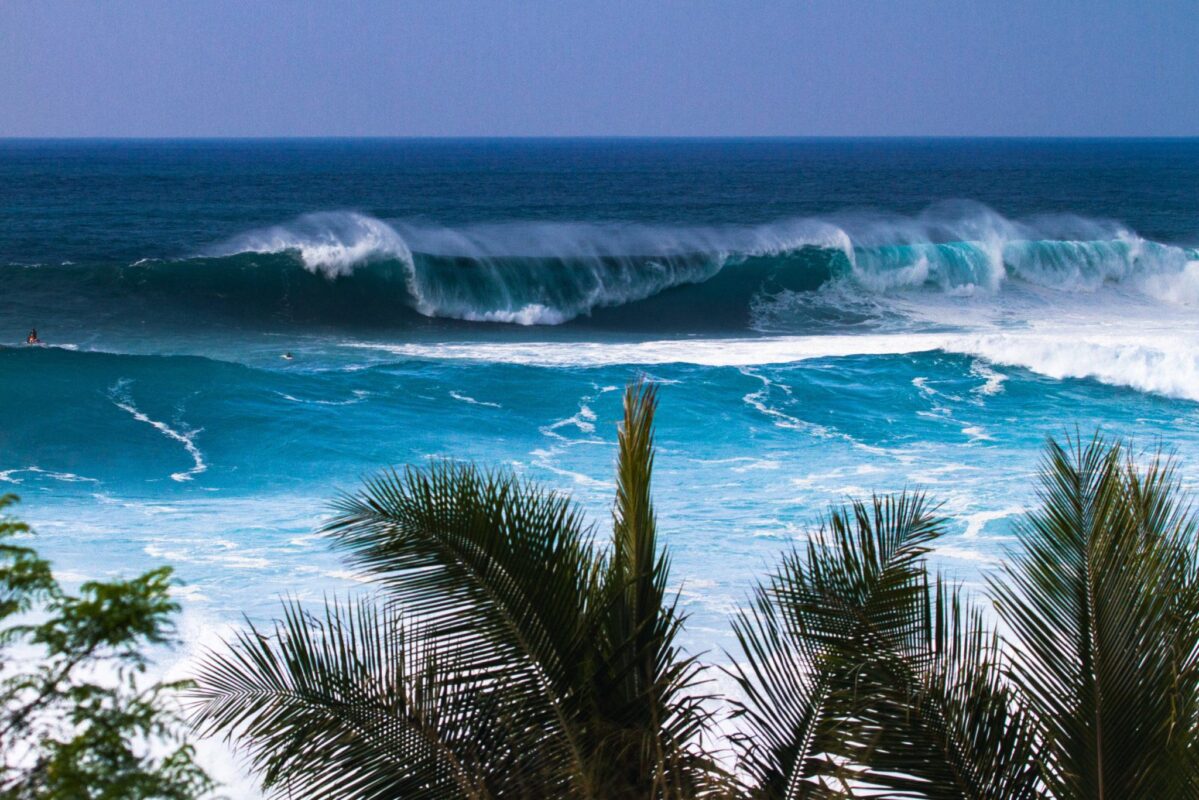
Image courtesy of journeyera.com
Waimea Bay Surf Break Guide | Where Big Wave Surfing Was Born
What Makes Waimea Bay Special
Picture this: A deep-water channel swells with dark blue energy. The horizon darkens as a 25-foot set marches toward shore. Suddenly, the ocean floor rises, and physics takes over—water jacks vertical, forming a wave face that towers four stories high. At Waimea Bay, this isn’t a rare event. It’s winter. And when the bay wakes up, it reminds everyone why big wave surfing exists.
Welcome to the Waimea Bay surf break—the birthplace of modern big wave riding, home to The Eddie Aikau Big Wave Invitational, and still one of the most respected waves on the North Shore. This is where the discipline of big wave surfing began, where legends like Eddie Aikau, Greg Noll, and Mark Foo pushed the boundaries of what seemed possible, and where today’s elite watermen continue to test themselves against the Pacific’s raw power.
Waimea Bay sits on Oahu’s North Shore, roughly three miles west of Pipeline. But where Pipe punishes with shallow reef barrels, Waimea delivers raw, open-ocean power concentrated into a focused takeoff zone. The break forms over a deep-water channel that funnels northwest swells directly into the bay, creating waves that rise suddenly—often appearing manageable from the beach before revealing their true size in the lineup.
Whether you’re an experienced big wave surfer plotting your session or a spectator hoping to witness history, this comprehensive guide covers everything you need to know about Waimea Bay.
Currently, The Eddie’s waiting period is open through March 6, 2026. The bay is watching. The question remains: Will it call the day?
The Wave: What to Expect
Wave Characteristics
Waimea Bay is unlike any other North Shore break. While most reef breaks begin working on smaller swells, Waimea remains dormant—flat, glassy, perfect for swimming—until winter storms in the North Pacific generate the energy this wave demands.
Primary Direction: Right-hander with occasional lefts
Peak Location: Deep-water channel focusing swell energy into concentrated impact zone
Bottom: Deep-water reef break with sandy channel
Best Size: 15-25+ feet Hawaiian scale (30-50+ foot faces)
Sections: Steep takeoff → Open face wall → Powerful shoulder → Closeout shorebreak
The wave characteristics that define Waimea:
Deep-Water Power: Unlike shallow reef breaks, Waimea’s depth creates a different type of wave—thick, heavy, powerful shoulders rather than hollow barrels. The energy is concentrated but spread across a massive face.
Sudden Size Increase: Sets appear on the horizon and seem moderate. As they approach the bay and the ocean floor rises, physics amplifies everything. A wave that looks 12 feet from shore is 20 feet in the lineup.
Deceptive Takeoff: The paddle-in requires commitment to a face that continues jacking as you drop. Hesitation means getting caught in the lip and driven straight to the bottom.
Open Face Riding: Waimea isn’t about tube time—it’s about managing speed, holding your line down massive faces, and executing powerful bottom turns on waves with the energy of freight trains.
The Closeout Shorebreak
One of Waimea’s most dangerous features isn’t the main break—it’s the inside. When sets hit the beach, they close out hard with shocking violence. The shorebreak has injured countless surfers, photographers, and spectators who underestimated the power or got caught in the wrong place.
After riding a wave at Waimea, surfers must time their exit carefully, often diving under closeout sets or paddling wide to avoid the impact zone. Getting caught inside at the shorebreak means taking multiple 10-15 foot waves on the head in shallow water with nowhere to escape.
The Deep-Water Channel
The channel at Waimea provides both salvation and challenge. It’s the safest route for paddling out, offering deeper water between sets. However, strong currents rip through the channel, and on bigger days, even “safe” channel waves can be overhead and powerful.
Experienced Waimea surfers use the channel strategically—paddling out between sets, positioning themselves to catch the current that helps them reach the lineup without burning excessive energy. Timing and ocean reading are essential.
Optimal Surf Conditions
Best Swell Direction
Ideal: Northwest (300-320 degrees)
Range: West-Northwest to North-Northwest (285-335 degrees)
Waimea Bay requires serious northwest swell energy to activate. The bay’s orientation and bathymetry focus WNW-NW swells perfectly, creating the classic Waimea Bay big wave conditions. Too much west and the swell wraps inconsistently. Too much north and neighboring breaks like Sunset steal the energy.
The ideal scenario: A large, long-period northwest groundswell (16+ second intervals) that’s been building for 24-48 hours, giving the bay time to organize and clean up.
Swell Size Requirements
Minimum: 15 feet Hawaiian scale (30-foot faces) – Below this, the bay doesn’t break properly
Optimal: 18-22 feet Hawaiian (36-44 foot faces) – Classic Waimea conditions
Maximum Rideable: 25+ feet Hawaiian (50+ foot faces) – Expert-only, extreme conditions
The Eddie Requirement: 40+ foot faces (20 feet Hawaiian minimum) for the contest to run
Waimea doesn’t light up often. Many winter seasons see only a handful of truly quality Waimea days. When the swell hits the threshold, the entire North Shore surf community takes notice.
Best Wind Conditions
Ideal: Light offshore (Southeast to South)
Acceptable: Glassy calm or light variable winds
Avoid: Northeast trades (side-shore chop), any westerly/onshore winds
Early morning sessions offer the best conditions before trade winds strengthen around 10 AM. On perfect Waimea days, light southeast winds groom the faces and hold up the lips just enough to create clean drops.
Tide
Optimal: Mid to high tide
Workable: All tidal ranges, though low tide exposes more reef and increases inside shorebreak danger
Strategy: Most experienced big wave surfers prefer pushing high tide when there’s more water cushion and the inside is slightly safer for exits
Unlike shallow reef breaks where tide dramatically affects wave shape, Waimea’s deep water makes it relatively tide-tolerant. However, tide affects the shorebreak intensity significantly.
Peak Season
November through March – Primary big wave season
December through February – Highest frequency of quality swells
January – Statistically the most consistent month for proper Waimea conditions
The Eddie Waiting Period: December 7, 2025 through March 6, 2026
Summer months (May-September) see Waimea Bay flat and calm—perfect for swimming, snorkeling, and cliff jumping from the famous Waimea Rock, but no surfing.
The History That Changed Surfing Forever
The Fourteen-Year Silence
For fourteen years, Waimea Bay sat empty. Surfers avoided it. The reason? In 1943, Dickie Cross had drowned attempting to reach shore during a massive swell. His body was never recovered. After that, the bay carried a reputation—not just difficult, but cursed.
Local Hawaiian watermen had surfed Waimea in earlier decades, but the modern surf culture of the 1940s-1950s viewed the bay as too dangerous, too powerful, too deadly. The tragedy of Dickie Cross cemented that fear, and an entire generation of surfers gave the bay a wide berth.
That changed on November 7, 1957.
November 7, 1957: The Day Big Wave Surfing Was Born
Greg Noll, Mike Stange, Pat Curren, Mickey Munoz, and several others pulled over at Waimea while driving between breaks. The swell looked rideable—around 15 feet by modern measurement standards. After watching for twenty minutes, Noll and Stange paddled out. Within an hour, half a dozen surfers had joined them. By the end of the session, Waimea had been ridden, photographed, and documented.
Big wave surfing as a discipline was born that day. Waimea became the standard—the wave that separated committed watermen from everyone else. Before that session, “big wave surfing” didn’t exist as a recognized category. After it, everything changed.
Over the following decades, legends like Eddie Aikau, Greg Noll, and Mark Foo pushed the limits at Waimea, each generation going bigger, deeper, and further than the one before.
Greg Noll’s Legendary Wave
In December 1969, Greg Noll paddled into a wave estimated at 35 feet Hawaiian scale (70-foot face by today’s measurement standards)—a ride so profound it defined his career and still stands as one of surfing’s most iconic moments.
The conditions that day were apocalyptic. Most surfers had already retreated to shore. Noll, paddling solo in massive, stormy conditions, caught what many still consider one of the biggest waves ever ridden on a conventional surfboard at that time. His account of the ride—the commitment, the fear, the respect for the ocean—remains required reading for anyone serious about big wave surfing.
Eddie Aikau: The Soul of Waimea Bay
No discussion of Waimea Bay is complete without Eddie Aikau.
The Lifeguard Who Saved Lives
Eddie grew up on Maui, moved to Oahu’s North Shore as a teenager, and became the first lifeguard hired by the City & County of Honolulu to work on the North Shore. His beat stretched from Sunset Beach to Haleiwa, but centered on Waimea Bay.
In 1968, Eddie became the first official lifeguard for Waimea Bay and the surrounding beaches. During his watch, not one person drowned at Waimea Bay—a remarkable record given the dangerous conditions and heavy crowds that frequent the area during winter months. He made over 500 rescues, braving waves reaching 30+ feet to save swimmers, bodyboarders, and surfers in distress.
The Waterman Who Charged Fearlessly
Eddie didn’t just guard the beach—he charged it. His surfing style at Waimea was smooth, fearless, and rooted in deep respect for the ocean. He understood the bay’s moods, knew when to paddle out, and never hesitated when the waves demanded commitment.
Where others saw danger, Eddie saw opportunity. Where others pulled back, Eddie paddled deeper. His approach to big wave surfing—calm, measured, fearless—became the template for generations of Hawaiian watermen.
The Tragic Voyage of the Hōkūleʻa
In March 1978, Eddie joined the crew of the Hōkūleʻa, a traditional Polynesian voyaging canoe attempting to retrace ancient migration routes from Hawaii to Tahiti. The vessel capsized in rough seas twelve miles south of Molokai.
Eddie removed his life jacket and paddled toward Lanai on his surfboard, hoping to reach land and summon help for the rest of the crew. He was never seen again.
The rest of the crew was rescued hours later by the Coast Guard. The search for Eddie became the largest air-sea operation in Hawaiian history. His disappearance cemented his legacy—not just as a surfer, but as someone who embodied the values of courage, service, and aloha.
Eddie gave his life attempting to save others. That act of selflessness defines his legacy more than any wave he ever rode.
The Eddie Aikau Big Wave Invitational: When the Bay Calls the Day
The Most Prestigious Event in Surfing
In 1984, Quiksilver (now sponsored by Rip Curl as of recent years) established The Eddie Aikau Big Wave Invitational in Eddie’s honor. The competition has one unyielding requirement: wave faces must reach at least 40 feet (20 feet Hawaiian scale). If conditions don’t meet the standard, the event doesn’t run.
Since 1984, The Eddie has been held only eleven times. Most years, the waves don’t cooperate. Waiting periods open and close with no contest. But when the conditions align—when the bay wakes up with the size, power, and clean faces The Eddie demands—it’s not just a surf contest. It’s a gathering, a memorial, and a celebration of everything Eddie stood for.
The Format and Spirit
When the call is made, 28 invited surfers gather at Waimea Bay. The invitations go to the world’s most respected big wave surfers—a mix of Hawaiian legends, proven big wave chargers, and rising talents who’ve earned their place through commitment and skill.
The Rules:
- No jet ski assists
- No tow-in surfing
- Pure paddle power only
- Respect for the ocean above all
This isn’t about progressive maneuvers or aerial tricks. It’s about commitment, wave selection, positioning, and the courage to drop into massive Waimea walls under pressure.
Past Champions and Memorable Moments
- John John Florence (2016): Won at age 23, becoming one of the youngest Eddie champions
- Luke Shepardson (2023): North Shore lifeguard who left his post mid-shift to compete and claimed victory
- Landon McNamara (2024): Took the title in powerful, shifting conditions
- Kelly Slater, Ross Clarke-Jones, Bruce Irons: All past champions who’ve etched their names in Eddie history
Every Eddie champion joins an elite lineage—surfers who proved themselves in Eddie-sized Waimea conditions, honoring his legacy through their performance.
The 2025-2026 Waiting Period
The current Eddie waiting period opened on December 7, 2025, and runs through March 6, 2026. Organizers monitor forecasts daily, looking for the perfect northwest swell—the kind Eddie himself would have paddled into without hesitation.
When the call is made, typically 24-48 hours before the contest window, the surf world mobilizes. Thousands of spectators descend on Waimea Bay. Media crews set up. The energy becomes electric.
And when it runs, the world watches.
Skill Level & Crowd Factor
Who Should Surf Waimea Bay?
This is expert-only territory. Period.
Waimea Bay is dangerous. The power of the waves, the size of the sets, and the consequences of mistakes demand absolute respect and extensive big wave experience.
Required Experience:
- Comfortable surfing double-overhead+ waves at other breaks
- Experience with hold-downs of 15-20+ seconds
- Strong paddling fitness and ocean swimming ability
- Mental composure under high-stress, high-consequence situations
- Understanding of big wave safety protocols
If you’re not confident in your ability to handle 20-foot+ waves under pressure, do not paddle out. There’s no shame in watching from shore—most of the surf world never paddles into Waimea, and that’s perfectly okay.
Crowd Factor
On big days when Waimea is firing, expect 20-40 surfers in the lineup. This is surprisingly uncrowded compared to other North Shore breaks, but the level of surfing is extraordinarily high.
The Lineup Hierarchy:
- Local Hawaiian big wave chargers get priority
- Visiting pros with proven big wave credentials are respected
- Unknown surfers must prove themselves through wave selection and positioning
- Dropping in or snaking at Waimea can have serious consequences—both from the ocean and the lineup
Respect, patience, and awareness of lineup hierarchy are essential. If you’re unfamiliar with North Shore etiquette and big wave protocols, Waimea is not the place to learn.
When the Bay is Flat
During summer and small winter swells, Waimea Bay transforms into one of Oahu’s best swimming and snorkeling spots. The famous Waimea Rock (a large boulder on the right side of the bay) becomes a popular cliff-jumping platform.
Families, tourists, and locals enjoy the calm waters, clear visibility, and protected bay conditions. It’s hard to imagine the same location producing 40-foot waves just a few months later.
Safety Considerations
Primary Hazards
Deep-Water Impact Zones Wipeouts at Waimea can drive surfers 20+ feet underwater. Hold-downs regularly exceed 15-20 seconds. Multiple-wave sets mean getting caught inside can result in several successive hold-downs with limited time to recover between waves.
The Closeout Shorebreak The inside section at Waimea closes out with brutal power. Waves that hit the beach can be 10-15 feet and close out violently in shallow water. Photographers, spectators, and exiting surfers have all been injured by underestimating the shorebreak.
Strong Rip Currents Currents sweep through the channel and along the bay. Paddling back to the lineup after a wipeout requires serious fitness. Exhaustion is a real danger, especially after multiple hold-downs.
Crowd Pressure and Positioning In a high-consequence environment, poor positioning or wave interference can create dangerous situations. Experienced big wave surfers dominate the lineup for good reason—they know how to navigate the risks.
Safety Requirements
Physical Conditioning:
- Ability to hold breath for 30+ seconds (simulating two-wave hold-downs)
- Strong swimming and paddling endurance
- Recovery fitness to handle multiple sessions
Mental Preparation:
- Visualization of worst-case scenarios (wipeouts, hold-downs, multiple-wave sets)
- Calm composure under pressure
- Ability to make split-second decisions in high-stress situations
Equipment and Backup:
- Big wave gun (7’6″ to 9’6″ depending on size and rider preference)
- Impact vest or flotation device (many pros wear them)
- Thick wetsuit (winter water temps drop to low 70s°F)
- Strong leash designed for big wave conditions
- Backup plan for rescue (buddy system, water safety personnel awareness)
Communication: Let someone know your surf plan. Have a pickup time. Carry a whistle or safety device. These simple steps can save lives.
Equipment Recommendations
Board Selection
Size Range: 7’6″ to 9’6″+ depending on wave size, rider weight, and experience
Small Waimea Days (15-18 feet Hawaiian): Experienced riders can use 7’6″-8’0″ step-up boards with moderate volume
Classic Waimea Days (18-22 feet Hawaiian): Most surfers ride 8’6″-9’2″ guns with added volume for paddle power and stability
Massive Waimea Days (22+ feet Hawaiian): Pure guns in the 9’0″-10’0″+ range become essential
Design Features:
- Extra volume for paddle power
- Pulled-in nose for late drops
- Thick rails for stability
- Strong construction (carbon, epoxy reinforcement)
- Pin tail for hold in powerful faces
Additional Safety Gear
Impact Vest/Flotation Device: Many professional big wave surfers wear impact vests at Waimea. These provide flotation assistance after wipeouts and some protection during hold-downs. No shame in wearing one—it’s smart big wave protocol.
Wetsuit: Full 3/2mm or 4/3mm wetsuit. Winter North Shore water temps range from low 70s to mid-70s°F. Warmth helps maintain energy and flexibility during long sessions.
Leash: Heavy-duty big wave leash, minimum 10 feet long, rated for the wave size. Standard leashes snap like twigs at Waimea.
Reef-Safe Sunscreen: Protect yourself and the reef ecosystem
Booties (Optional): Some surfers wear booties for reef protection and warmth, though most big wave surfers prefer barefoot feel
Practical Information
Location & Access
Address: 61-031 Kamehameha Highway, Haleiwa, HI 96712
Getting There:
- From Waikiki/Honolulu: 50-minute drive (approximately 38 miles) via H-1 West to H-2 North to Kamehameha Highway
- From Haleiwa town: 5 minutes north on Kamehameha Highway
- From Pipeline/Ehukai: 3 miles west on Kamehameha Highway
- Public transportation: TheBus Routes 55 and 60 reach the area, but rental cars offer more flexibility
Parking
Waimea Bay Beach Park Parking Lot: Main lot directly at the beach. Fills quickly on big swell days and during The Eddie waiting period. Capacity: ~50 vehicles.
Overflow Parking: Roadside parking along Kamehameha Highway (both sides). Follow posted signs and don’t block driveways or fire lanes.
Big Day Strategy: Arrive before 7:00 AM to secure parking. Eddie days see thousands of spectators—parking becomes extremely difficult by 8:00 AM.
Free parking throughout the area.
Amenities
At Waimea Bay Beach Park:
- Restrooms and outdoor showers
- Large grassy lawn with shade trees
- Picnic tables
- Lifeguard tower (9:00 AM – 5:30 PM during winter season)
- Direct beach access
Nearby (Haleiwa – 5 minutes south):
- Surf shops (rentals, wax, leashes, boards)
- Restaurants and food trucks
- Giovanni’s Shrimp Truck
- Haleiwa Joe’s Seafood Grill
- Matsumoto Shave Ice (famous)
- Ted’s Bakery (chocolate haupia cream pie)
- Coffee shops
- Grocery stores (Foodland Pupukea)
- Gas stations
Lifeguard Services
Lifeguards are on duty at Waimea Bay Beach Park from 9:00 AM to 5:30 PM during the winter season. They post daily ocean condition warnings and can provide crucial information about current hazards, swell size, and safety concerns.
Always check with lifeguards before paddling out.
On Eddie days and other big swell events, additional water safety personnel, jet skis, and emergency response teams are on standby.
Spectator’s Guide: Watching Waimea From Shore
Not ready to paddle out? Waimea Bay offers some of the best big wave viewing in the world.
Best Viewing Locations
Waimea Bay Beach Park – Main Beach The primary spectator area provides direct sightlines to the break. Position yourself on the sand berms or grassy areas for elevated views. Bring chairs, sunscreen, and binoculars for close-up views of the action.
East Side Rocks For photographers and serious spectators, the rocky outcrop on the east (right) side of the bay offers close-up views of the lineup and takeoff zone.
CAUTION: Rogue waves can sweep across these rocks. Multiple spectators have been injured or killed by unexpected wave surges. Stay alert, watch the ocean constantly, and move to higher ground when sets approach.
Waimea Valley Overlook For elevated panoramic views, hike up the trail near Waimea Valley (adjacent to the bay). The higher vantage point gives perspective on wave size, set patterns, and the full scope of the lineup.
Spectator Safety
Stay Back from the Shoreline: On big days, the shorebreak closes out violently. Waves can surge 20-30 feet up the beach. Multiple spectators have been swept into the impact zone. Respect the power.
Watch for Rogue Sets: Even from the beach, unexpected larger sets can create dangerous situations. Keep eyes on the horizon and be ready to move quickly.
Respect Posted Warnings: If lifeguards close the beach or post warnings, heed them. They’re protecting your safety.
Etiquette for Spectators
On Eddie Days and Big Swell Events:
- Arrive early (6:00-7:00 AM) for parking and prime viewing spots
- Respect parking regulations and local neighborhoods
- Keep noise levels reasonable
- Pack out all trash (leave no trace)
- Do not interfere with surfers, lifeguards, or water safety personnel
- Give space to media crews and photographers working
- Be respectful of Hawaiian culture and Eddie’s legacy
The atmosphere during The Eddie or other major Waimea events is electric, respectful, and deeply rooted in Hawaiian culture. This isn’t just a sporting event—it’s a community gathering honoring Eddie’s legacy and celebrating big wave surfing culture.
Best Nearby Breaks
Haleiwa (Ali’i Beach Park)
Three miles west, Haleiwa serves as the opening event of the Vans Triple Crown of Surfing. A powerful, V-shaped reef break with rights, lefts, and the infamous “Toilet Bowl” inside section. Works on smaller northwest swells than Waimea, making it more consistent.
Laniakea (Lani’s)
One mile east, Laniakea offers a broad right-breaking reef perfect for longboarders and intermediate surfers. Also famous for resident green sea turtles that bask on the beach. Works on smaller swells.
Chun’s Reef
Two miles east, Chun’s Reef provides beginner-friendly waves on the North Shore. A mellow reef break with softer, slower waves—perfect for learning or warm-ups before bigger challenges.
Sunset Beach
Four miles east, Sunset Beach is stop #2 of the Triple Crown. A massive, shifty, open-ocean power break that demands world-class skill. Different character than Waimea—more spread out, less focused, but equally powerful.
Pipeline/Backdoor
Six miles east lies the most famous wave in the world. If Waimea is the birthplace of big wave surfing, Pipeline is the pinnacle of tube riding. Heavier, hollower, shallower, and more crowded than Waimea.
Local Knowledge & Tips
Reading Waimea Conditions
Spend 20-30 minutes watching from shore before paddling out. Study:
- Set frequency and size variation
- Cleanup set patterns (are the biggest waves coming in groups?)
- Current direction and strength
- Inside shorebreak intensity
- How surfers are positioning in the lineup
On bigger days, sets can be inconsistent. Understanding the rhythm can mean the difference between a successful session and a dangerous beating.
Paddle-Out Strategy
Use the Channel: Paddle out through the channel on the right side of the bay. Time your paddle between sets. Even in the channel, be prepared for overhead waves on big days.
Conserve Energy: The paddle out can take 10-15 minutes depending on conditions. Don’t burn yourself out before reaching the lineup. Steady, efficient strokes.
Position Wisely: Don’t paddle straight to the peak if you’re new to the break. Sit slightly wider and observe experienced surfers. Learn positioning through observation before committing.
Wave Selection
Wait for Your Wave: In a high-consequence environment, patience is essential. Don’t paddle for waves you’re not 100% confident about. One bad decision can end your session (or worse).
Deeper is Often Better: At Waimea, positioning yourself deeper than you’re comfortable often results in better waves. The drop is steep but the wave face is workable. Sitting too far inside means getting caught by the steepest, most critical section.
Watch for Cleanup Sets: Waimea often produces “cleanup sets”—massive, outside waves that break wider and deeper than the regular sets. These catch surfers by surprise. Always keep eyes on the horizon.
Post-Session Recovery
After a Waimea session, recovery is crucial:
Hydration and Food: Head to Haleiwa for food and recovery. Garlic shrimp, poke bowls, açaí bowls, and Matsumoto Shave Ice are North Shore traditions.
Body Recovery: Stretch, rest, process the session mentally. Big wave surfing is physically and emotionally draining. Give yourself time to recover before the next session.
Mental Processing: Many big wave surfers journal or visualize their sessions afterward—what went well, what needs improvement, how to approach the next opportunity.
Why Waimea Bay Still Matters
Waimea Bay isn’t just a surf break—it’s a measuring stick. For over six decades, it has defined what big wave surfing means. The courage required to paddle into a 20-foot Waimea set hasn’t changed since 1957. The bay doesn’t care about technology, sponsorships, or social media. It demands respect, preparation, and commitment.
This is where big wave surfing was born. This is where Eddie Aikau became a legend. This is where generations of watermen have tested themselves against the Pacific’s power and learned humility in the face of nature’s force.
Eddie Aikau’s legacy lives on every time the bay wakes up. His spirit—rooted in service, humility, and fearlessness—continues to inspire surfers around the world. When the call is made and The Eddie runs, it’s not just about competition. It’s about honoring a man who gave everything to the ocean and his community.
As winter swells march toward Hawaii and the 2025-2026 Eddie waiting period continues, one question remains: Will the bay call the day?
When it does, the world will be watching.
Frequently Asked Questions
Q: What is the minimum swell size for Waimea Bay to break? A: Waimea Bay requires a minimum of 15 feet Hawaiian scale (30-foot faces) to break properly. Below this threshold, the bay remains flat. For The Eddie Aikau Invitational to run, wave faces must reach at least 40 feet (20 feet Hawaiian).
Q: Can intermediate surfers surf Waimea Bay? A: No. Waimea Bay is strictly for expert big wave surfers with extensive experience in powerful, large surf. The consequences of mistakes are severe, and the wave demands a skill level that takes years to develop at other breaks.
Q: When is the best time to visit Waimea Bay to see big waves? A: December through February offers the highest frequency of large northwest swells. The Eddie Aikau Invitational waiting period (December 7 – March 6) indicates the prime window. Check surf forecasts and follow The Eddie’s social media for real-time updates.
Q: Is Waimea Bay safe for swimming? A: During summer months (May-September), Waimea Bay is one of Oahu’s best swimming beaches with calm, clear water. During winter (November-March), dangerous surf and strong currents make swimming extremely hazardous. Always check with lifeguards before entering the water.
Q: How often does The Eddie Aikau Invitational run? A: The Eddie has only run 11 times since 1984—roughly once every 3-4 years on average. Many seasons pass without the wave conditions meeting the 40-foot face minimum requirement. This rarity makes each Eddie event historically significant.
Q: What is the best board for surfing Waimea Bay? A: Most surfers ride guns between 8’6″ and 9’6″ depending on wave size and rider preference. Boards should have extra volume for paddle power, pulled-in noses for late drops, and strong construction to handle the power.
Q: Where is the best place to watch Waimea Bay from shore? A: Waimea Bay Beach Park offers the best spectator viewing. Arrive early on big days for parking. The beach berms and grassy areas provide clear sightlines. Use caution near the water—the shorebreak can be dangerous.
Q: Who are some legendary surfers associated with Waimea Bay? A: Eddie Aikau (lifeguard and big wave pioneer), Greg Noll (1969 legendary wave), Mark Foo, Clyde Aikau, Darrick Doerner, and modern champions like John John Florence, Kelly Slater, and Luke Shepardson.
Q: Can you surf Waimea Bay year-round? A: No. Waimea is a winter wave only, breaking from November through March when North Pacific storms generate large northwest swells. Summer months see the bay completely flat and calm.
Q: What makes Waimea Bay different from Pipeline? A: Waimea is a deep-water reef break producing massive, powerful open-face waves. Pipeline is a shallow reef break creating hollow, barreling waves. Waimea rewards big wave paddling and commitment; Pipeline rewards precision tube riding. Both are expert-only, but with different characteristics and dangers.
Sources & References
This comprehensive guide to Waimea Bay surf break was researched using the following authoritative sources:
- Encyclopedia of Surfing – Waimea Bay
- The Eddie Aikau Foundation – Official Website
- Surfline – Waimea Bay Surf Report
- World Surf League – The Eddie History
- Hawaii News Now – Eddie Aikau Invitational Coverage
- Bishop Museum – Eddie Aikau Legacy Collection
- Go Hawaii – Waimea Bay Beach Park Official Information
- Honolulu Ocean Safety – North Shore Beach Conditions
- Surfing Heritage and Culture Center – Big Wave History
- Matt Warshaw – The History of Surfing (Waimea Bay Chapter)
Looking for more North Shore surf guides?
- Pipeline Surf Break Guide – The World’s Most Famous Wave
- Sunset Beach Surf Break Guide – Triple Crown Power
- Rocky Point Surf Break Guide – High-Performance North Shore Reef
- Haleiwa Surf Break Guide – Triple Crown Opening Event
- Gas Chambers Surf Break Guide – North Shore Barrel Training Ground
Last Updated: February 2026
Written by the Hawaii.Surf team with contributions from local watermen
