
Legends
Rell Sunn: Queen of Makaha, Heart of the Sea
Apr
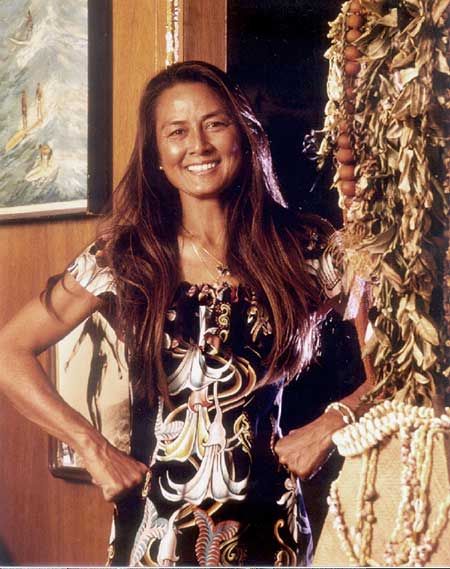
Images courtesy of Rell Sunn Foundation
Rell Sunn: Queen of Makaha, Heart of the Sea
She was born Roella, a name stitched together from her parents’ names, Roen and Elbert. She never liked it. By the time the world came to know her she had become Rell, and the name that mattered most was the one her grandmother gave her before she was even born: Kapolioka’ehukai. Heart of the Sea.
On the dry, sun-bleached west side of Oahu, where the Waianae mountains run straight down into the Pacific, that name turned out to be a kind of prophecy. Rell Sunn spent her whole life within reach of the water at Makaha, and the people there did not call her a champion or a pioneer, though she was both. They called her Aunty. They called her the Queen of Makaha. Those titles told you more about who she was than any contest result ever could.
A Makaha Childhood
Rell was born on July 31, 1950, one of five kids raised in a Quonset hut a stone’s throw from the beach. Her father was a beach boy, the old Hawaiian role that blended lifeguard, surf instructor, and waterman into one. The family did not have much. What they had was the ocean, and a single battered surfboard the kids passed between them.
She started surfing at four. By her teens she was reading the reefs at Makaha better than most grown men in the lineup, picking apart the Point and the Bowl on swells that sent everyone else to the beach. Makaha in those years was the center of the surfing world, home to the most prestigious contest on the planet before the North Shore took the crown. Rell grew up in the middle of all of it, and she grew up unafraid.
In 1966, at sixteen, she traveled to the World Championships in San Diego in the company of Duke Kahanamoku himself. It was the beginning of a life lived partly on the road, chasing contests around the globe, but Makaha was always home. She always came back.
Hawaii’s First Female Lifeguard
In 1975, Rell became the first female lifeguard in the state of Hawaii. In a culture that measures people by their competence in the water, that was not a small thing. It meant the establishment looked at a woman and admitted what the West Side already knew: nobody read the ocean like Rell.
She did not stop there. She helped build the architecture of women’s professional surfing from the ground up, co-founding the Women’s International Surfing Association and helping launch the first real pro tour for women. By 1982 she was ranked number one in the world on a longboard, the finest all-around waterwoman of her era. She free-dove, she paddled, she surfed everything from knee-high Makaha reformers to serious West Side juice, and she did all of it with a smooth, unhurried grace that people still talk about.
The Diagnosis
In 1983, at thirty-two, Rell was diagnosed with breast cancer and given a year to live.
She lived fifteen more.
She surfed through chemotherapy. She kept working as a radio DJ and a surf reporter. She helped start a breast cancer awareness program on the Waianae Coast, sitting with other Hawaiian women facing the same fight she was, because that was simply what she did. Her great fear, she once said, was that she would be remembered as a victim of cancer rather than a woman of the sea. She need not have worried. What people remember is the smile, the aloha, the way she kept paddling out long after the disease had taken most of her strength.
The Keiki Contest
In 1976 Rell started a surf contest for the keiki of Makaha. It was never about trophies. It was about putting West Side kids in the water, building their confidence, teaching them to respect the ocean and each other. The Rell Sunn Menehune Surf Contest still runs at Makaha every year, decades after she started it and long after she was gone.
That may be the truest measure of her. A thing built for children that outlived her and keeps giving.
She summed up her own philosophy better than anyone else could. “The aloha spirit is real simple. You give and you give and you give, and you give from here, until you have nothing else to give.”
A Paddle Out at Makaha
Rell Sunn passed away on January 2, 1998, at forty-seven. Her memorial at Makaha drew thousands. Surfers paddled out beyond the break to scatter her ashes in the water she loved, the water that named her. The New York Times called her a state treasure.
On the West Side they did not need a newspaper to tell them what they had lost. They had grown up with her. She had taught their keiki to surf. She had handed out aloha the way other people hand out small talk, freely and to everyone, until there was nothing left to give.
If you ever stand on the sand at Makaha and watch the keiki trade waves at the Point, you are watching her legacy in motion. The Queen never really left.
Sources
- Rell Sunn Foundation
- Rell Sunn — Wikipedia
- Rell Sunn: The Memorable Life of the Queen of Makaha — Surfer Today
- Why Hawaiian Legend Rell Sunn Was the Human Embodiment of Aloha — WSL
- Letters to Legends: Dear Rell Sunn — The Inertia
- Rell Sunn — Hawaii Waterman Hall of Fame
Related Reading:
- Makaha Surf Break Guide
- Greg Noll’s Legendary Makaha Wave
- The History of Surfing in Hawaii
- Hawaiian Princes Surfing Santa Cruz
Mahalo for reading. If you want to learn more about Rell’s legacy and the keiki contest she built, visit the Rell Sunn Foundation .
Last Updated: June 2026
Her name lives on every year at the Rell Sunn Menehune Championship at Makaha, the contest she founded for the children of her community.
