Surf Culture
Why Kilauea Keeps Producing Surf Legends
Apr
Why Kilauea, Kauai Keeps Producing Surf Legends
At Pipeline in February 2026, Gabriela Bryan had just won the Lexus Pipe Challenger. Standing on the podium, board under her arm, she paused mid-speech and said something that stopped the crowd. She talked about growing up in Kilauea with a photo of Andy Irons on her wall. About how they came from the same hometown. About how she surfs with that in mind every time she paddles out.
That moment wasn’t just a tribute. It was a thread connecting generations, proof that something specific and repeatable happens in that small town on Kauai’s north shore. Kilauea isn’t a surf academy. It isn’t a well-funded pipeline of talent. It’s a tight community of a few thousand people on an outer island, and it keeps producing world-class surfers with a consistency that demands explanation.
So what is it about Kilauea?
The Place Itself
Kauai’s north shore is not forgiving. The reef breaks that ring the island’s upper coast, Hanalei Bay, Tunnels, the outer reefs off Kilauea, produce powerful, consequence-heavy surf that forces young surfers to develop judgment alongside technique. You can’t fake your way through a solid north swell at Hanalei. You either learn to read the ocean or you get punished by it.
There’s also an isolation factor that works in Kilauea’s favor. Kauai is the furthest north of the main Hawaiian islands, the least developed, and by any measure the most removed from the mainland surf industry machine. Kids who grow up surfing there aren’t chasing trend or attention. They’re surfing because it’s what you do, because your dad surfed, your brothers surfed, and the ocean is right there every morning before school.
As Bethany Hamilton once described it, “Most kids are put on a board by the time they’re like three. The parents are pushing them into waves.” Bethany Hamilton That isn’t marketing language. That’s just Tuesday in Kilauea.
Andy and Bruce Irons: The Standard
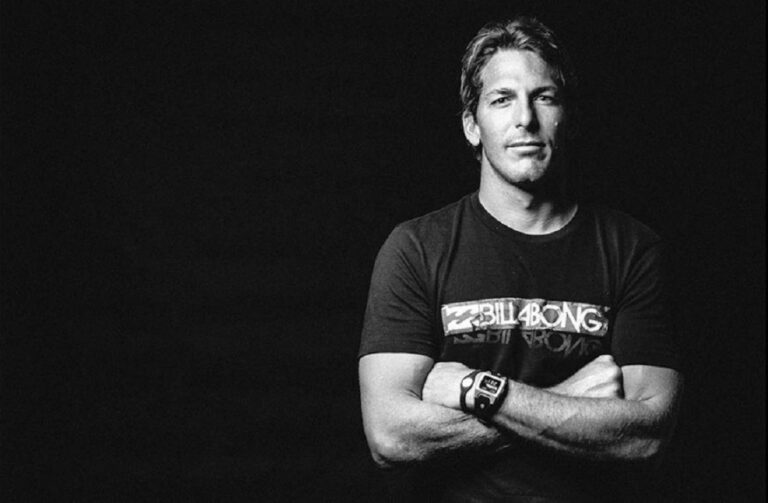
Andy Irons grew up charging Hanalei Bay and the powerful north shore reefs of Kauai from the time he could stand on a board. He turned that foundation into three consecutive WSL World Titles in 2002, 2003, and 2004, matching the most sustained dominance in the sport’s history at the time. What separated Andy wasn’t just talent, and it wasn’t just power. It was the combination of both at a scale nobody had seen since Kelly Slater, paired with a surfing style that looked nothing like Slater’s. Andy was raw, aggressive, and wholly himself.
Bruce Irons surfed alongside him, equally gifted, arguably even more fearless in big surf. Where Andy carried the competitive fire, Bruce carried something wilder. At Pipeline, Bruce was considered by many to be the most naturally talented tube rider alive during his prime years on tour.
Together they redefined what a Kauai surfer could become. Not just good. Not just professional. World standard. Generational. The brothers didn’t just set a bar for the kids watching them in Kilauea. They made it feel possible.
Bethany Hamilton: Courage as Legacy
Bethany Hamilton was born in Lihue and grew up on Kauai, learning to surf at age three, competing by age eight, and earning her first sponsorship by ten. Wikipedia By thirteen she was being talked about as a future world champion.
On October 31, 2003, a tiger shark attacked her at Tunnels Beach and took her left arm. She was back in the water within a month. Within a year she was competing again.
What Bethany added to Kilauea’s legacy wasn’t a world title. It was something harder to quantify, a demonstration that the Kauai surfer’s relationship with the ocean runs deeper than competition. She returned not because she had to, but because the ocean was who she was. Her coaches recalled her uncanny drive and dedication from a young age, and she regularly competed in and won boys’ divisions of local surf contests. gestalten
The Soul Surfer story became global, but its roots are entirely local. A Kauai kid shaped by the same north shore culture that shaped everyone on this list.
Sebastian Zietz: The Quiet Warrior
Seabass doesn’t always get the recognition he deserves in the Kilauea legacy conversation, but his story belongs here.
Zietz grew up in Kauai after his parents moved there in 1988, and started surfing at age four. Wikipedia He came up watching the Irons brothers from close range, not as a fan watching highlights, but as a kid surfing the same breaks. Zietz has spoken openly about surfing next to Andy and Bruce Irons, Bethany Hamilton, and Dustin Barca, and credits the respect and humility that environment demanded as formative to his entire approach. The Garden Island
He qualified for the Championship Tour by winning the Vans Triple Crown of Surfing in 2012 World Surf League, and later became the first Kauai surfer to win a men’s CT event since Andy Irons when he took the Drug Aware Margaret River Pro in 2016. “You can’t be loud and talking, especially being a haole,” Zietz has said. “You have to let the surfing do the talking.” The Garden Island
That’s Kilauea culture. The ocean sets the terms.
Gabriela Bryan: The Torch Carrier
Gabriela Bryan spent her childhood on Kauai’s north shore, and her dad took her surfing for the first time when she was just four years old. Freesurf Magazine She grew up competing in junior contests, training under coach Kahea Hart, and building her surfing on the same powerful reef breaks that shaped everyone before her.
After a breakthrough 2025 season that saw her claim three CT event wins and finish ranked third in the world, the 24-year-old from Kilauea kicked off 2026 by winning the Rip Curl Pro Bells Beach and taking the yellow jersey as WSL tour leader. Surfingvic
At her Pipe Challenger win earlier that year, she stopped mid-speech to honor Andy Irons. She talked about the photo she kept of him as a kid. About coming from the same hometown. About following in the footsteps of someone she grew up idolizing from a few streets away.
That’s not a coincidence. That’s a community doing what Kilauea communities do.
What Kilauea Does Differently
The common thread running through every surfer on this list isn’t coaching methodology or wave quality, though both matter. It’s culture.
Kilauea produces surfers who are shaped by proximity, to powerful unforgiving surf, to people who came before them and set an impossibly high standard, and to a community that measures respect by how you carry yourself in the water, not by what you say on land. Seabass said it directly: you let your surfing do the talking.
There’s also something to the outer island mentality. Without the industry noise of Oahu’s North Shore scene, without the cameras and the crowds and the constant visibility, Kilauea kids develop their surfing for the right reasons first. By the time the world notices them, they already know who they are.
The question was never whether Kilauea would produce another legend. The question is who’s paddling out there right now.
Sources
WSL: Gabriela Bryan wins 2026 Rip Curl Pro Bells Beach
Surfer Magazine: Gabriela Bryan wins Lexus Pipe Challenger
Freesurf Magazine: Rookie Lessons from Gabriela Bryan
WSL: Sebastian Zietz athlete bio
Surfline: Sebastian Zietz profile
The Garden Island: Sebastian Zietz
Carry the culture with you. Browse the Hawaii.surf collection below: