Legends
Duke Kahanamoku: Father of Modern Surfing & 5-Time Olympic Medalist
Jan
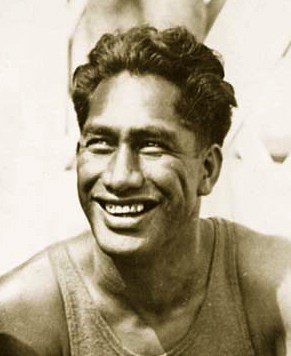
Image courtesy of hawaiimagazine.com
Duke Kahanamoku: The Father of Modern Surfing & Olympic Legend Who Changed the World
The Day Duke Saved Eight Lives (And Proved Surfing Saves People)
June 14, 1925. Newport Beach, California. A fishing boat capsizes in violent surf, throwing 29 passengers into churning waves. People are drowning. Lifeguards can’t reach them.
An off-duty 34-year-old Hawaiian man grabs his surfboard—an object most Californians had never seen before—and paddles into the chaos. Again and again, he loads panicked victims onto his board and shuttles them to shore. In minutes, he single-handedly saves eight lives.
His name was Duke Paoa Kahinu Mokoe Hulikohola Kahanamoku. And that day, he didn’t just save lives—he showed the world what surfing really was.
Not a hobby. Not a sport for beach bums. A life-saving skill. A connection to the ocean’s power. A bridge between humans and nature that had sustained Hawaiian culture for over a thousand years.
This is the story of how one man took surfing from a dying Hawaiian tradition to a global phenomenon—and became an Olympic champion, Hollywood actor, sheriff, and ambassador of aloha along the way.
From Waikiki to Olympic Glory: The Making of a Legend
Born to Ride Waves (1890-1910)
Duke Paoa Kahanamoku was born on August 24, 1890, in Honolulu, Kingdom of Hawaii—just seven years before Hawaii would be illegally annexed by the United States. His family lived near Waikiki Beach, where young Duke learned to swim and surf in the same waters his ancestors had for centuries.
But surfing in 1890s Hawaii wasn’t the billion-dollar industry it is today. It was a dying art.
Christian missionaries had spent decades suppressing Hawaiian culture, dismissing surfing as “idle amusement” and “pagan ritual.” The number of surfers had dwindled from thousands to dozens. Ancient surf breaks lay empty. Centuries-old knowledge was vanishing.
Duke’s childhood mentor, an older surfer named Jonah Kūhiō Kalanianaʻole (who would later become Hawaii’s delegate to Congress), taught him something critical: Surfing wasn’t just recreation. It was cultural survival.
By his teens, Duke was one of the best swimmers and surfers in Hawaii—riding massive koa wood boards that weighed over 100 pounds, reading ocean swells like poetry, spending entire days in the water.
But the world beyond Waikiki had no idea who he was.
That changed in 1911.
Breaking World Records in a Waikiki Harbor (1911-1912)
During a casual swimming competition in Honolulu Harbor, Duke shattered the world record for the 100-yard freestyle by 4.6 seconds—swimming it in 55.4 seconds.
The Amateur Athletic Union (AAU) didn’t believe it. They rejected the record, claiming the timekeeping must have been faulty. How could some unknown Hawaiian surfer swim faster than any trained athlete in the world?
Simple. Duke had been training his entire life—not in a pool, but in the ocean. Surfing built explosive paddling power. Reading waves developed tactical intelligence. Hawaiian waterman traditions created endurance no pool could replicate.
In 1912, Duke traveled to the U.S. mainland and re-broke the record under official AAU supervision. They couldn’t deny it anymore.
He qualified for the 1912 Summer Olympics in Stockholm, Sweden.
Stockholm 1912: Aloha Meets the World
At the 1912 Olympics, Duke won gold in the 100-meter freestyle and silver in the 4×200-meter relay. But more importantly, he brought a surfboard to Sweden—and gave the first surfing demonstration many Europeans had ever seen.
After his races, Duke would paddle out into Scandinavian waters on his board, standing and riding small swells while confused Swedes watched from shore. He explained Hawaiian culture, ocean respect, and the art of wave riding.
It was the first time surfing had been introduced to Europe. The first seeds of a global movement.
But Duke was just getting started.
Olympic Dominance Continues (1920-1924)
- 1920 Antwerp Olympics: Gold in 100m freestyle (on his 30th birthday), gold in 4x200m relay
- 1924 Paris Olympics: Silver in 100m freestyle (at age 33, losing only to Johnny Weissmuller, who would later become famous as Tarzan)
By 1924, Duke Kahanamoku had won three gold medals and two silver medals across three Olympic Games spanning 12 years. He remains one of the greatest Olympic swimmers in history.
And through it all, everywhere he traveled—Australia, New Zealand, Europe, the U.S. mainland—he brought his surfboard and gave demonstrations, planted seeds, taught local kids, and spread the culture of surfing.
The Father of Modern Surfing: How Duke Globalized Wave Riding
Australia, 1914-1915: Igniting a Surf Revolution
Duke’s most transformative surfing moment came in December 1914, when he gave a surfing exhibition at Freshwater Beach in Sydney, Australia.
Australians had never seen anyone ride waves standing up. Duke carved elegant turns on his hand-crafted sugar pine board (which weighed 40 kilograms), demonstrating power and grace that seemed superhuman. Thousands watched from the beach.
During a subsequent demonstration in early 1915, Duke invited 15-year-old Isabel Letham from the crowd to try tandem surfing with him. They rode waves together—making Isabel one of the first Australian women to ever surf, and creating one of the most iconic moments in surf history.
That single demonstration sparked Australia’s surf culture, carrying a Hawaiian tradition thousands of years old to a new continent. Within years, surf clubs formed across Australian beaches. By the 1950s and 60s, Australia became one of the global epicenters of surf innovation.
All because Duke showed them it was possible.
California: Spreading Aloha on the Mainland
Duke spent significant time in Southern California throughout the 1920s-1940s, working as a Hollywood actor (appearing in over 30 films), giving surf demonstrations, and mentoring young Californian surfers.
That 1925 Newport Beach rescue? It made front-page news across America. The Newport Beach police chief called Duke’s efforts “the most superhuman surfboard rescue act the world has ever seen.” Suddenly, surfing wasn’t just Hawaiian mysticism—it was heroism. It was skill. It was American.
The rescue fundamentally changed water safety in the United States. Lifeguards across the country began using surfboards as standard rescue equipment—a practice that continues today.
Duke’s presence in California legitimized surfing for a mainland audience that had dismissed it as primitive island recreation. He trained the next generation of surfers, shared board-building techniques, and established Waikiki as the spiritual home of the sport.
The Global Ambassador of Aloha
From the 1920s through the 1960s, Duke traveled the world as Hawaii’s unofficial ambassador. He:
- Demonstrated surfing on five continents
- Taught wave riding to royalty, celebrities, and street kids with equal enthusiasm
- Promoted Hawaiian culture during a time when native traditions were systematically suppressed
- Embodied aloha—kindness, generosity, respect—in every interaction
He never charged for surf lessons. He never patented his techniques. He gave away knowledge freely, believing that surfing belonged to everyone, just as the ocean belonged to everyone.
By the time of his death in 1968, Duke had transformed surfing from a nearly extinct Hawaiian tradition into a worldwide phenomenon practiced by millions.
Beyond the Waves: Duke’s Multifaceted Legacy
Hollywood Actor & Cultural Bridge
Duke appeared in over 30 Hollywood films between 1925-1955, usually playing Pacific Islander characters (often stereotyped, but Duke used the platform to bring dignity and authenticity to the roles). He befriended celebrities like John Wayne, Clark Gable, and Buster Crabbe, introducing them to surfing and Hawaiian culture.
Sheriff of Honolulu (1932-1961)
For nearly 30 years, Duke served as the Sheriff of Honolulu—initially elected in 1932 and re-elected 13 consecutive times. He greeted visiting dignitaries, served as Hawaii’s public face during its transition to statehood in 1959, and remained a beloved community figure.
Advocate for Hawaiian Sovereignty
Though often diplomatic in his approach, Duke quietly supported Hawaiian cultural preservation and pushed back against exploitation of native traditions. He insisted on correct pronunciation of Hawaiian names, refused to let his image be used to sell alcohol or exploit Hawaiian stereotypes, and mentored young Hawaiians to take pride in their heritage.
The Talents Few People Know About
Duke’s gifts reached well beyond the water. He was an accomplished ukulele player, a skill he picked up on the beachfront alongside his brother David Kahanamoku and the Waikiki Beach Boys, the watermen who made their living teaching visitors to surf and entertaining them afterward. Music and the ocean were part of the same trade in the Waikiki of his youth, and contemporaries such as Rabbit Kekai grew up in that same world.
He was also a serious athlete on dry land. In 1908 he played on Kamehameha School’s championship soccer team, years before the swimming records that made his name. He sailed, and he paddled outrigger canoes with the same instinct he brought to a sixteen-foot koa board.
And he could dance. Duke mastered the foxtrot and the rhumba, and in 1966, two years before his death, he taught the hula to the Queen Mother of England. The aloha he is remembered for was not a pose he adopted for the cameras. It showed up in every room he walked into.
The Values That Made Duke Legendary
Aloha Wasn’t Just a Word—It Was How He Lived
People who met Duke universally described him the same way: humble, generous, kind, present.
Despite being an Olympic champion and international celebrity, Duke:
- Gave free surf lessons to anyone who asked
- Spent hours talking with children on the beach
- Never boasted about his achievements
- Treated janitors and presidents with equal respect
- Shared credit generously with others
- Remained deeply connected to his Hawaiian roots
The Power of Presence
Duke understood something modern culture often forgets: The way you make people feel matters more than what you achieve.
He could have been arrogant. He could have commercialized his fame. He could have kept surfing’s secrets to himself.
Instead, he gave freely. He taught openly. He embodied the Hawaiian concept of aloha ʻāina (love for the land) and mālama (caring for others).
That’s why people remember Duke not just as a champion, but as someone who changed their lives.
Duke’s Death & Eternal Legacy
On January 22, 1968, Duke Kahanamoku died of a heart attack at age 77. Over 10,000 people attended his funeral—one of the largest in Hawaiian history.
His ashes were scattered in the ocean off Waikiki, returning him to the waters he loved.
Today, Duke’s legacy lives on:
The Statue at Waikiki Beach
A bronze statue of Duke stands on Kuhio Beach in Waikiki, arms outstretched in welcome, draped in countless lei from visitors worldwide. It’s one of the most photographed monuments in Hawaii—and perhaps the most beloved.
Locals maintain a tradition: If someone disrespects Duke’s statue (like climbing on it drunk), the ocean will punish them. Whether superstition or coincidence, disrespectful tourists often find themselves getting unexpectedly knocked over by waves shortly after.
The ocean protects its own.
The Duke Kahanamoku Foundation
Established to support young Hawaiian athletes and watermen, the foundation continues Duke’s mission of mentorship and cultural preservation.
Global Surf Culture
Every surfer who paddles out today—whether in California, Australia, Indonesia, or Portugal—is riding waves that Duke helped globalize. Every surf lesson taught with patience and aloha echoes his approach. Every ocean rescue performed with a surfboard proves his 1925 heroism wasn’t a fluke.
The Ironman World Championship Connection
The Ironman World Championship triathlon in Kona, Hawaii, awards the winner the “Duke Kahanamoku Trophy”—honoring his legacy as the ultimate waterman and endurance athlete.
What Duke Teaches Us Today
1. Your Culture Is Your Superpower
Duke could have assimilated. He could have downplayed his Hawaiian heritage to fit mainland American expectations. Instead, he led with it—teaching the world that Hawaiian traditions had value, that indigenous knowledge was sophisticated, that aloha was a philosophy worth living.
In a world that often pressures people to abandon their roots for acceptance, Duke showed that staying true to your culture can change the world.
2. Generosity Compounds
Duke gave away surfing knowledge freely. He could have hoarded it, monetized it, kept it exclusive.
Instead, every person he taught went on to teach others. Every demonstration inspired thousands. His generosity created a compounding global movement that now touches billions of lives.
The more you give, the more you create.
3. Excellence + Humility = Legacy
Duke was objectively one of the greatest athletes of his era. But his legacy isn’t just his medals—it’s how he made people feel.
He proved that you can be elite without being arrogant, successful without being selfish, famous without losing yourself.
How you treat people matters more than what you accomplish.
4. The Ocean Connects Us All
Duke saw surfing as more than sport. It was communion with nature. A reminder that humans are part of something larger.
In our hyperconnected but disconnected modern world, Duke’s reverence for the ocean reminds us: Step away from screens. Get in the water. Remember you’re part of the earth.
The Enduring Question: What Would Duke Do?
In modern surf culture, when debates arise—about localism, commercialization, gatekeeping, tourism, respect—people still ask: “What would Duke do?”
The answer is almost always the same:
He’d be kind. He’d share. He’d teach. He’d welcome. He’d embody aloha.
That’s the standard he set. That’s the legacy he left.
Not just a sport. Not just medals. But a way of being in the world.
Visit Duke’s Legacy in Person
Every August, Waikiki honors him at the Duke Kahanamoku OceanFest, a week of ocean sports held on the beach he made famous.
When you’re in Waikiki, visit Duke’s statue on Kuhio Beach. Bring a lei if you can. Place it around his neck (respectfully). Thank him for what he gave the world.
Then paddle out into the same waters where he learned to surf over a century ago. Feel the same swells. Ride the same waves.
And when you’re out there, remember:
You’re not just surfing. You’re participating in a tradition Duke saved from extinction and shared with the world.
That’s aloha.
Quick Facts: Duke Kahanamoku at a Glance
- Full Name: Duke Paoa Kahinu Mokoe Hulikohola Kahanamoku
- Born: August 24, 1890, Honolulu, Kingdom of Hawaii
- Died: January 22, 1968 (age 77)
- Olympic Medals: 3 gold, 2 silver (1912, 1920, 1924)
- World Records: Broke swimming world records multiple times
- Lives Saved: 8 people in the 1925 Newport Beach rescue
- Films: Appeared in 30+ Hollywood movies
- Sheriff of Honolulu: 1932-1961 (13 consecutive terms)
- Legacy: Father of Modern Surfing, Ambassador of Aloha
Sources
This article draws from multiple historical sources and archives:
- Olympics.com – Duke Paoa Kahanamoku Olympic biography and competition records
- Britannica Encyclopedia – Duke Kahanamoku biographical entry
- U.S. Olympic & Paralympic Hall of Fame – Official Duke Kahanamoku profile
- Wikipedia – Duke Kahanamoku comprehensive article (extensively referenced)
- PBS American Masters – Duke Kahanamoku documentary and biography timeline
- Team USA Hall of Fame – Official athletic records and achievements
- Olympedia – Historical Olympic records and statistics
- Olympic News – Feature on Duke’s Antwerp 1920 achievements
- Newport Beach News/Orange County Register – Coverage of the 1925 rescue and 2024 commemorative plaque
- The Inertia – “Duke Kahanamoku and The Superhuman Rescue” historical analysis
- Encyclopedia of Surfing – Primary source documents from 1925 rescue
- The Olympians – “Duke Kahanamoku Part 2: The Day He Saved Eight Souls”
- Northern Beaches Council (Australia) – Duke Kahanamoku and early Australian surfing development
- Surfer Today – Isabel Letham biography and Duke’s Australian tour
- Manly Observer – Blue plaque commemoration at Freshwater SLSC
- NSW Heritage and Environment – Official blue plaques documentation
- SurfResearch.com.au – Comprehensive analysis of Duke’s 1914-1915 Australian tour
- DukesWaikiki.com – Official Duke Kahanamoku biographical timeline
- DukeKahanamoku.com – The Duke Kahanamoku Story official resource
Mahalo for reading. Share this story to honor Duke’s memory and spread aloha. 🌺🏄♂️
