

Surf Breaks
Makaha Surf Break Guide: West Side Oahu’s Original Big Wave
Jun
Makaha Surf Report
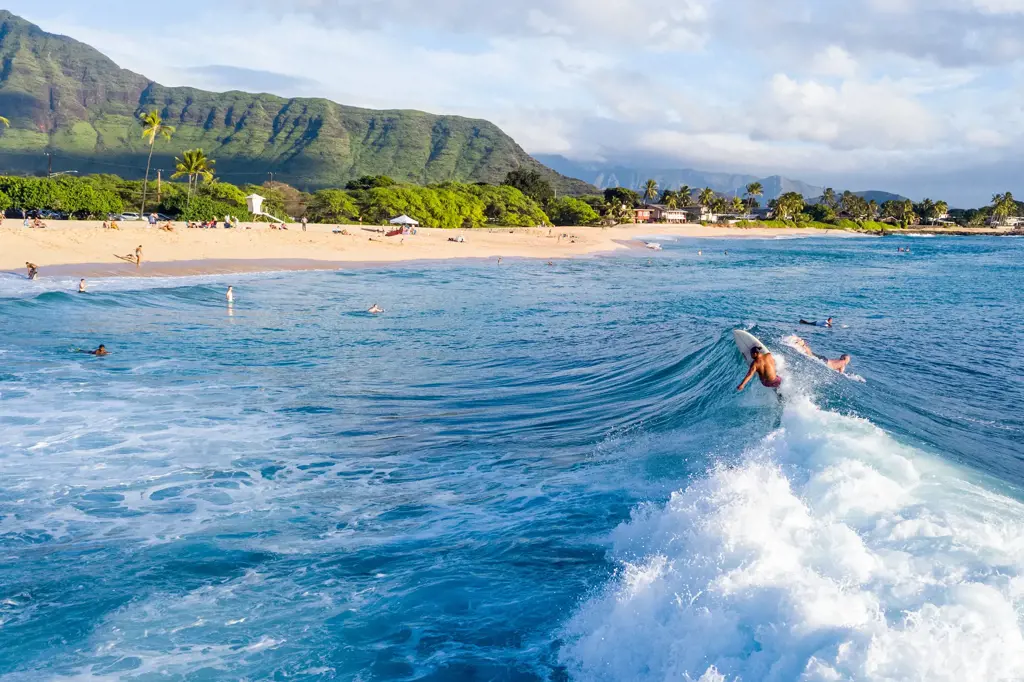
Updated …Image courtesy of quarts mountain
Makaha Surf Break Guide: West Side Oahu’s Original Big Wave
There is a version of Hawaii surfing that exists entirely outside the North Shore conversation. No contest jerseys, no camera crews, no rental car traffic backed up past Foodland on a solid swell day. Just a wide, crescent-shaped bay on the dry west side of Oahu, flanked by the Waianae Range, pulling in west and northwest swells that have been shaping surfers and surfing history for longer than most people realize.
I spent a summer living up in the Makaha Valley, in one of the old plantation-style units near the resort at the foot of the mountains, and I surfed this break almost every day. The morning sessions were quiet, the water was warm, and on the right swell the waves were as good as anything I had found anywhere on the island. The winter big wave potential I knew about from reputation. The summer fun I did not expect. Both are real. Both are worth knowing about.
Makaha was the center of the surfing world before Pipeline existed. The Makaha International Surfing Championships, which ran from 1954 to 1971, was the most prestigious contest on the planet — drawing the world’s best surfers to this bay every winter when everywhere else was either flat or unknown. Greg Noll rode what was at the time the biggest wave ever surfed here in December 1969. The break shaped an entire generation of Hawaiian watermen and women, including Rell Sunn , who grew up a stone’s throw from the beach and spent her life giving back to the community that raised her.
The North Shore eventually took the spotlight. Makaha never stopped delivering.
This guide covers everything: the four distinct breaks, the wave mechanics, optimal conditions, who should surf it, what to expect in the lineup, and a few things you genuinely need to know before you paddle out.
The Place: Makaha and Its Setting
Makaha sits on Oahu’s leeward coast, roughly 35 miles northwest of Honolulu along Farrington Highway. The bay is a wide, natural amphitheater — a half-moon of white sand backed by the dramatic green ridgelines of the Waianae Range, which rise steeply behind the town and cut off the trade winds that define most of Oahu’s coastline. That geography is the key to understanding everything about this break. Shielded from the northeast trades, open to the west and northwest Pacific, Makaha receives a completely different set of swells than the North Shore and operates on its own schedule.
The word Makaha means “fierce” in Hawaiian. That name was earned long before anyone started surfing here seriously. Ancient Hawaiians used this valley and coastline for fishing and agriculture, and the bay’s abundant marine resources sustained communities in the Waianae district for centuries. The surfing tradition at Makaha runs deep — this was not a break discovered by outsiders. It was a break reclaimed by the Hawaiian watermen who had always known it was special.
The beach itself is wide and sandy, one of the more beautiful stretches of sand on Oahu. Lifeguards are on duty daily. There are restrooms and showers at the park. The surrounding community is tight-knit and protective of this place — arrive with that awareness and you will be received well.
Understanding the Wave: Four Distinct Breaks
Makaha is not a single wave. It is a system of four interconnected breaks that behave differently depending on swell size, direction, and tide. Understanding which zone you are in — and which zone you should be in — is the foundation of surfing Makaha well.
The Point
The Point is the outermost break at Makaha, sitting at the northern tip of the bay where the reef shelf drops off into deeper water. This is where the wave machine starts. On a solid northwest or west swell, the Point picks up energy earlier than anything else in the bay and produces long, powerful right-hand walls that roll toward the Bowl section further inside. At head-high and above, the Point takeoff is committed — the drop is steep, the current is active, and the wall moves fast. On the biggest days, when the swell is pushing 15 feet or more, the Point becomes a serious big wave environment that draws experienced watermen from across the island.
I never surfed the Point at serious size. On smaller days, paddling out to the tip and sitting in that outermost position with the Waianae Range behind you and open ocean in front, you understand immediately why this place held the attention of the best surfers in the world for two decades.
The Bowl
The Bowl is the crown jewel of Makaha. Sitting inside the Point, it is where the energy that has traveled across the bay suddenly concentrates and throws — producing a defined, powerful section that can barrel on the right swell and tide combination. The Bowl is what made Makaha famous. Contest heats were won and lost in the Bowl. Greg Noll’s legendary 1969 wave passed through this section. Rell Sunn spent years reading its rhythms.
At overhead and above, the Bowl demands your full attention. The wave face steepens quickly and the lip throws hard. At more manageable sizes — chest to head-high on a clean northwest swell — it is one of the more satisfying waves on the island: a defined peak, a fast wall, and a section that rewards commitment. Longboarders can set up beautiful trimming rides through the Bowl on moderate days; shortboarders can find legitimate barrel opportunities when conditions align.
The Blowhole
The Blowhole is a middle section break that connects the Bowl to the inside reef on certain swells. It gets its name from the way energy channels through a gap in the reef, producing a quick, punchy section that can throw unexpectedly. On most days it functions as a transition zone — the place where a long ride from the Point or Bowl either reforms or closes out before reaching the inside. On the right swell angle, it produces its own distinct wave that is worth paying attention to, particularly for bodyboarders and surfers comfortable on faster, shallower reef breaks.
The Inside Reef
The Inside Reef is Makaha’s more forgiving zone, positioned closest to the beach and protected from the full force of larger swells by the outer breaks. On small to moderate days, the inside produces consistent, rolling waves that work well for longboarders, beginners with some experience, and surfers who want a mellow session without the intensity of the outer breaks. Summer months, when Makaha’s west-facing orientation picks up southern hemisphere groundswell wrapping around Ka’ena Point, keep the inside alive and fun through the warmer season. My summer sessions here were almost entirely on the inside — waist to chest-high, warm water, nobody out, just trading waves with whoever else had figured out that the West Side was firing.
Optimal Conditions
Swell Direction and Size
Makaha’s west-facing orientation means it responds to swell directions that most North Shore breaks never see. West swells (270 degrees) hit Makaha directly and produce the most powerful, organized conditions across all four breaks. Northwest swells (300-330 degrees) are the most common winter swell direction and keep the bay active from October through April. True north swells wrap around Ka’ena Point with reduced energy and produce rideable but softer conditions.
The inside works at virtually any size with enough swell period to wrap into the bay. The Bowl comes alive from waist-high upward. The Point and the Blowhole are best from head-high to double overhead. Above double overhead, Makaha enters big wave territory — the lineup thins dramatically, currents intensify across the Point, and the wave commands the full respect that its reputation demands.
Wind
Makaha’s position behind the Waianae Range creates natural wind protection that the North Shore cannot match. The mountains block the northeast trade winds that dominate the rest of Oahu, meaning Makaha can be glassy and clean on mornings when every North Shore break is blown out. This is one of the West Side’s most underappreciated advantages. Offshore winds at Makaha come from the northeast — when the trades are light, they groom the wave face beautifully. Strong Kona winds from the southwest are the one condition that creates problems, pushing into the bay and making the surf messy.
Morning glass-off sessions are reliably the best window, particularly in summer. Get there early.
Tide
Mid to higher tides are preferred at Makaha across all four breaks. Lower tides expose the reef, make entries and exits more technical, and cause the wave to close out more frequently across the Bowl section. An incoming mid-tide on a clean west or northwest swell is the combination experienced Makaha surfers plan their sessions around. The inside reef is more forgiving at lower tides than the outer breaks, but in general, let the tide come in before you paddle out.
Best Times of Year
Winter (October through April) is prime season for the outer breaks. The Point and Bowl light up on the northwest swells that push through this period, and the biggest days — the ones that carry the break’s historical legacy — arrive from December through February. October and November offer excellent surf with lighter crowds before the season peaks.
Summer (May through September) sees the outside largely go quiet, but the inside stays alive on south and southwest swells wrapping around the island. The warm water, empty lineups, and consistent small surf made my summer here genuinely memorable. If you are on Oahu in summer and the South Shore is maxed out, drive to Makaha. More often than not, something is breaking.
Who Should Surf Makaha
Beginners
The Inside Reef at Makaha on small summer swells is appropriate for surfers with some basic experience — those who can paddle, pop up, and have a basic understanding of wave reading. It is not the most beginner-friendly setup on Oahu; the reef requires awareness and the currents across the bay can catch newer surfers off guard. True absolute beginners are better served starting at a beach break before coming to Makaha. That said, on a calm summer morning with a small, organized swell, the inside section is genuinely enjoyable and manageable for a surfer with a few sessions under their belt.
Intermediate Surfers
Intermediate surfers with solid reef break experience will find Makaha rewarding across a wide range of conditions. The inside and Bowl sections on moderate days offer real waves without the intensity of the outer Point. Learning to read the current across the bay, understanding how the swell bends into the different sections, and developing patience in a lineup with genuine local hierarchy — all of it builds ocean intelligence that translates everywhere. This is a break worth investing time in.
Advanced Surfers
The Point and Bowl on a solid northwest or west swell are legitimate, serious waves that reward advanced surf skills and local knowledge. The current across the Point requires constant paddling to hold position. The Bowl can throw hard and shallow on a pushing tide. On the biggest days, when Makaha enters true big wave territory, only surfers with significant Hawaiian reef break experience and proven big wave judgment belong in the outer lineup. The wave does not ask for credentials. It simply tells you whether you belong there.
First-Person: A Summer at Makaha
I lived up the valley for most of a summer, in one of the old plantation-style units near the resort where the road climbs into the mountains above the town. Most mornings I was in the water before seven. The trades do not reach the West Side the way they do everywhere else on the island — Makaha has its own weather, its own light, its own pace. The mountains hold the heat differently. The bay sits in a kind of stillness in the early morning that the North Shore never quite achieves.
The surf that summer was small and consistent — waist to chest-high south and southwest swell wrapping around Ka’ena Point and filling the inside section with clean, fun waves. Nobody was out most mornings. I had entire sessions to myself, trading waves with the occasional longboarder or bodyboarder who knew the break. The water was warm and clear. There were turtles. It was some of the most quietly enjoyable surfing I have done anywhere in Hawaii.
The community on the West Side is different from what you find at the tourist-facing breaks. It is tighter, more protective, and more immediately present. People know who belongs and who does not. Showing up with awareness, surfing within your ability, not overcrowding the peak, and treating the place with visible respect goes a long way. I never had a bad interaction in the water at Makaha. But I also never pretended I owned the place.
Practical Information
Getting There
Makaha Beach Park is located on Farrington Highway (Route 93) on Oahu’s leeward coast. From Honolulu and Waikiki, take H-1 West to Exit 1, then follow Farrington Highway northwest through Waianae and Maili. Makaha is approximately 35 miles from Waikiki — allow 45 to 60 minutes depending on traffic. The beach park is well-signed and easy to find; the parking lot sits directly off the highway with the beach visible from the road.
Parking
Makaha Beach Park has a free parking lot directly adjacent to the beach. It fills on weekends and on good surf days — arrive early. As with all parking on Oahu, leave nothing visible in your vehicle. Car break-ins do occur in the area. Stow valuables before you leave your accommodation, not in the parking lot.
Lifeguards
Makaha Beach Park has lifeguards on duty daily, which distinguishes it from many North Shore breaks. This is meaningful — the outer breaks at Makaha on a big day are serious water, and the presence of professional ocean safety personnel is worth noting for anyone visiting with less experienced companions.
Nearby
The town of Waianae, a few miles south, has grocery stores, food trucks, and basic supplies. There is no surf shop directly in Makaha — if you need board rentals or gear, plan ahead from Honolulu before making the drive. The Makaha Resort Golf Club sits at the foot of the valley above the beach and offers accommodation for those who want to stay on the West Side.
Gear Recommendations
Board Selection
For the inside section on small days: a mid-length board (7-9 feet), a fish, or a longboard. The rolling, forgiving inside waves reward volume and smooth trimming over aggressive shortboard maneuvers.
For the Bowl and Point on moderate days: a performance shortboard in the 6’0″-6’6″ range handles the faster, more powerful walls well. A step-up or semi-gun (6’6″-7’2″) is the right choice when the swell starts pushing overhead and above.
For big days at the Point: a proper gun in the 7’6″-9’0″ range depending on the size. Do not paddle out to the outer Point on a significant swell on a board that is too small. The wave will tell you.
Reef Awareness
Makaha’s reef is exposed coral and rock across all four break zones. Reef booties are a reasonable precaution, particularly for anyone prone to falls near the shoreline during entry and exit. Cover your head on wipeouts, especially in the Bowl section where the reef comes up quickly on a lower tide. Go limp over the reef and do not try to stand until you have confirmed the depth.
Sun Protection
Reef-safe, mineral-based sunscreen only — Hawaii law prohibits sunscreens containing oxybenzone and octinoxate. The West Side sun is intense and the beach faces west, meaning afternoon sessions get full direct exposure. A rashguard or UV shirt is practical for longer sessions.
Respecting Makaha
Makaha is a community break before it is anything else. The West Side has its own culture, its own history, and its own relationship with the ocean that runs deeper than any surf contest or travel guide. The families at the beach on weekends, the older watermen in the outer lineup, the keiki learning to surf in the inside section — they all have a connection to this place that your visit is a small part of, not the center of.
The standard principles of respectful surfing apply here with particular force. Do not crowd the peak. Do not drop in. Do not paddle around the outside and snake the lineup. Take your rubbish with you. The West Side community is not unfriendly — but it is direct, and it notices. Earn your waves, surf within your ability, and treat everyone in the water the way you would want to be treated at your own home break.
Makaha has been here a long time. It will be here long after your visit. Surf it like that is true.
Frequently Asked Questions
Q: Is Makaha safe for intermediate surfers?
On moderate days with waist to head-high surf and light winds, the Bowl and inside sections are appropriate for solid intermediate surfers with reef break experience. The outer Point on larger swells is expert-only. Know which zone you belong in and stay there.
Q: How does Makaha compare to the North Shore breaks?
Makaha operates on a different swell window than Pipeline , Sunset Beach , or Waimea Bay . It responds to west and northwest swells that the North Shore’s east-facing breaks handle differently, and its leeward position means it is often clean and glassy when trade winds are making the North Shore choppy. It is a distinctly different experience — less crowded, more community-oriented, with a longer and deeper cultural history than most North Shore breaks.
Q: Does Makaha work in summer?
Yes. The inside section picks up south and southwest groundswell wrapping around Ka’ena Point through the summer months and produces consistent, fun waves when the North Shore is flat. Summer at Makaha is genuinely enjoyable for intermediate and experienced surfers who want uncrowded waves in warm water.
Q: What was the Makaha International Surfing Championship?
The Makaha International ran from 1954 to 1971 and was the most prestigious surf contest in the world during that era, drawing the top surfers from Hawaii, California, Australia, and Peru to compete in this bay every winter. It predated the Triple Crown and established Makaha as the global center of competitive surfing before the North Shore contests took over. Greg Noll surfed here throughout that era and rode his famous 1969 wave in this bay.
Q: Are there sea turtles at Makaha?
Yes. Hawaiian green sea turtles (honu) are a regular presence along the reef at Makaha. Observe them from a respectful distance, do not touch or approach them, and give them right of way in the water. They are federally protected under the Endangered Species Act, with fines reaching $25,000 for harassment or harm.
Q: Is there parking at Makaha Beach Park?
Yes, there is a free parking lot directly at the beach off Farrington Highway. It fills early on weekends and good surf days. Arrive early and leave nothing visible in your vehicle.
Q: Who is Rell Sunn?
Rell Sunn was born and raised at Makaha, became Hawaii’s first female lifeguard, reached number one in the world in longboarding, and spent 15 years surfing through breast cancer before passing in 1998. She started the Menehune Surf Contest for the keiki of Makaha in 1976, which still runs every year. The West Side called her the Queen of Makaha. She earned it.
Makaha in Context
Makaha does not need the North Shore’s validation. It had its moment at the center of the surfing world and carried it with dignity. When the attention moved northeast, Makaha kept doing what it had always done — producing powerful, honest waves for the community that lives alongside them.
For anyone building a real understanding of Hawaiian surf culture, Makaha is not optional. The history of this break connects directly to the history of modern surfing — the Makaha International Championships, the big wave pioneers who tested themselves here in the 1950s and 60s, the West Side watermen and women who developed their craft in this bay without any of the recognition that the North Shore attracted. Rell Sunn came from this place. Greg Noll made history here. The tradition is real.
Come to Makaha with that awareness. Surf it well. And if you catch a clean Bowl section on a west swell morning with the Waianae Range turning gold behind you and nobody else in the lineup, you will understand exactly why the people who grew up here never needed to go anywhere else.
Mahalo for reading. Go with respect, go early, and let the wave show you what it has.
Sources
- Surfline — Makaha Surf Guide
- Magicseaweed — Makaha Point Surf Guide
- Surf-Forecast.com — Makaha
- Surfer Magazine — Makaha: 25 Best Waves in the World
- Encyclopedia of Surfing — Matt Warshaw
- NOAA National Weather Service — Honolulu Marine Forecasts
- Hawaii Department of Health — Reef-Safe Sunscreen Information
- City and County of Honolulu — Makaha Beach Park
Related Surf Break Guides:
- Pipeline Surf Break Guide
- Sunset Beach Surf Break Guide
- Waimea Bay Surf Break Guide
- Ala Moana Bowls Surf Break Guide
- Pua’ena Point Surf Break Guide
- Rell Sunn: Queen of Makaha
- History of Surfing in Hawaii
Last Updated: June 2026
Not sure this is the right wave for you? Compare every Oahu break by skill level and season in our guide to the best surf spots in Hawaii.
